Alleyway Symphonies: Can You Decode Vietnam's Hilarious Street Vendor Cries?
Those crackly, hypnotic megaphone recordings echoing through your neighborhood aren't random noise—they are the historic soul of Vietnamese street food. Here is how to decode them and buy like a seasoned local.
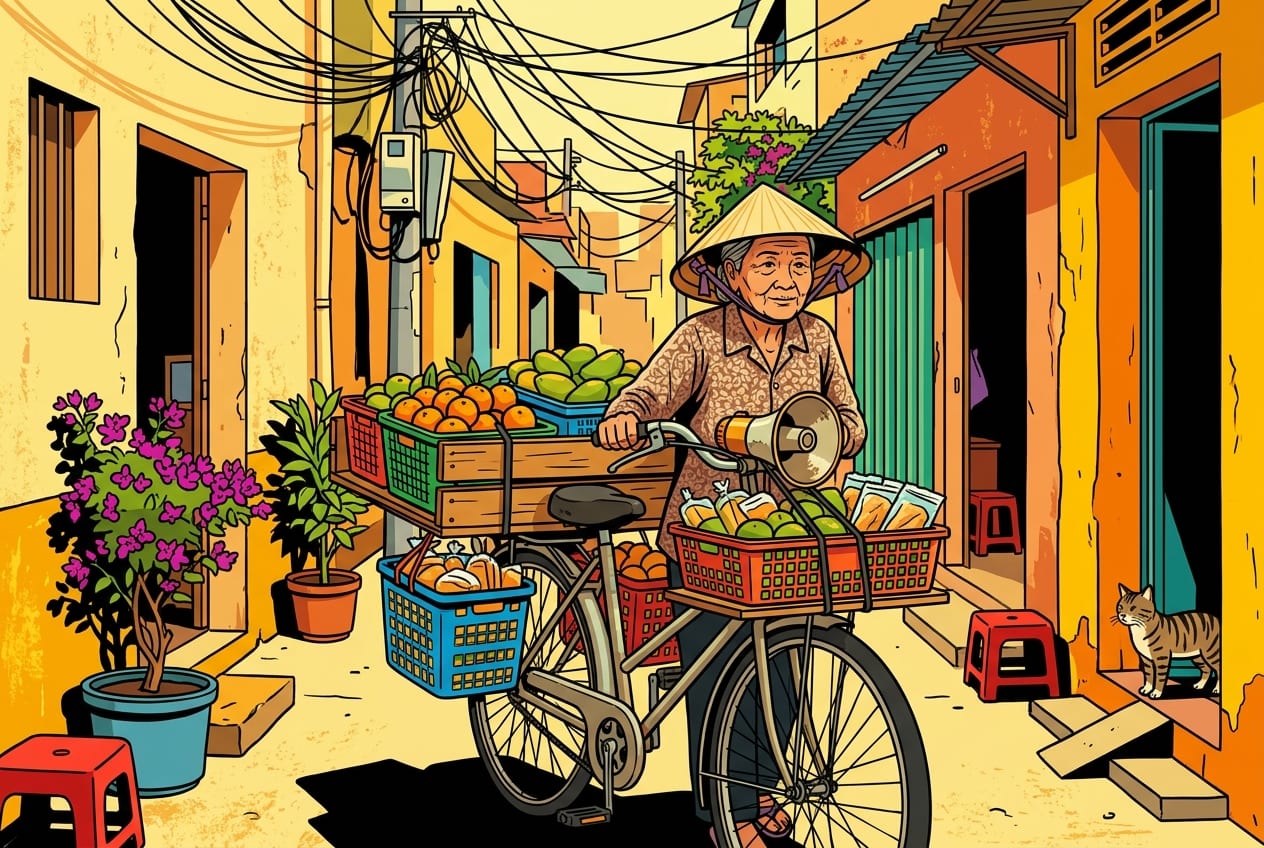
If you have recently moved into a residential neighborhood in Ho Chi Minh City or Hanoi, your mornings have likely been punctuated by a bizarre acoustic phenomenon. Through the open window of your apartment, a crackly, highly distorted, and rhythmic voice blasts from a small megaphone, echoing off the high concrete walls of your alley. It sounds like a cross between a vintage radio broadcast, an emergency siren, and a melancholic song. You peer outside, expecting a neighborhood announcement, only to see a vendor slowly pedaling a heavily modified bicycle laden with steaming metal pots.
Welcome to the world of tiếng rao—the iconic street vendor cries of Vietnam. For decades, these auditory signals have served as the background soundtrack to local life. What sounds like chaotic noise to a newcomer is actually a highly sophisticated, low-tech neighborhood clock. To locals, these sounds evoke deep hoài niệm (nostalgia), signaling the exact time of day and the arrival of their favorite comfort foods. If you want to move beyond the bubble of high-end cafes and truly integrate into your neighborhood, learning to decode these cries is your ultimate rite of passage.
What Are Those Loud, Crackly Megaphone Sounds in Your Alley?
Vietnamese street vendor cries, known as tiếng rao, are rhythmic vocal announcements used by mobile sellers to advertise food and services. Historically sung live, modern vendors use pre-recorded megaphone loops to project across dense urban alleyways, acting as a low-tech neighborhood clock for locals and expats alike.
Historically, tiếng rao was an acoustic art form. In the early to mid-20th century, vendors walked the labyrinthine hidden alleys of Hanoi and Saigon, calling out their wares live. Because they had to project their voices over long distances and through dense neighborhoods, they developed melodic, operatic, and sometimes melancholic vocal techniques. A vendor’s unique cry was their brand identity; neighbors could identify exactly who was passing by just by the pitch and rhythm of their voice.
However, as Vietnam rapidly modernized, urban noise pollution increased. Motorbike traffic grew louder, and concrete houses replaced low-rise brick dwellings. To survive, vendors had to adapt. In the late 1990s and early 2000s, vendors began recording their voices onto cassette tapes, and later, digital MP3 chips. Today, in 2025–2026, almost all tiếng rao is pre-recorded and blasted from small, battery-powered megaphones strapped to bicycles or motorbikes. While some purists lament the loss of the live, soulful cries, this shift is a testament to the practical resilience of Vietnam's working class, allowing vendors to save their vocal cords during grueling 12-hour shifts.
The Menu of the Megaphones: Decoding the Most Common Cries
The most common street vendor cries advertise affordable culinary staples like crispy baguettes (bánh mì nóng giòn), sweet silken tofu (tào phớ or tàu hũ), and savory butter-fried corn (bắp xào). These mobile snacks offer expats an authentic, budget-friendly taste of Vietnamese street food culture right outside their front doors.
To the untrained ear, the heavily distorted megaphone loops can sound like an incomprehensible blur of vowels. However, once you learn the key phrases, you will begin to recognize them instantly. Here are the most common cries you will hear echoing through the hẻm (southern alleys) and ngõ (northern alleys) of Vietnam:
- "Ai bánh mì nóng giòn đây..." (Who wants hot, crispy bread...): This is the quintessential morning soundtrack. The vendor, usually on a bicycle with a large, insulated basket covered in thick blankets, sells fresh French-style baguettes. In 2025, a plain, warm baguette (bánh mì không) costs a mere 4,000 to 6,000 VND ($0.16–$0.24 USD)—perfect for dipping into condensed milk or pairing with eggs at home.
- "Ai tào phớ / tàu hũ đây..." (Who wants tofu pudding...): In the North, it is called tào phớ; in the South, it is tàu hũ nước đường. This comforting snack consists of warm, silken tofu ladled into a bowl, drowned in a sweet, fragrant ginger syrup, and topped with jelly or coconut milk. The seller often signals their presence by clinking a small metal spoon against a glass jar or playing a soft, melodic recording. A bowl of this heavenly sweet treat will only set you back 12,000 to 15,000 VND ($0.50–$0.60 USD).
- "Bắp xào, cá viên chiên đây..." (Stir-fried corn, fried fish balls...): Usually heard in the late afternoon and evening, this cry heralds the ultimate street comfort food. Bắp xào is sweet corn kernels stir-fried in a wok with margarine, green onions, and tiny dried shrimp, resulting in a savory, sweet, and buttery masterpiece. Paired with cá viên chiên (skewered, deep-fried fish and meat balls), a generous portion costs between 20,000 and 30,000 VND ($0.80–$1.20 USD).
- "Bánh giò..." (Pyramidal minced pork rice dumpling): This cry is often deep, slow, and haunting, stretching the vowels to sound like "Bánh... giò... nóng... hổi...". Bánh giò is a savory, pyramid-shaped dumpling made from rice flour starch, stuffed with seasoned minced pork, wood ear mushrooms, and a quail egg, all wrapped in banana leaves and steamed. It is the ultimate heavy, satisfying snack for a rainy afternoon, costing around 15,000 to 20,000 VND ($0.60–$0.80 USD).
Street Vendor Etiquette: How to Order Without Causing Bad Luck
Ordering from a Vietnamese street vendor requires signaling with a downward hand wave, calling out respectful pronouns like Chị ơi or Anh ơi, and paying with small cash bills. Crucially, expats must avoid haggling during the first transaction of the day to respect the cultural belief in morning business luck (mở hàng).
Buying from a mobile vendor is a highly interactive, social experience that requires a bit of local cultural understanding. To successfully flag down a vendor and order your food, follow these essential steps of street food etiquette:
First, master the signal. In Vietnam, waving someone over with your palm facing up is considered impolite, as it is the gesture used to call animals. Instead, extend your arm out and wave your fingers downward in a gentle, repetitive patting motion. As you wave, call out using the correct pronoun based on their age: "Anh ơi!" (to a young or middle-aged man), "Chị ơi!" (to a woman), or "Ngoại ơi!" (to an elderly vendor, meaning 'grandma' or 'grandpa').
Second, always keep small cash change ready. Mobile vendors operate on razor-thin profit margins and carry very limited physical change. Handing over a 500,000 VND bill for a 15,000 VND bag of corn is a major social faux pas. Keep a stash of 10,000, 20,000, and 50,000 VND bills near your front door specifically for alleyway purchases.
Third, respect the sacred rule of mở hàng (the first sale of the day). Vietnamese business owners are highly superstitious about their very first transaction. They believe that a quick, smooth, and friendly first sale brings excellent financial luck (vía lành) for the rest of the day. Conversely, a customer who hesitates, haggles extensively, or cancels their order as the first transaction is thought to bring bad luck (vía dữ). If you are their first customer of the morning, be decisive, polite, and pay quickly.
The Ingenious DIY Engineering of Vietnam’s Mobile Carts
Vietnamese street vendors operate highly customized, mobile operations built on vintage motorbikes or heavy-duty bicycles. These vehicles are modified with welded metal racks, insulated food containers, and battery-powered megaphones, allowing vendors to navigate narrow, high-walled urban alleys with maximum efficiency and minimal overhead costs.
Beyond the food and the sounds, the visual aesthetic of the Vietnamese street vendor is a masterclass in functional, weathered charm. If you look closely at their vehicles, you will see incredible feats of DIY engineering. A standard, rusted bicycle or a vintage Honda Cub motorbike is transformed into a fully operational mobile kitchen. Metal racks are custom-welded to the frame to hold heavy propane tanks, gas burners, and massive aluminum pots wrapped in thick, insulated blankets to keep food piping hot for hours.
The vendors themselves are a colorful sight against the grey concrete of the alleyways. They typically wear sun-bleached pastel long-sleeve shirts, floral trousers, and the iconic conical hat (nón lá) to shield themselves from the intense tropical sun and sudden downpours. Taped prominently to the handlebars is the heart of the modern operation: a small, scuffed white-and-blue megaphone wired directly to a motorcycle battery strapped under the seat. This setup allows them to play their pre-recorded loops continuously as they glide through the neighborhood.
Interestingly, this traditional, low-tech way of life has seamlessly adapted to the digital age. In 2025 and 2026, it is incredibly common to see a heavily weathered, traditional vendor cart displaying a laminated VietQR card taped to the handlebars. This allows tech-savvy locals and expats to pay instantly using their mobile banking apps, proving that even the most nostalgic slices of Vietnamese working-class culture can comfortably coexist with high-tech modernization. For more on how street food culture thrives in these spaces, check out the authoritative guides on BBC Travel and the cultural preservation archives of UNESCO.
Do
- Wave your hand palm-down to signal a passing vendor to stop.
- Keep small change (10,000, 20,000, or 50,000 VND bills) ready near your door.
- Respect the first sale of the day (mở hàng) by completing the purchase quickly and politely.
- Look for laminated VietQR codes on their carts if you are out of physical cash.
Don't
- Do not haggle over low-cost street snacks, especially if you are the first customer.
- Avoid waving your hand palm-up or snapping your fingers to get their attention.
- Do not try to pay for a 15,000 VND snack with a 500,000 VND bill.
Why do modern Vietnamese street vendors use recorded megaphones instead of calling out live?
In the past, vendors sang their tiếng rao live to showcase their unique vocal style. However, as cities grew louder with motorbike traffic and neighborhoods became more dense, vendors transitioned to pre-recorded loops played through battery-powered megaphones. This practical shift saves their vocal cords during long 10-hour shifts and ensures their cries can pierce through the concrete walls of Vietnam's deep alleys. According to historical features on VNExpress International, this acoustic shift represents a survival adaptation in rapidly modernizing urban landscapes.
What should I do if I want to buy from a vendor but they are moving too fast?
Don't panic! Step out of your doorway, make clear eye contact, wave your hand downward, and call out loudly: 'Anh ơi!' (for a man) or 'Chị ơi!' (for a woman). Because their megaphones are loud, they might not hear you immediately, so a physical wave is crucial. If they pass you, a short jog to catch up is perfectly normal and highly welcomed—vendors are always happy to stop for an eager customer.
Is it acceptable to pay street vendors using phone banking or QR codes?
Yes, surprisingly so! While cash remains king for small transactions, many mobile street vendors now carry a laminated VietQR card taped to their bicycle basket or hanging from their neck. This allows you to scan and transfer money instantly using your Vietnamese bank app. However, always ask first ('Quét mã được không ạ?') and keep cash handy as a backup, especially for older vendors who may still prefer physical bills.
Hear these phrases
Each one is recorded in both the northern and southern accent.
Topics
Read more
Other posts from our Vietnamese learning blog.
By Xinchao team
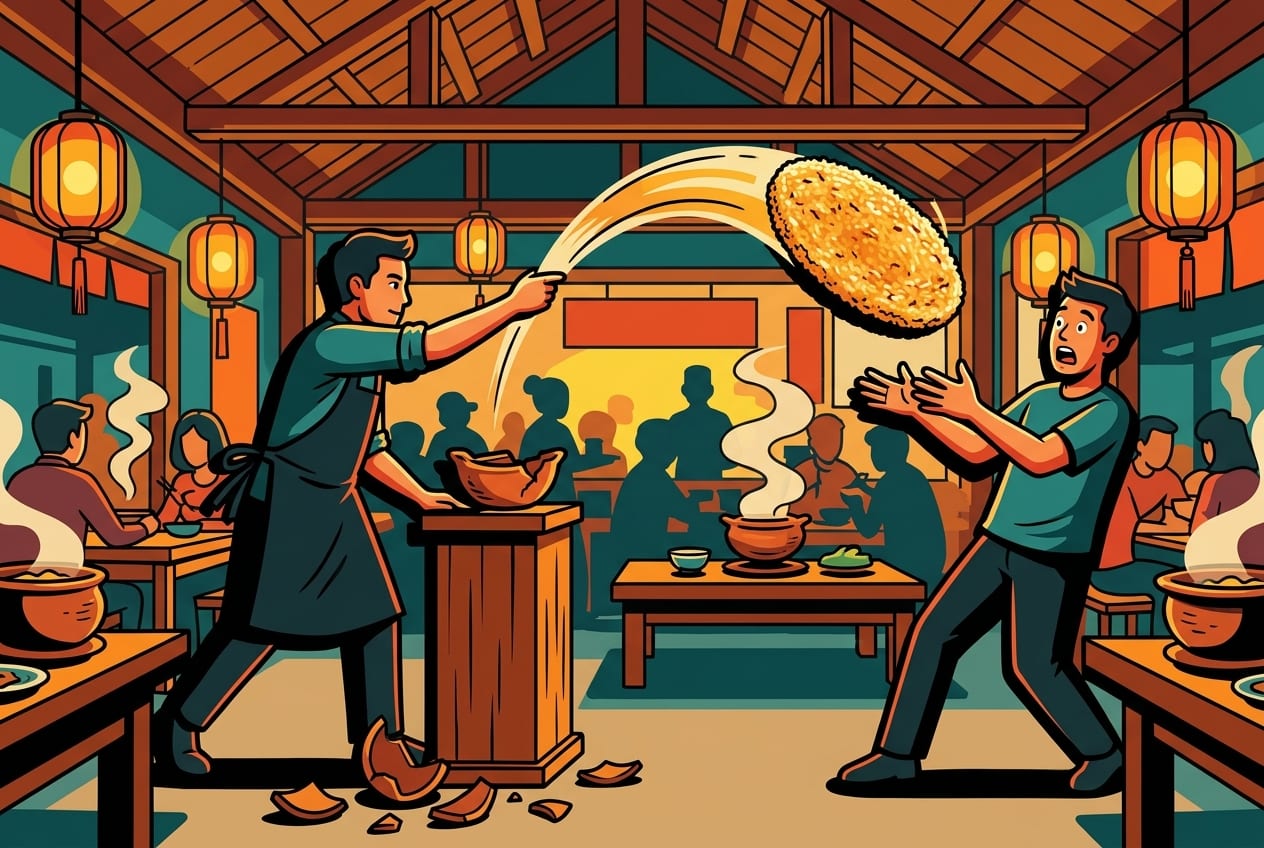
Duck! Your Expat Survival Guide to Catching Flying Rice at Vietnam's Chaotic 'Cơm Niêu Đập' Restaurants
Ready for dinner and a show? Discover how to navigate Vietnam's chaotic flying clay pot rice restaurants without taking a crispy projectile to the face.

By Xinchao team
Left Foot First: How to Avoid Cosmic Chaos at Tay Ninh's Technicolor Cao Dai Temple
Heading to Tay Ninh's spectacular Cao Dai Holy See? Avoid a spiritual faux pas with this essential guide to gender doors, threshold rules, and cosmic balance.
By Xinchao team
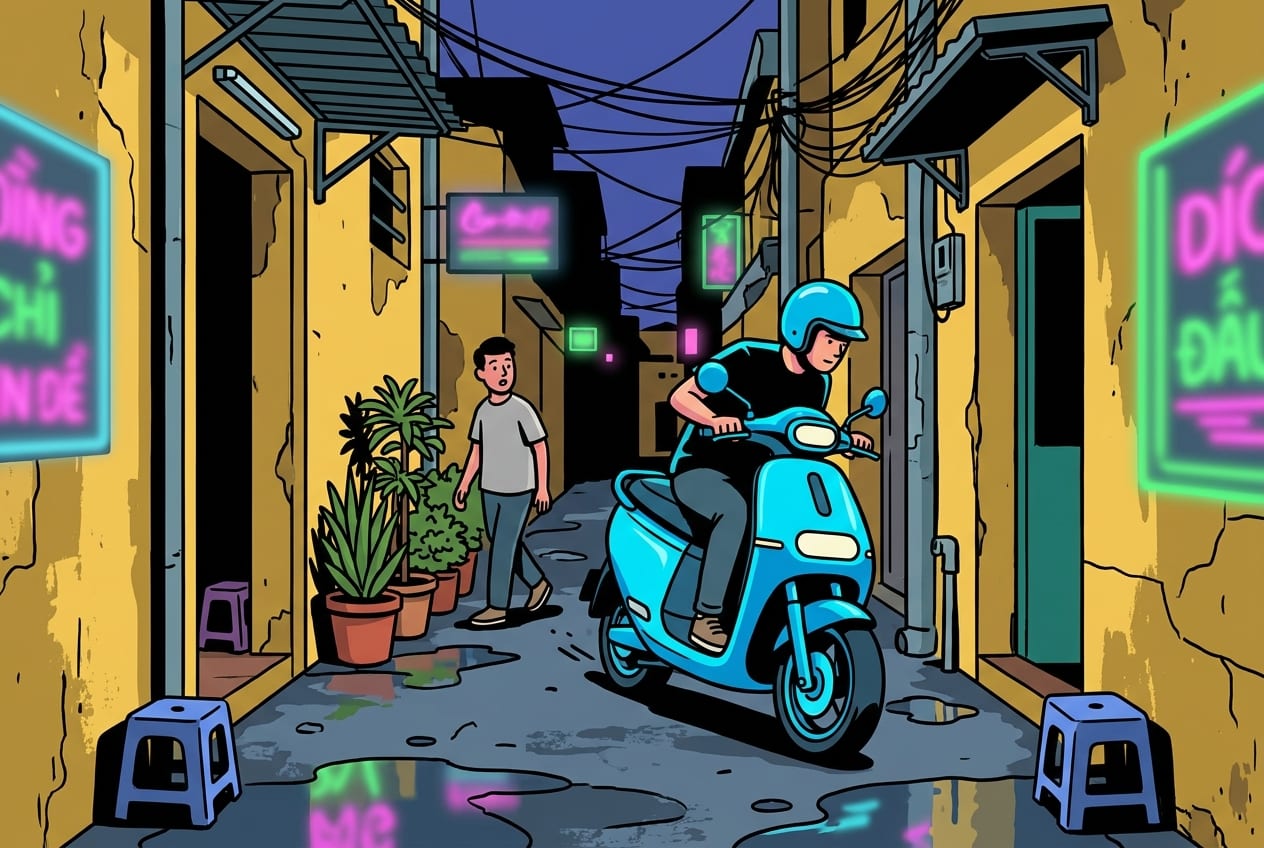
The Silent Alley Threat: Your Survival Guide to Vietnam's Ultra-Quiet EV Revolution
Vietnam's iconic, roaring alleyways are falling silent as electric bikes and mini-EVs take over. Here is how to navigate these sensory-shifted streets safely.