Duck! Your Expat Survival Guide to Catching Flying Rice at Vietnam's Chaotic 'Cơm Niêu Đập' Restaurants
An insider's survival guide to Vietnam's most theatrical dining experience: flying clay pot rice. Learn the social rules, where to go, and how to duck.
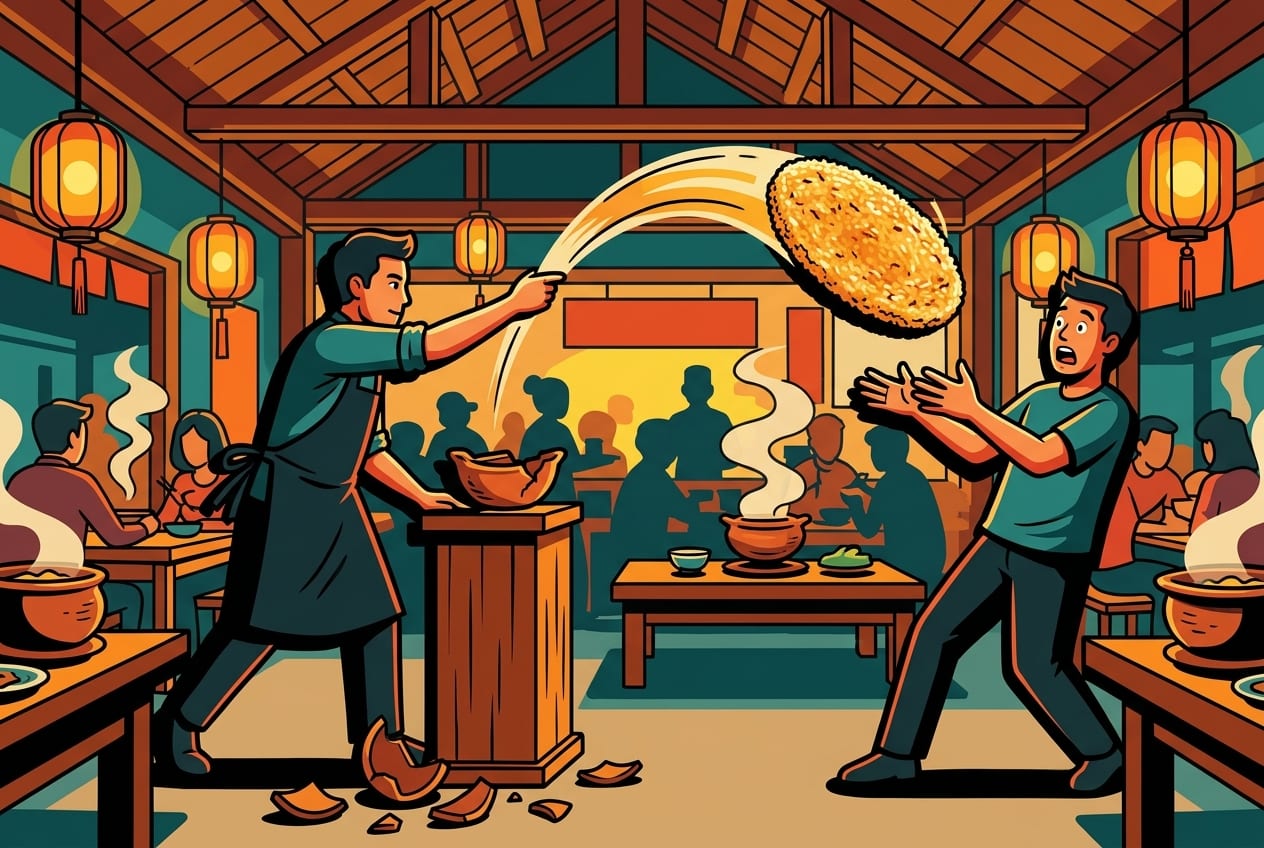
Imagine sitting at a rustic wooden table, the air thick with the sweet, savory aroma of caramelized fish sauce and sizzling scallions. Suddenly, a sharp metallic CLANG echoes through the dining room, followed by a loud, theatrical shout. Before you can process the sound, a golden, disc-shaped object launches into the air, sailing high over the heads of startled diners. Welcome to the high-stakes, high-energy world of Cơm Niêu Đập, or flying clay pot rice Vietnam style. This is not just a dinner; it is a full-contact culinary sport that every expat and traveler must experience at least once.
For the uninitiated, the spectacle can feel like controlled chaos. Waiters sprint across the floor, clay shards shatter into designated bins, and flying projectiles of crispy rice soar up to 30 feet across the room. To help you navigate this sensory overload without taking a hot, buttery piece of rice to the forehead, we have put together the ultimate survival guide. From understanding the cultural roots of this theatrical dish to mastering the social etiquette of the shared table, here is everything you need to know to survive and thrive at your first flying rice feast.
The Theater of Cơm Niêu Đập: Why Do They Throw the Rice?
Cơm Niêu Đập is a theatrical Vietnamese dining style where waiters smash a clay pot and launch the crispy rice dome across the room. While clay pot cooking is a rustic Northern tradition, the dramatic throwing technique was developed in Southern and Central Vietnam to entertain diners and keep the crispy crust intact.
To understand why people do this, we have to look at the humble clay pot (niêu). Historically, cooking in unglazed terracotta is a rustic tradition rooted in the agricultural heartlands of Northern Vietnam. According to cultural guides on Vietnam Tourism, clay pots were prized for their ability to distribute heat slowly and evenly, locking in moisture and flavor. When rice is cooked over hot coals in these porous pots, a magnificent transformation occurs: the interior rice remains soft and fluffy, while the intense heat against the unglazed clay creates a perfectly uniform, golden-brown, crispy crust (cơm cháy) on the outer layer.
But how did a humble peasant comfort food become an aerial acrobatics show? The "smashing and throwing" aspect is a modern, urban innovation. If you try to pry a thin, crispy dome of rice out of a narrow-necked clay pot with a spoon, it will inevitably break into uneven, jagged shards. By physically smashing the single-use pot with a metal hammer, the waiter instantly frees the entire, unbroken dome of crispy rice. Throwing it across the room to a colleague with a plate is a brilliant piece of performance art. It keeps the crust perfectly intact, ensures the hot rice does not steam itself soggy on the way to the table, and—most importantly—provides a thrilling spectacle that turns a simple family meal into an unforgettable event.
Where to Get Hit by Flying Rice: Top Spots and Costs
The best places to experience flying clay pot rice in Vietnam are Cơm Niêu Nhà Đỏ in Da Nang and Cơm Niêu Sài Gòn in Ho Chi Minh City. A full family-style feast at these iconic venues typically costs between 150,000 and 300,000 VND ($6 to $12 USD) per person.
If you want to witness the absolute masters of the craft, there are two legendary institutions you must visit. In Ho Chi Minh City, the undisputed champion is Cơm Niêu Sài Gòn (specifically the branch at 59 Hồ Xuân Hương in District 3). This iconic restaurant was famously visited by Anthony Bourdain in his series No Reservations, bringing the art of flying rice to a global audience. You can read more about his legendary culinary travels on Wikipedia's Anthony Bourdain page. In Central Vietnam, the crown belongs to Cơm Niêu Nhà Đỏ in Da Nang, with highly popular branches located at 86 and 500 Nguyễn Tri Phương.
A meal here is highly affordable, especially when compared to Western-style dining. While the flying rice itself is incredibly cheap (usually around 40,000 VND or $1.60 USD per pot), it is never eaten alone. Instead, it serves as the canvas for a massive spread of traditional, family-style side dishes. When you factor in a table filled with caramelized fish, savory pork dips, and fresh herb soups, expect to pay between 150,000 to 300,000 VND ($6 to $12 USD) per person for a feast that will leave you thoroughly satisfied.
The Expat Survival Guide: How Not to Get Smashed
To safely enjoy flying clay pot rice, expats should choose seats away from the central flight path, listen for the 'Đập nè!' cue to film, and never try to catch the rice. Pair the crispy crust with rich, savory dipping sauces like kho quẹt or cá kho tộ.
Walking into a Cơm Niêu Đập restaurant for the first time can be intimidating. To ensure you have a seamless, delicious, and injury-free experience, follow these practical survival steps:
First, choose your seat wisely. The dining room is divided into distinct zones. If you are there to capture high-speed action shots for social media, ask for a table near the central aisle—this is the designated "flight path" where the magic happens. However, if you prefer to eat without the constant anxiety of a flying rice disc passing over your head, or if you want to avoid stray sesame seeds landing in your hair, request a table near the perimeter of the room.
Second, make sure you order correctly. If you simply ask for Cơm Niêu, you will receive a standard clay pot of rice that is served intact, meant to be eaten with a spoon. To get the theatrical flying show, you must specifically order Cơm Đập (smashed/flying rice). Much like choosing between rice or noodles for your daily meals, making the right choice at the start of your order shapes your entire dining experience.
Third, prepare your camera early. The waiters work with lightning speed and military precision. Keep your ears open for the cue: a loud, sharp shout of "Đập nè!" (Smash it!) or the metallic ring of a hammer hitting the pot. Have your phone set to slow-motion video beforehand, because once the hammer falls, the rice is across the room in a fraction of a second.
Finally, build your flavor profile. Plain crispy rice is dry and bland. To eat like a local, you must pair it with rich, caramelized sauces. The ultimate pairing is kho quẹt, a thick, sweet, and savory dipping sauce made from fish sauce, sugar, pork fat cracklings, and whole black peppercorns. Alternatively, drizzle the rich, savory gravy of cá kho tộ (caramelized clay-pot catfish) directly onto your crispy shard of rice.
Dining Etiquette: The Rules of the Crispy Dome
Vietnamese dining etiquette dictates that the crispy rice dome is a shared dish, with the eldest or guest of honor taking the first piece. Diners should always accept traditional toppings like scallion oil and savory sesame salt, which balance the dry, crunchy texture of the rice.
For locals, a meal at a Cơm Niêu Đập restaurant represents cơm gia đình (family-style dining). It is a warm, communal experience designed to bring people together over shared plates. To show respect and blend in like a seasoned expat, there are a few subtle social rules you should follow.
The first rule is the Sharing Rule. The crispy rice dome is not an individual portion. Once the catcher waiter places the golden dome on your table, it is meant to be broken into smaller, bite-sized shards and shared among everyone. It is polite to wait and let the eldest person or the guest of honor at your table take the first piece before you dig in. This small gesture of respect goes a long way in Vietnamese culture.
The second rule is Topping Etiquette. As soon as the rice is caught and placed on your table, the waiter will immediately drizzle it with mỡ hành (scallion oil) and sprinkle it with muối vừng (savory sesame salt) or pork floss. Do not wave them away! These toppings are not optional garnishes; they are essential culinary components designed to add moisture, fat, and a savory kick to the dry, crunchy rice crust. If you want to dive deeper into the nuances of Vietnamese dining and beverage habits, check out our guide on why coffee styles change across regions.
The final, and most important rule: keep your hands off the flight path. Never, under any circumstances, attempt to catch the flying rice yourself. The rice is incredibly hot, straight out of a coal-fired oven, and the waiters undergo months of rigorous training to master the trajectory and catch it safely on heavy ceramic plates. Trying to intercept the rice is not only a major safety hazard that could result in painful burns, but it is also considered a significant social faux pas that disrupts the flow of the restaurant's hard-working staff.
Do
- Let the staff drizzle the scallion oil and sesame salt immediately; it balances the dry texture.
- Share the crispy shards communally, offering the first piece to the eldest person at the table.
- Keep your eyes peeled and ears open for the 'Đập nè!' cue so you don't get startled.
Don't
- Never attempt to catch the flying rice yourself; it is extremely hot and dangerous.
- Don't order standard 'Cơm Niêu' if you specifically want to see the flying rice show.
- Do not refuse the rich dipping sauces like kho quẹt, as the rice is too dry to eat plain.
Is the flying rice actually hot when it flies across the room?
Yes, the rice is incredibly hot! It is cooked in a terracotta pot directly over red-hot coals to create the crispy crust. When the pot is smashed, the rice dome retains a massive amount of heat. This is why you must never try to catch it with your bare hands—leave it to the trained waiters who use heavy-duty ceramic plates.
What happens if the waiter drops the flying rice?
While the waiters train for months and rarely drop the rice, accidents do occasionally happen in the high-speed environment. If a rice dome misses the plate and falls, the staff will immediately clean it up, apologize, and prepare a fresh pot for your table free of charge. You won't be left hungry!
Can I request the waiters not to throw my rice if I have kids with me?
Absolutely. If you are dining with young children or prefer a quieter meal, you can simply order standard 'Cơm Niêu' (which is served intact in the pot and eaten with a spoon), or ask the staff 'không đập' (no smashing/throwing) when ordering your 'Cơm Đập'. They will happily break the pot gently at your table side instead.
Practise the words you just read
Vietnamese phrases for real situations, each with native audio in both accents.
Topics
Read more
Other posts from our Vietnamese learning blog.

By Xinchao team
Left Foot First: How to Avoid Cosmic Chaos at Tay Ninh's Technicolor Cao Dai Temple
Heading to Tay Ninh's spectacular Cao Dai Holy See? Avoid a spiritual faux pas with this essential guide to gender doors, threshold rules, and cosmic balance.
By Xinchao team
The Silent Alley Threat: Your Survival Guide to Vietnam's Ultra-Quiet EV Revolution
Vietnam's iconic, roaring alleyways are falling silent as electric bikes and mini-EVs take over. Here is how to navigate these sensory-shifted streets safely.

By Xinchao team
The Cat-and-Mouse Game of Hanoi's Train Street: Your 2026 Survival Guide to Visiting Safely (and Legally)
How do you navigate the guards, barricades, and narrow tracks of Hanoi's Train Street in 2026? Learn the insider rules to visit safely, legally, and respectfully.