The Silent Alley Threat: Your Survival Guide to Vietnam's Ultra-Quiet EV Revolution
Vietnam's iconic, roaring alleyways are falling silent as electric bikes and mini-EVs take over. Here is how to navigate these sensory-shifted streets safely.
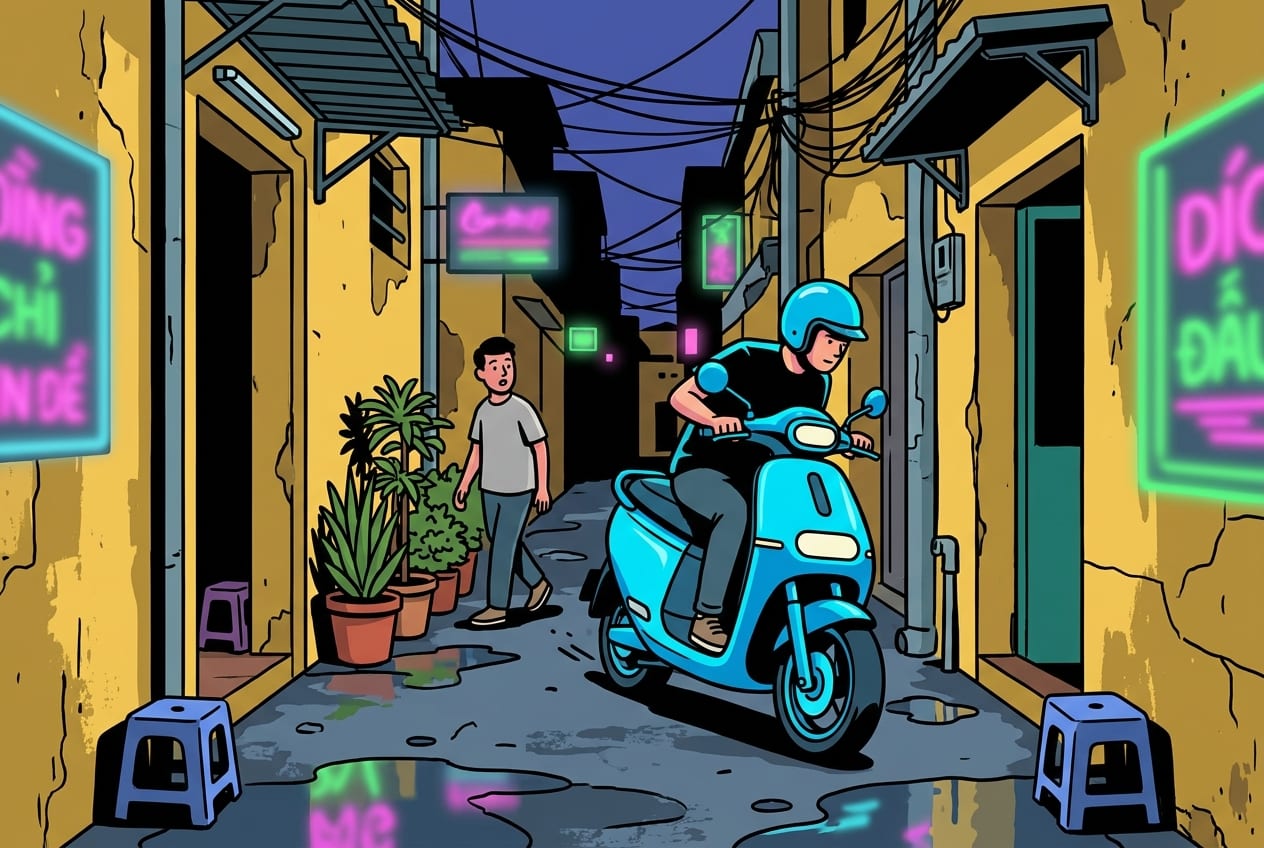
The Quiet Shift: Vietnam’s Electric Awakening
Vietnam's rapid transition to electric vehicles has dramatically quieted its bustling urban alleyways. By replacing loud internal combustion engines with silent electric motors, the nation has significantly reduced noise pollution while introducing a new spatial challenge for pedestrians navigating narrow, high-density neighborhood corridors.
For decades, the standard soundtrack of urban Vietnam was a roaring, petrol-fueled symphony. Millions of internal combustion engines choked the avenues of Hanoi and Ho Chi Minh City, producing a constant, vibrating hum that let you know a vehicle was approaching long before you saw it. Today, that acoustic landscape is undergoing a monumental, green transformation. The streets are rapidly falling silent as the country embraces an ambitious electric vehicle (EV) transition. Leading this charge is the domestic automotive giant VinFast, whose ultra-affordable, boxy VF 3 mini-SUV has taken the country by storm, alongside the ubiquitous, bright cyan-blue electric scooters and taxis operated by Green SM (GSM), VinFast's ride-hailing affiliate. Local startups like Dat Bike, with their sleek Weaver series, are also putting thousands of silent electric motorbikes on the asphalt.
This massive wave of green transport has migrated off the wide, multi-lane boulevards and deep into the residential heart of Vietnam’s cities. The transition is highly visible; according to a report by Reuters, the rollout of affordable mini-EVs like the VF 3 has democratized car ownership, bringing four-wheeled vehicles into neighborhoods where only two-wheelers once ruled. However, this shift presents a unique challenge for visitors. Navigating these transformed spaces requires an updated approach to personal safety, making a modern Vietnam street safety guide essential for anyone looking to explore the country's historic urban centers without getting caught off guard by a silent vehicle.
The Soundscape of the Hẻm: Why Silence is a Modern Hazard
The acoustic signature of Vietnamese alleys historically served as an organic early warning system for residents and pedestrians. The sudden absence of engine noise from oncoming electric scooters disrupts this traditional sensory feedback loop, making visual awareness and proactive scanning essential for modern street safety.
To understand why silent EVs pose a safety hazard, one must understand the unique cultural ecosystem of the Vietnamese alleyway—known as a ngõ in Hanoi and a hẻm in Ho Chi Minh City. These narrow passages, often measuring less than two meters wide, are far more than mere transit routes. They are vibrant extensions of the local living room. On any given day, you will find children playing tag, elderly neighbors gossiping on low plastic stools, street vendors frying up savory snacks, and residents keeping their front doors wide open to catch a breeze. For generations, this entire social choreography relied on sound. The distinct rattle of a Honda Wave or the deep rumble of an old Vespa served as an acoustic beacon, signaling to everyone in the alley to take a step back, pull in a drying rack, or grab a wandering toddler.
The rapid influx of silent electric scooters has completely disrupted this sensory ecosystem. Now, a vehicle weighing over a hundred kilograms can glide up behind a pedestrian completely undetected, relying only on the faint friction of rubber tires on wet asphalt. To adapt, a new social etiquette has emerged among local riders. Motorcyclists now use a gentle, double-tap "chirp" of their horn when approaching blind corners or passing pedestrians. This is not an act of aggression or impatience; rather, it is a polite acoustic warning designed to replace the missing engine noise. Understanding this subtle shift in communication is a vital part of adapting to local life, much like learning how to cross the street or finding the right platform when figuring out Where is the 'Ga'? during your travels.
Your Survival Blueprint: Four Golden Rules for the Silent Lanes
Navigating Vietnam's quiet alleys safely requires travelers to actively adapt their habits by eliminating auditory distractions and utilizing visual aids. Key strategies include avoiding noise-canceling headphones, pausing at doorways, checking corner-mounted convex mirrors, and walking in a single-file line close to the walls.
Exploring Vietnam's alleyways is one of the most rewarding cultural experiences a traveler can have, but it demands an active adjustment to your daily habits. First and foremost, you must ditch the active noise-canceling (ANC) headphones. While it might be tempting to block out the urban sensory overload with your favorite playlist, doing so in a hẻm or ngõ strips away your primary line of defense. You need your ears completely unobstructed to listen for the subtle, high-pitched whine of an electric motor or the polite, double-chirp of an approaching scooter's horn.
Second, adopt the "doorway pause." When exiting a cafe, homestay, or shop directly into an alley, never step straight out onto the path. Instead, pause at the threshold, look both ways, and ensure the coast is clear. Do not assume the path is empty simply because you do not hear an engine. Third, make use of the visual aids installed throughout the neighborhoods. Look up at tight intersections; local wards and property owners frequently mount stainless steel convex mirrors on blind corners. These mirrors are invaluable for spotting oncoming, silent scooters before they turn the corner. Finally, always walk in a single-file line and keep to the right. By leaving a clear lane on the left, you allow silent two-wheelers to pass you safely without forcing them to make sudden, dangerous maneuvers to avoid your group.
The Visual Aesthetic of the 2026 Green Alleyway
The visual landscape of modern Vietnamese alleys is a striking juxtaposition of historic architecture and clean-energy infrastructure. Weathered ochre-yellow walls and tangled overhead cables now frame bright cyan-blue electric scooters, pastel-colored mini-EVs, and newly installed, wall-mounted charging stations.
The visual transition accompanying this green revolution is nothing short of spectacular. The historic, weathered ochre-yellow plaster walls, mossy green brickwork, and classic red-tiled roofs that define traditional Vietnamese alleys are now punctuated by a burst of futuristic colors. The most prominent of these is the vibrant, electric cyan-blue of the GSM taxi and scooter fleets. These bright vehicles stand out vividly against the dark, wet asphalt, especially at dusk when the neon signs of local noodle shops begin to glow. Alongside them, you will see the pastel yellows, mint greens, and soft pinks of parked VinFast VF 3s, squeezed tightly against old concrete walls next to rows of red plastic stools.
Overhead, the iconic, chaotic canopy of black electrical and telecommunication cables remains, but it is now interspersed with newly installed, glowing white EV charging boxes. These chargers are often mounted directly onto old concrete pillars, with heavy cords snaking down to charge parked scooters. The human element adds even more color to this scene. Locals zip past wearing floral-patterned, UV-shielding hoodies (áo chống nắng) or bright, translucent plastic rain ponchos during sudden downpours, while delivery riders in green Grab or teal GSM jackets navigate the narrow pathways on silent Selex Motors delivery bikes, carrying swappable gray battery packs. It is a beautiful, chaotic blend of old-world charm and cutting-edge, green technology.
Do
- Listen carefully for the polite double-chirp of scooter horns at blind intersections.
- Keep your group in a single-file line close to the right-hand walls of the alley.
- Use corner-mounted convex mirrors to spot quiet electric vehicles before they turn.
- Pause and look both ways before stepping out of any doorway directly into an alley.
Don't
- Wear active noise-canceling headphones or earbuds while walking through narrow alleys.
- Make sudden, unpredictable sideways steps without looking behind you first.
- Assume an alleyway is clear or empty just because you cannot hear any engine noise.
- Block the center of the lane when stopping to take photos of the colorful street scenes.
Adapting to the New Flow of Vietnamese Street Life
Adapting to Vietnam's modern street flow means embracing a shared, fluid sense of space where pedestrians and silent vehicles constantly negotiate right-of-way. Rather than expecting vehicles to stop, walkers must maintain predictable movement patterns to allow electric riders to safely navigate around them.
Surviving and thriving in Vietnam's silent EV revolution ultimately comes down to understanding the local mindset regarding traffic and shared space. In Western countries, traffic rules are rigid, and pedestrians generally expect vehicles to stop for them at designated crossings. In Vietnam, traffic functions more like a liquid. It is a continuous, flowing stream where drivers and pedestrians constantly negotiate space in real-time. This fluid motion relies on predictability. When crossing a street or walking down an alley, you must move at a steady, predictable pace, allowing riders to calculate your trajectory and steer smoothly around you. Sudden stops or erratic backward steps are what cause accidents.
This philosophy of fluid movement extends to all forms of public transport and pedestrian life across the country. Whether you are trying to understand local transit etiquette—such as Why Is Everyone Bowing at the Bus Stop?—or navigating a narrow alleyway in District 4, success lies in observation and gradual adaptation. By keeping your senses sharp, respecting the local unspoken rules of space, and embracing the quiet, green future of Vietnam's urban landscape, you can safely enjoy the incredible warmth, color, and culinary wonders hidden within the country's historic labyrinth of alleys.
Why do electric scooter riders in Vietnam double-tap their horns if they aren't angry?
In Vietnam, a quick double-tap of the horn is not an aggressive gesture. Because electric scooters are nearly silent, riders use this gentle 'chirp' as a polite acoustic warning to let pedestrians and other riders know they are approaching, especially around blind alley corners.
How do I safely step out of my alleyway homestay or cafe without getting hit by a silent EV?
Always practice the 'doorway pause.' Before stepping over the threshold of any building directly into an alley, stop completely, look both ways, and check for oncoming vehicles. Never assume the path is clear simply because you do not hear any engine noise.
Can a boxy VinFast VF 3 actually fit down a narrow 1.5-meter-wide hẻm?
While the VinFast VF 3 is incredibly compact, some ultra-narrow alleys are strictly two-wheeler paths. However, in slightly wider alleys, you will frequently see these mini-EVs parked tightly against the ochre-yellow walls, requiring drivers and pedestrians to carefully negotiate passing space.
Practise the words you just read
Vietnamese phrases for real situations, each with native audio in both accents.
Topics
Read more
Other posts from our Vietnamese learning blog.

By Xinchao team
The Cat-and-Mouse Game of Hanoi's Train Street: Your 2026 Survival Guide to Visiting Safely (and Legally)
How do you navigate the guards, barricades, and narrow tracks of Hanoi's Train Street in 2026? Learn the insider rules to visit safely, legally, and respectfully.

By Xinchao team
Midnight at the Cemetery: Why Thousands of Vietnamese Pilgrims Flock to Cô Sáu under the Stars
Discover the deep history, essential etiquette, and practical steps for participating in Côn Đảo's famous midnight pilgrimage to the grave of Cô Sáu.

By Xinchao team
Beyond the Beach: Why You Must Experience Ninh Thuan’s Mystical Cham Kate Festival
Ready to go beyond the beach? Experience Ninh Thuan's mystical Cham Kate Festival at Po Klong Garai. Learn the deep cultural meanings, crucial etiquette, and expert survival tips for expats.