Street Food Etiquette: How to Eat Like a Local on a Plastic Stool
Master the unwritten rules of Vietnamese street food. Learn why we wipe chopsticks, how to share sauces, and the secret to the tiny plastic stools.
The Magic of the Blue Plastic Stool
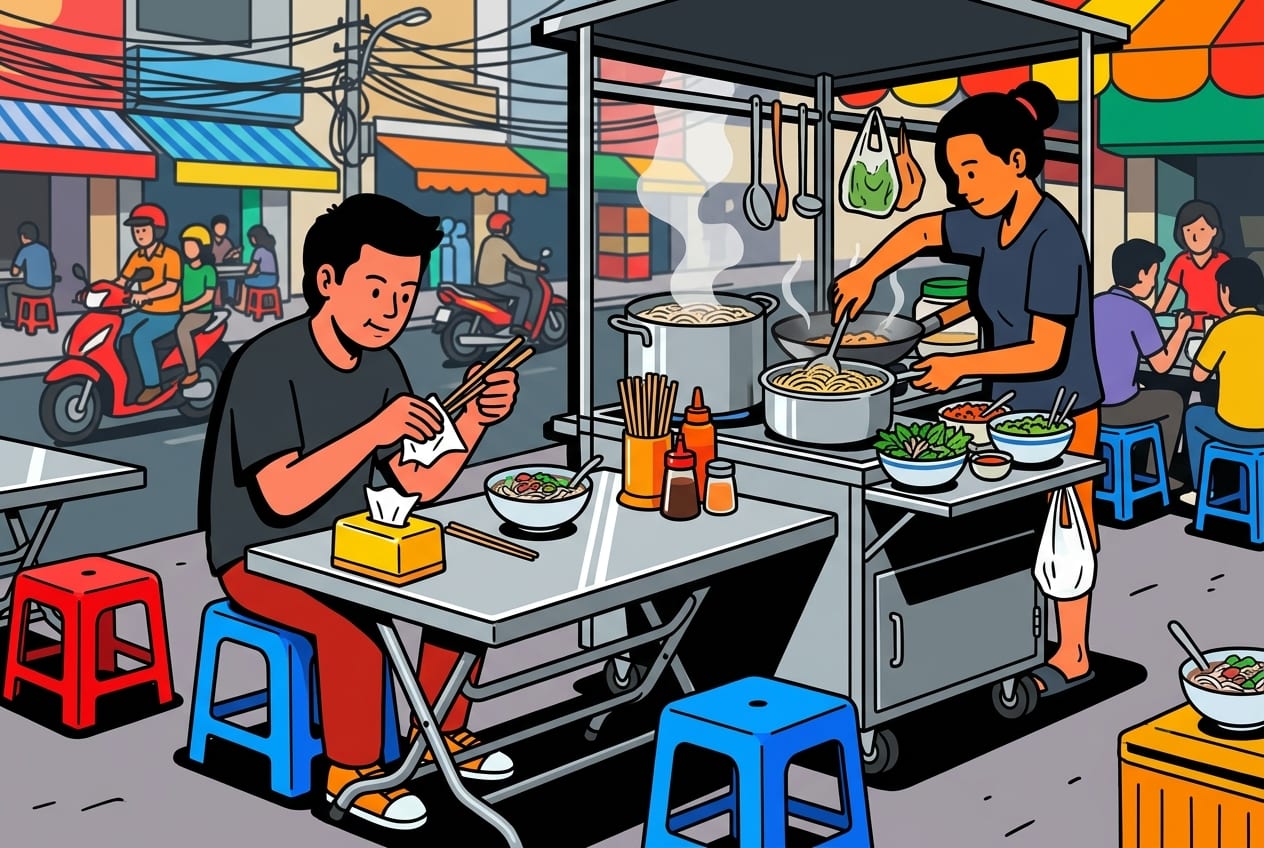
If you walk through any alley in Hanoi or Saigon, you will see a sea of brightly colored plastic stools. For a traveler, these tiny chairs might look like they belong in a kindergarten, but in Vietnam, they are the ultimate symbol of street food culture. Why are they so small? It’s practical! Space on the sidewalk is limited and expensive. These stools allow vendors to fit twenty people in a space that would normally hold five. More importantly, sitting low to the ground creates a sense of equality. Whether you are a wealthy businessman in a suit or a construction worker, everyone sits at the same level to enjoy a bowl of Phở. It is a humble, communal way of eating that brings the whole neighborhood together.
The Chopstick Ritual: Why We Wipe
When you sit down at a stainless steel table, the first thing you will notice is a plastic container filled with paper tissues. You might see a local take a tissue and vigorously wipe their wooden chopsticks and spoon before eating. Don't be offended—they aren't saying the restaurant is dirty! This is a deeply ingrained habit from a time when street food hygiene was less regulated. Today, even though most stalls are very clean, the 'wipe' remains a ritual. It’s a mental transition, a way of preparing yourself for the meal. Some people even use a squeeze of lime juice on the tissue to 'sanitize' the utensils. It’s perfectly polite to do the same; in fact, it makes you look like a seasoned pro who understands the local rhythm.
The Art of the Shared Dipping Sauce
Vietnamese meals are built around 'Nước chấm'—the soul of the dish. On your table, you will often find a large communal bowl of fish sauce or chili paste. In Western culture, 'double-dipping' is often frowned upon, but in Vietnam, sharing is the heart of the family meal. However, there is a polite way to do it. Instead of dipping your half-eaten spring roll back into the big bowl, use the small individual saucer provided. Pour a little bit of the sauce into your own bowl. This respects the 'sharing' culture while keeping things hygienic. If you are eating with locals, you might see them use the 'clean' ends of their chopsticks to pick up food for you. This is a sign of great respect and hospitality, showing they care about your comfort.
Do
- Wipe your spoons and chopsticks with the provided tissues before eating.
- Say 'Mời' (invite) to the older people at the table before you take your first bite.
- Use both hands when receiving a bowl or a drink from the vendor.
- Look for a small trash bin under the table for your used tissues.
Don't
- Never stick your chopsticks upright in a bowl of rice; it looks like incense for the dead.
- Don't be afraid to make a little noise; slurping noodles shows you are enjoying the meal!
- Don't wait for everyone's food to arrive; street food is best eaten while it's steaming hot.
Dealing with the 'Mess'
One thing that shocks new travelers is seeing tissues or lime wedges on the floor under the table. In many traditional street stalls, the floor is the designated 'bin.' Why? Because it keeps the small, crowded tables clear for the food. However, times are changing! Most modern stalls now place small plastic bins under every table. Always check under your stool first. If there is a bin, use it. If there isn't, and you see others dropping tissues, don't worry—the staff sweeps the floor every few minutes to keep the area moving. It’s part of the fast-paced 'street' energy where efficiency is king.
Should I tip the street food vendor?
Tipping is not expected at street stalls. The price on the menu is exactly what you pay. However, if your bill is 48,000 VND and you give them 50,000 VND, it is common and appreciated to say 'keep the change.' It's a small gesture that builds 'face' and friendship with the vendor.
Is it rude if I don't finish everything on my plate?
In Vietnam, finishing your plate is generally a sign that you loved the food. However, if you are full, don't force yourself! Leaving a tiny bit of food can actually signal that the host was very generous and provided more than enough. The most important thing is to try a bit of everything offered.
Finally, when you are ready to leave, don't wait for someone to come to you. Catch the eye of the staff and call out 'Em ơi, tính tiền!' (pronounced 'em oy, tinh tien'). In Vietnam, being loud enough to be heard isn't rude; it's considered being clear and direct. Paying is usually done at the table or at a small desk near the front. Once you’ve paid, stand up, give a quick nod of thanks, and make room for the next person waiting for that coveted plastic stool. You've officially mastered the art of the Vietnamese sidewalk!
Hear these phrases
Each one is recorded in both the northern and southern accent.
Topics
Read more
Other posts from our Vietnamese learning blog.
By Xinchao team
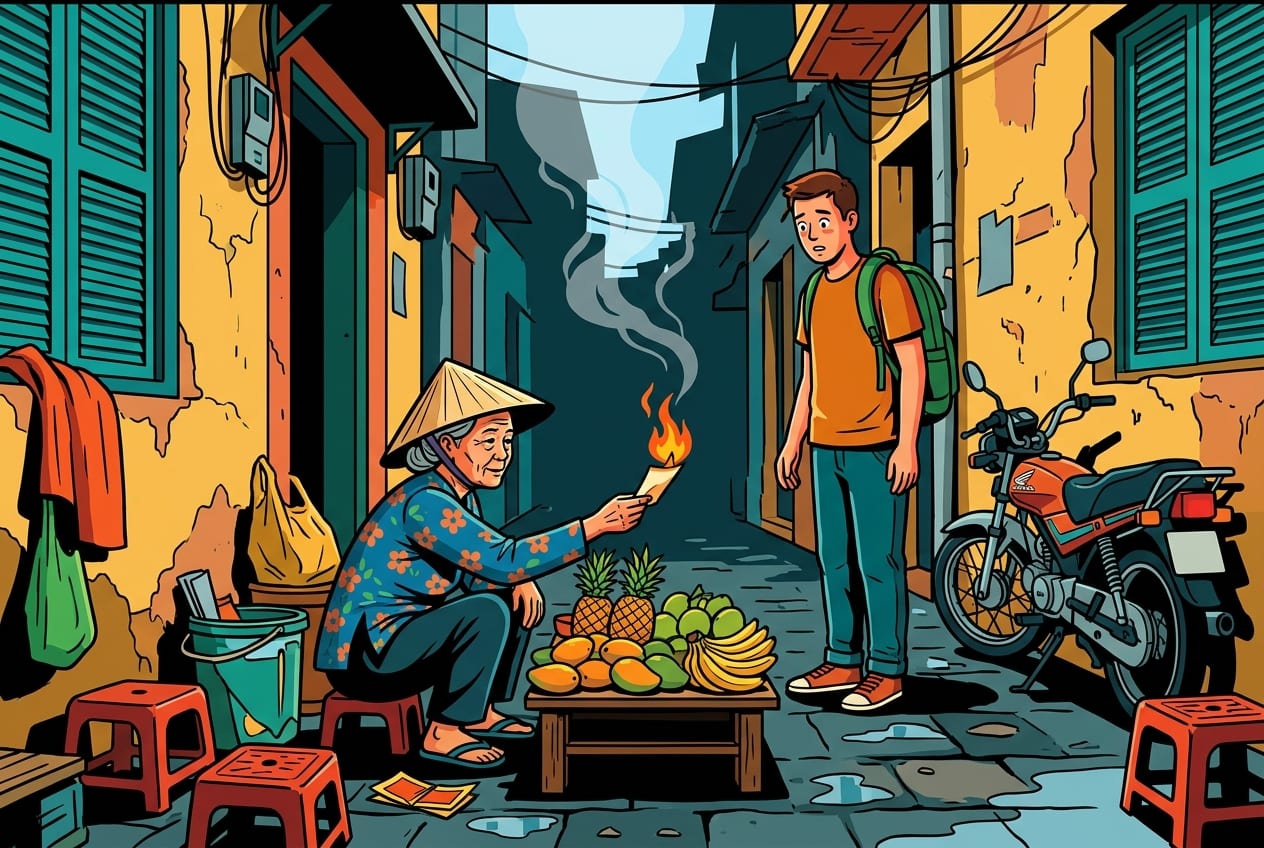
Don't Be the First Customer! An Expat’s Guide to Vietnam's Sacred Morning Rituals of 'Mở Hàng' and 'Đốt Vía'
Ever wondered why a Vietnamese street vendor looked terrified when you asked for a price early in the morning? Welcome to the delicate, sacred rituals of Mở Hàng and Đốt Vía.
By Xinchao team
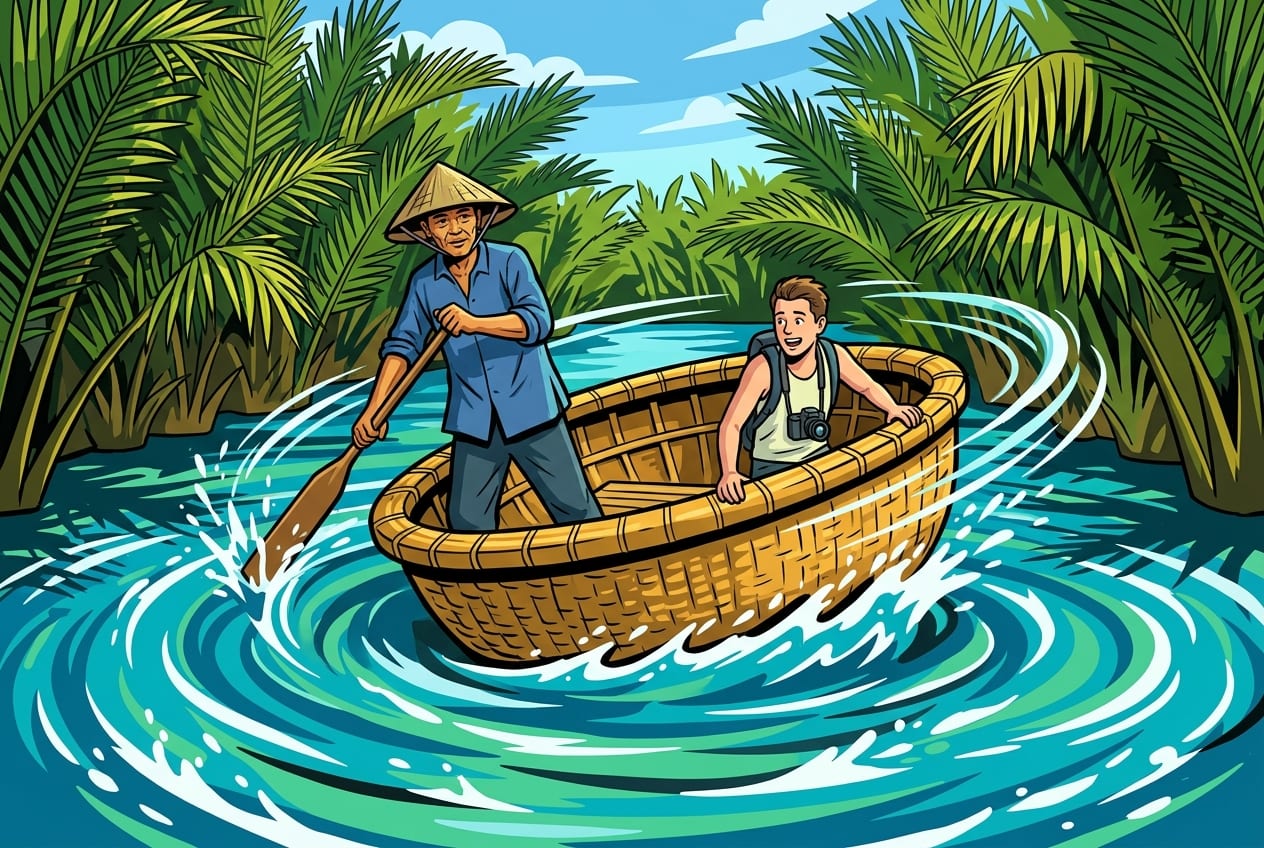
Survival of the Spinnest: Your Expat Guide to Navigating Hoi An’s Dizzying Basket Boat Culture
Get ready to spin! Dive into the history, pricing, and survival tips for navigating Hoi An's iconic basket boats in Cam Thanh Coconut Forest.
By Xinchao team
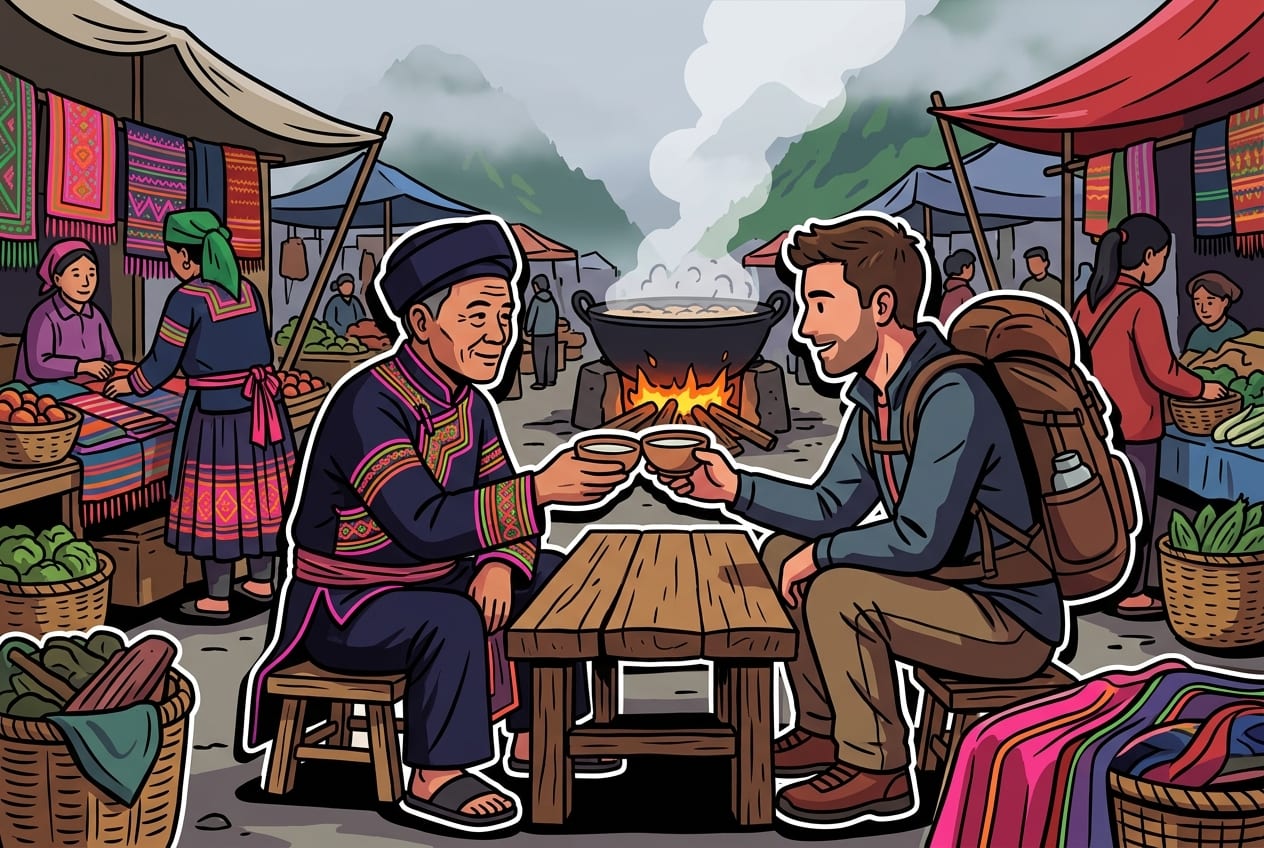
A Bowl of Corn Wine and a Handshake: Your Expat Survival Guide to Highland Market Etiquette in Ha Giang
Ready to brave the legendary Sunday markets of Ha Giang? Discover the essential rules of highland etiquette, from sharing a bowl of fiery corn wine to mastering the physical handshake ritual.