Street Food Secrets: Why the Best Food is Hidden in Alleys
Discover why Vietnam's best flavors are found in narrow alleys. Learn the cultural secrets of street food, from plastic stools to shared dipping sauces.
The Magic of the Vietnamese 'Hẻm'
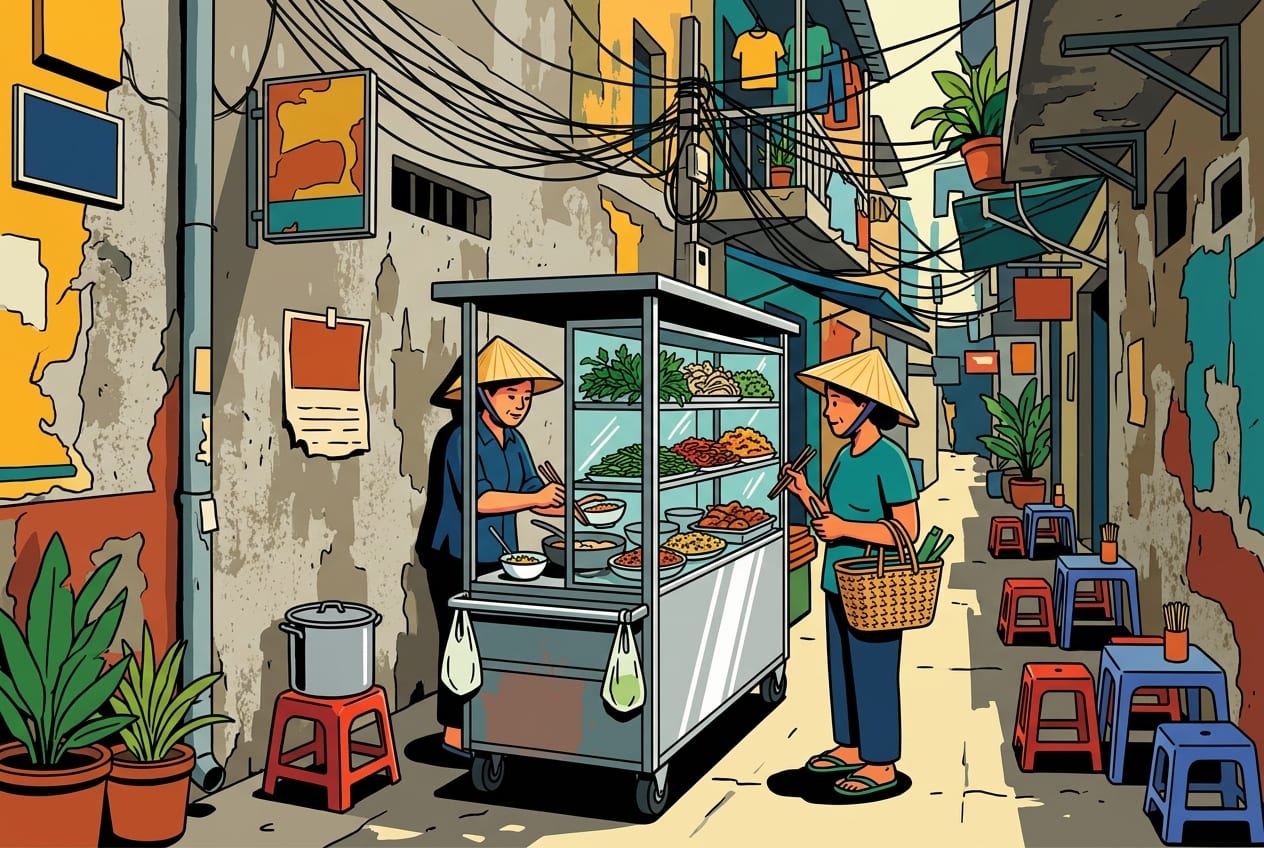
If you are walking down a main street in Saigon or Hanoi and see a narrow, sun-dappled alleyway, don't be afraid to turn inside. In Vietnam, we call these alleys 'hẻm.' They are the veins of the city, where life happens away from the loud motorbikes and tourist shops. You will see weathered concrete walls, a tangle of overhead electrical wires, and most importantly, the smell of sizzling pork or simmering broth. This is where the real food lives.
Why do locals hide their best food in these tight spaces? It is simple: community and tradition. Many of these vendors have been standing in the same spot for 30 years. They don't need a big sign on a main road because everyone in the neighborhood knows their 'bún chả' or 'cơm tấm' is the best. By setting up in an alley, they keep their costs low, which means they can spend more money on high-quality herbs and fresh meat. When you eat here, you aren't just a customer; you are a guest in their neighborhood.
The Stainless Steel Cart: A Kitchen on Wheels
At the center of this scene, you will usually find a stainless steel food cart. Look closely at the glass display case. It is like a map of the meal you are about to eat. You will see piles of bright green mint, Thai basil, and coriander, alongside colorful pickled carrots and daikon. In Vietnamese culture, we believe food must have 'balance.' The heavy, savory flavors of meat must be balanced by the 'cool' crunch of fresh vegetables. If you see a cart with overflowing herbs, you know the cook takes pride in their balance.
You might also notice the small blue or red plastic stools scattered around. Sitting just six inches off the ground might feel strange at first, but there is a reason for it. Sitting low makes everyone equal. Whether you are a businessman in a suit or a construction worker, you are all sitting at the same level, sharing the same space. It creates a sense of 'bình dân'—a word that means 'for the common people.' It is informal, fast, and incredibly social.
Do
- Wipe your chopsticks and spoon with a tissue before eating; it is a common local habit.
- Look for places where the locals are crowded together; high turnover means the food is fresh.
- Feel free to ask for extra herbs (rau thêm)—most places provide them for free.
Don't
- Don't leave your wooden chopsticks sticking straight up in a bowl of rice; it looks like incense for the dead.
- Don't worry about the napkins on the floor; in many street spots, the floor is cleaned at the end of the shift, not during.
- Don't be shy about sharing a table with strangers; it is the standard way to eat in a busy hẻm.
The Ritual of the Table
When your food arrives, you will notice a tray of condiments: chili paste, lime wedges, fish sauce, and garlic vinegar. This is because Vietnamese food is 'customizable.' The cook provides the base, but you are the artist. We don't find it rude if you add five spoons of chili; we find it a sign that you are enjoying the process of making the flavor perfect for your own palate. Another secret? The dipping sauce. Often, a small bowl of 'nước chấm' is shared. Dipping from the same bowl is a sign of connection and family style eating, even if you just met your table mates.
Is it safe to eat food from a cart in an alley?
Generally, yes! Look for 'high turnover'—places where the food is cooked right in front of you and there are many local customers. Because these vendors rely on their neighbors, they cannot afford to make anyone sick, or they would lose their business overnight.
Should I tip the street food vendor?
Tipping is not expected at street food stalls. In fact, if you leave extra money, the owner might chase you down the street thinking you forgot your change! If you want to show appreciation, a big smile and saying 'Cảm ơn' (Thank you) is the best way.
How do I pay if there is no menu?
Most street stalls have a very limited menu (often just one dish). You can point to what others are eating. When you are finished, catch the eye of the server and say 'Tính tiền' (Calculate the money). They will usually tell you the price or show it to you on their fingers or a calculator.
Next time you see a dark alleyway with a flickering light and the sound of laughter, take the turn. You might find the best bowl of noodles of your life, served on a tiny red stool, surrounded by the heartbeat of the city. That is the true Vietnamese street food experience.
Hear these phrases
Each one is recorded in both the northern and southern accent.
Topics
Read more
Other posts from our Vietnamese learning blog.
By Xinchao team
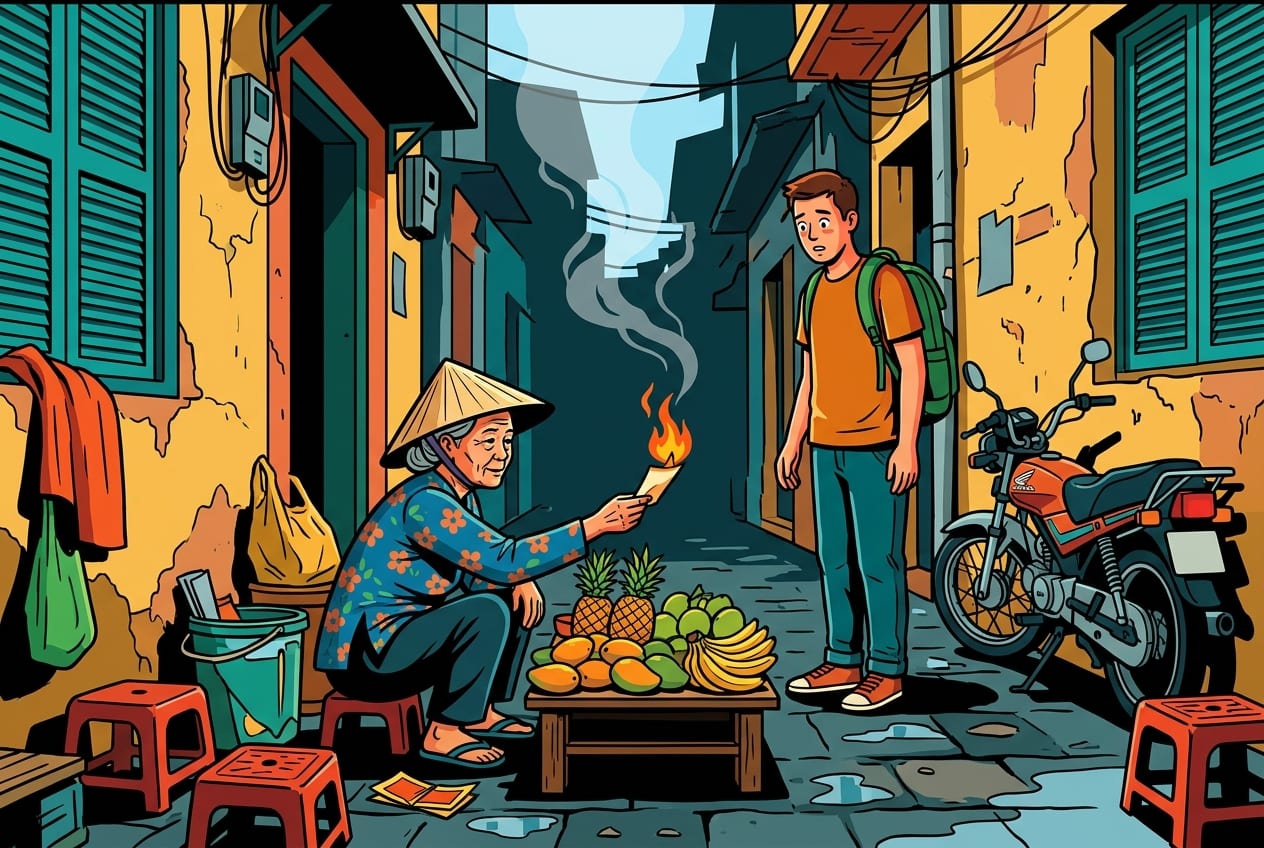
Don't Be the First Customer! An Expat’s Guide to Vietnam's Sacred Morning Rituals of 'Mở Hàng' and 'Đốt Vía'
Ever wondered why a Vietnamese street vendor looked terrified when you asked for a price early in the morning? Welcome to the delicate, sacred rituals of Mở Hàng and Đốt Vía.

By Xinchao team
Survival of the Spinnest: Your Expat Guide to Navigating Hoi An’s Dizzying Basket Boat Culture
Get ready to spin! Dive into the history, pricing, and survival tips for navigating Hoi An's iconic basket boats in Cam Thanh Coconut Forest.
By Xinchao team
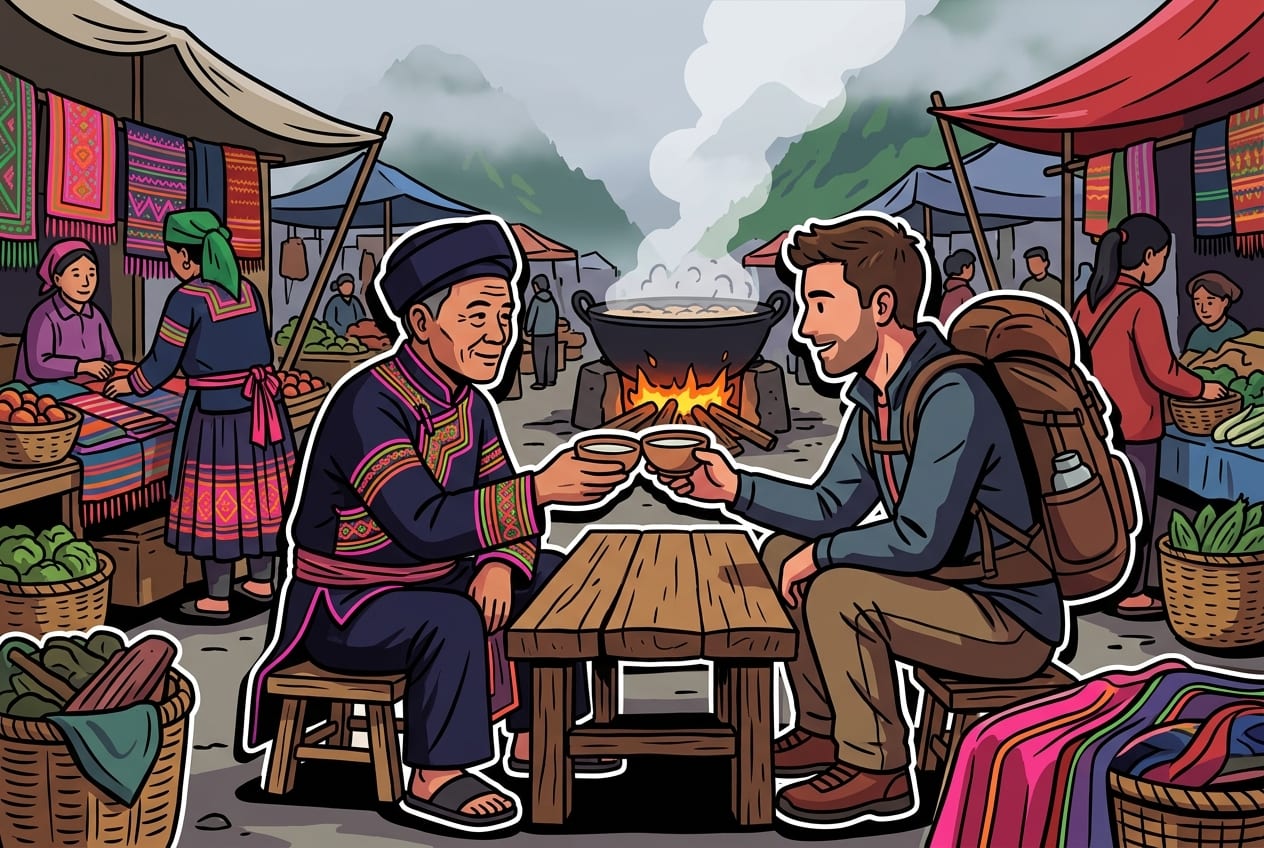
A Bowl of Corn Wine and a Handshake: Your Expat Survival Guide to Highland Market Etiquette in Ha Giang
Ready to brave the legendary Sunday markets of Ha Giang? Discover the essential rules of highland etiquette, from sharing a bowl of fiery corn wine to mastering the physical handshake ritual.