Red, White, or Blue? How Not to Dress Like a Ghost at a Vietnamese Wedding
Navigating the vibrant world of Vietnamese weddings can be tricky for first-timers. From avoiding funeral colors to mastering the 'Ao Dai' look, here is how to dress for success.
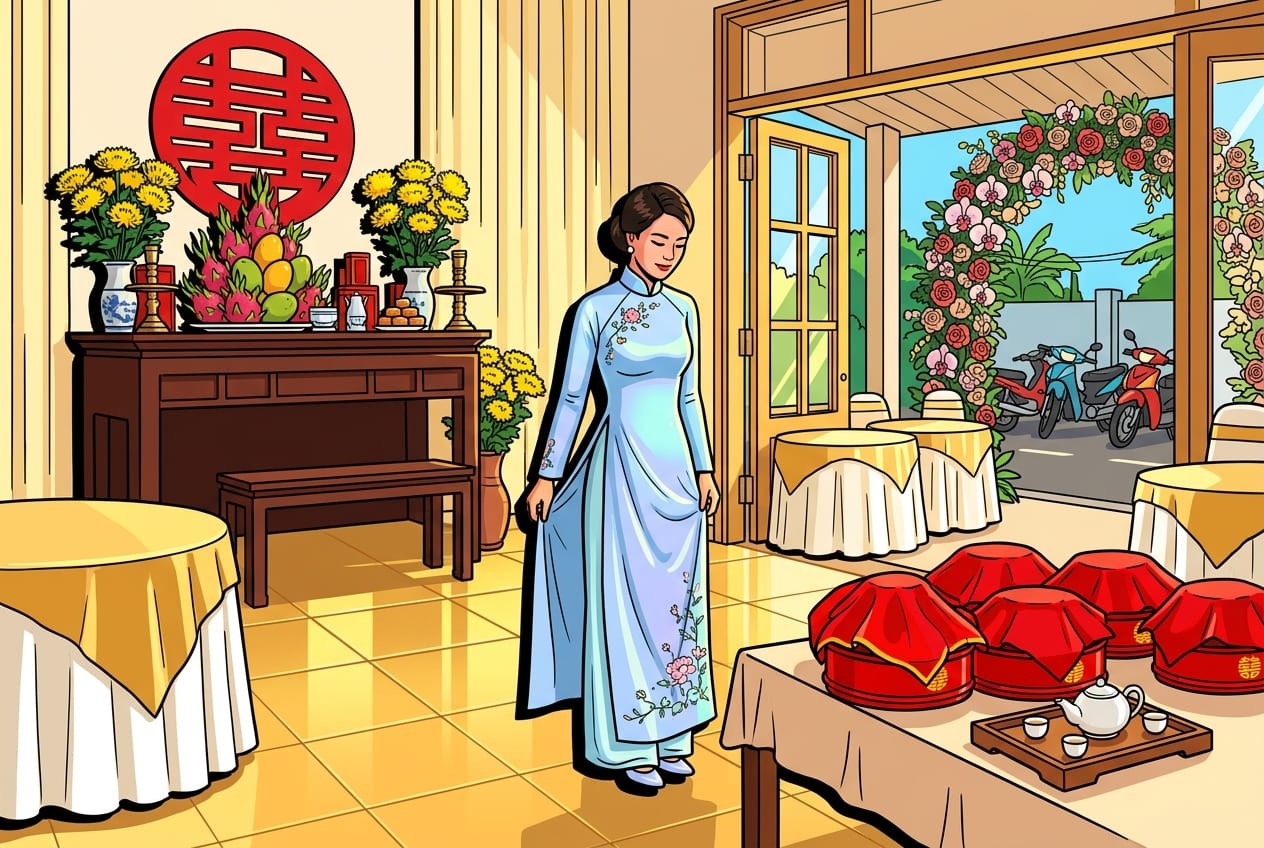
The Color Code: Why Black and White are Risky
Guests should avoid all-black or all-white outfits because these colors traditionally represent mourning and funerals in Vietnamese culture. While modern urban weddings are becoming more flexible, wearing bright, cheerful colors like pink, blue, or yellow signifies respect and brings good luck to the couple according to traditional Vietnamese customs.
In the West, wearing white to a wedding is a faux pas because you don't want to upstage the bride. In Vietnam, the logic is slightly different but leads to a similar result. White is the color of death. If you show up in a head-to-toe white dress or suit, you aren't just 'competing' with the bride; you are bringing a 'cold' or 'unlucky' energy to a 'hot' and vibrant celebration. Similarly, black is associated with 'đám tang' (funerals). While a black suit jacket for men is generally accepted if paired with a bright tie or shirt, women should steer clear of the 'little black dress' that is so popular in European or American weddings.
What about red? Red is the ultimate color of luck and prosperity in Vietnam. However, because it is so lucky, it is usually reserved for the bride and groom during the morning ceremony. If you wear a bright, fire-engine red outfit, you might accidentally look like you're trying to be the star of the show. To stay safe, think of a 'spring palette.' Pastels, floral patterns, soft blues, creams (if patterned), and gold are all excellent choices that signal your joy for the couple's new chapter.
Formality Levels: From the Living Room to the Ballroom
Vietnamese weddings often split into an intimate morning ceremony at home and a large evening banquet at a restaurant. Attire for the morning is conservative and respectful, often involving long sleeves or traditional dress, while evening receptions allow for semi-formal cocktail attire as guests prepare for multiple rounds of 'Một, hai, ba, dô!' toasts.
If you are invited to the morning 'Lễ Rước Dâu' (the procession to fetch the bride), you are entering a family’s private sanctuary. You will likely stand in a small living room packed with relatives, smelling incense from the ancestral altar. This is the time for your most 'polite' outfit. Avoid anything too short, low-cut, or casual. If you aren't sure what to expect, check out our Vietnamese wedding etiquette survival guide for a breakdown of the ceremony flow.
The evening banquet is a different beast entirely. This is often held in a 'Nhà hàng tiệc cưới' (wedding restaurant) with hundreds of guests. The lighting is bright, the music is loud, and the beer flows freely. For this part of the day, men can wear a nice button-down shirt with slacks (a tie is optional but appreciated), and women can wear cocktail dresses or elegant jumpsuits. It is less about 'solemnity' and more about 'vui' (fun).
Can I Wear an Ao Dai as a Foreigner?
Wearing an Ao Dai as a foreign guest is generally viewed as a high compliment and a gesture of cultural appreciation rather than appropriation. Most Vietnamese hosts are delighted to see international friends embracing their national costume, provided the garment is worn modestly and fits correctly, avoiding overly sheer fabrics or disrespectful styling in formal settings.
If you decide to go the traditional route, remember that the Ao Dai is a two-piece garment consisting of a long tunic and wide-legged silk trousers. It is meant to be elegant and figure-hugging, but not revealing. For a wedding, choose a silk or lace version in a soft color. Foreigners in Ao Dais are often the biggest hit at the wedding, and you will likely be asked for dozens of photos by the 'Cô' and 'Chú' (aunts and uncles) of the family. It’s a great way to break the ice!
The Morning Tea Ceremony: Traditional and Conservative
The morning ceremony, or 'Lễ Đính Hôn/Rước Dâu,' is a sacred ritual performed in front of the ancestral altar to inform ancestors of the new union. Because this takes place in a family home, guests should prioritize modesty, ensuring shoulders and knees are covered to show respect to the elders and the spiritual significance of the space.
During this ceremony, you might see the 'Mâm Quả'—bright red tin baskets containing gifts like betel leaves, tea, and fruit. The atmosphere is a mix of serious ritual and family chatter. Because you will be standing in a crowded house, often with limited air conditioning, choose breathable fabrics like linen or thin silk. You want to look sharp without fainting from the tropical heat. According to Vietnam's official tourism portal, these rituals are the backbone of Vietnamese social fabric, so looking the part is a sign of deep respect.
Footwear Faux Pas: To Shoe or Not to Shoe?
Footwear etiquette in Vietnam depends entirely on the location; you must remove shoes before entering a private home for the morning ceremony, but can keep them on at a hotel or restaurant banquet. Foreigners should choose shoes that are easy to slip on and off, as fumbling with complex laces at a crowded doorway can cause a minor social bottleneck.
If the wedding is in a rural area or a traditional 'nhà ống' (tube house), you will see a mountain of sandals at the front door. Pro tip: Wear nice socks! You don't want to reveal a hole in your sock when you step onto the polished wooden floor of the living room. For the evening banquet, however, feel free to wear your best heels or dress shoes. Just be prepared for the fact that you might be doing a lot of walking between tables to 'chào bàn' (greet the tables) with the hosts.
Do
- Wear bright, happy colors like pink, blue, or gold.
- Dress modestly for the morning tea ceremony at the family home.
- Consider wearing an Ao Dai to show cultural appreciation.
- Wear shoes that are easy to slip off for home visits.
Don't
- Avoid all-black or all-white outfits (associated with funerals).
- Don't wear bright red, as you might upstage the bride.
- Avoid overly casual clothes like shorts or flip-flops, even in hot weather.
- Don't forget to bring a 'lì xì' (lucky money envelope) as your gift.
Final Tips for the Evening Banquet
The evening banquet is the primary social event where guests celebrate the union with a multi-course meal and communal drinking. While the dress code is slightly more relaxed than the morning ceremony, it remains a 'face-giving' event where your appearance reflects your respect for the host's social standing and the importance of the occasion.
Expect a lot of noise! In many venues, there will be a stage with a live band or karaoke. If you are wearing a suit, you might find yourself taking the jacket off halfway through the night as the '1, 2, 3, Dô!' cheers heat up the room. It is perfectly acceptable to loosen up as the night progresses, but always start the evening looking your best. As a foreigner, you are a 'special guest,' and your effort to dress up will be noticed and appreciated by the couple's parents.
Is it okay to wear a suit with a white shirt?
Yes, absolutely! A white shirt under a suit jacket is perfectly fine. The 'no white' rule mainly applies to wearing a full white dress or an all-white suit, which can look like funeral attire or compete with the bride's Western-style wedding dress.
What if the wedding is held in a tent on the street?
In rural areas or certain neighborhoods, weddings are held in large red tents ('rạp') on the street. Even though it's outdoors, it is still a formal event. Avoid shorts or t-shirts; opt for a polo shirt with nice trousers or a simple sundress.
Can I wear jeans if I'm just a 'plus one'?
It is generally discouraged. Vietnamese people take weddings very seriously as a 'face' event. Even if you don't know the couple well, wearing jeans might make it look like you don't value the invitation. Slacks or chinos are a much safer bet.
Hear these phrases
Each one is recorded in both the northern and southern accent.
Topics
Read more
Other posts from our Vietnamese learning blog.
By Xinchao team
The Red Envelope Dilemma: How Much Cash Should You Actually Give at a Vietnamese Wedding?
How much cash goes in a Vietnamese wedding envelope? From city banquets to rural feasts, we break down the 2026 rates so you can celebrate with confidence.
By Xinchao team
The 'Em Ơi' Minefield: Your Expat Survival Guide to Addressing Anyone on the Vietnamese Street (Without Causing an Accidental Crisis)
Think 'Em ơi' is a magic pass to get any waiter's attention? Think again. Dive into the complex, rewarding world of Vietnamese pronoun etiquette and learn how to navigate the streets like a seasoned expat.
By Xinchao team
Sweet Sâm or Face-Melting Đắng? Your Expat Survival Guide to Cholon’s Ancient Herbal Tea Culture
Discover Saigon's ancient herbal tea culture in Cholon. Learn how to order sweet nước sâm and survive face-melting nước đắng with this expat survival guide.