Sweet Sâm or Face-Melting Đắng? Your Expat Survival Guide to Cholon’s Ancient Herbal Tea Culture
Step into District 5's sensory time machine to explore the yin-yang world of traditional herbal teas, where a 10,000 VND glass cures Saigonese heat.
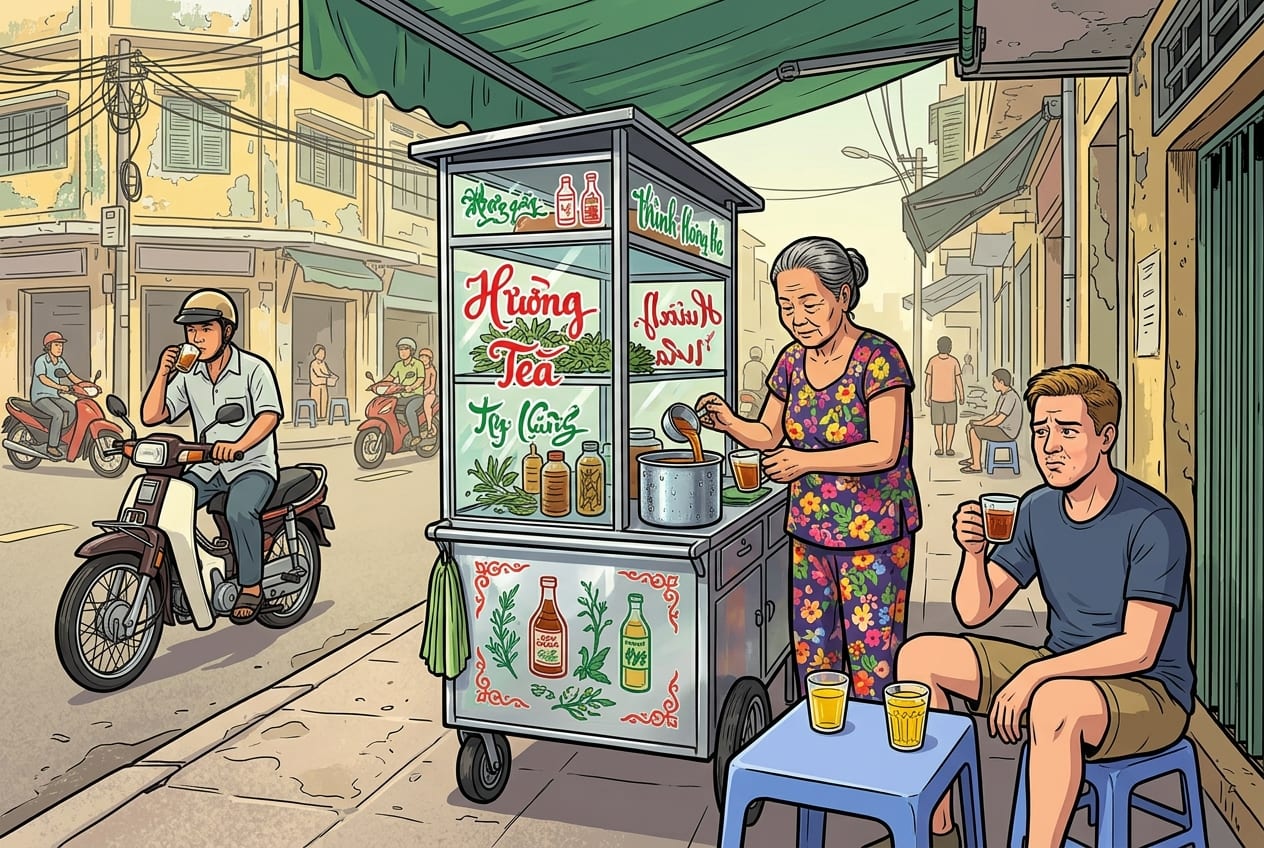
Step off the humid sidewalks of Ho Chi Minh City's District 5, and the heavy air immediately changes. It carries the rich, earthy aromas of dried star anise, licorice root, and ginseng wafting from the historic storefronts of Hải Thượng Lãn Ông street. Welcome to Cholon, Saigon’s vibrant Chinatown, where centuries-old traditions dictate how locals stay cool. If you are an expat trying to survive the oppressive, tropical heat, you need to look past modern convenience store energy drinks. Instead, pull up a plastic stool or keep your motorbike engine idling at a curbside apothecary cart. Here, the ultimate local defense system is served in a vintage glass: traditional herbal tea.
The Yin-Yang of Saigon’s Street-Side Apothecary
Saigon’s street-side herbal tea culture balances the body’s internal heat (nóng trong người) through traditional yin-yang medicine. By drinking sweet nước sâm (yin) or bitter nước đắng (yang-reducing), locals combat tropical humidity and dietary imbalances at rapid, curbside motorbike stalls.
To understand why locals crowd around these metallic carts, you must understand the concept of "nóng trong người" (internal heat). In Vietnamese culture, health is a delicate balancing act of hot and cold forces, heavily influenced by traditional medicine concepts. When you indulge in too many fried foods, suffer through sleepless nights, or spend hours under the brutal Saigon sun, your body accumulates excess "yang" or internal heat. This manifest as fatigue, skin breakouts, or general irritability.
While Westerners might reach for an iced soda, Saigonese pull over to the nearest curbside cart to restore their "yin." This is not a slow, meditative tea ceremony. It is a rapid, democratic daily ritual. Office workers, delivery drivers, and grandmothers pull up on their motorbikes, down a cold glass in under two minutes with their helmets still on, exchange a few small coins, and zoom back into the chaotic stream of traffic. It is a vital part of Saigon's unique culinary landscape, serving as both a social equalizer and a daily wellness check.
Sweet Sâm vs. Face-Melting Đắng: Choose Your Lane
Choosing between sweet nước sâm and bitter nước đắng determines your herbal tea experience. Nước sâm offers an approachable, sweet blend of sugarcane and chrysanthemum, while the intensely bitter nước đắng uses up to twenty-four medicinal herbs to detoxify the liver.
The herbal tea world of Cholon is divided into two distinct, uncompromising camps. On one side is Nước Sâm (sweet herbal tea). This is the crowd-pleaser. Brewed from a harmonious blend of sugarcane, nettle, chrysanthemum, and sometimes seaweed or grass jelly, it is light, naturally sweet, and incredibly refreshing. It gently coaxes the internal heat out of your system, leaving a pleasant, floral aftertaste. If you are new to the city, this is your perfect gateway drink.
On the opposite end of the spectrum lies Nước Đắng (literally "bitter water"). This is not a casual beverage; it is a medicinal punch to the throat. Brewed from up to 24 different traditional herbs—including prunella vulgaris (self-heal spike) and bitter melon—this dark, ink-like liquid is designed to aggressively detoxify the liver and purge internal heat. It is intensely, unapologetically bitter. Drinking it is a test of mettle, but locals swear by its near-miraculous ability to cure hangovers, clear up bad skin, and reset your body after a week of heavy eating.
Cholon’s Trending Tea Spots and Prices
The best traditional herbal tea spots in Cholon range from historic, viral retro hubs like Sâm Hữu Duyên to high-volume street carts. Prices remain incredibly affordable, averaging between 10,000 VND and 16,000 VND per glass or bottle, making healthy hydration accessible to everyone.
While you can find herbal tea carts on almost every street corner in Ho Chi Minh City, Cholon remains the undisputed capital of authentic brewing. Recently, a major trend has seen historic family stalls transform into retro cultural hubs, drawing younger generations back to these ancient brews.
One of the most famous spots is Sâm Hữu Duyên (800 Nguyễn Trãi, District 5). This stall has become a viral sensation, with young locals and expats dressing in traditional áo dài to take photos against its beautifully preserved 1990s Hong Kong-style facade. Despite the fame, a classic glass of herbal tea here still costs a mere 10,000 VND (approx. $0.40 USD).
Just a few doors down, Thanh Mã Sơn (840 Nguyễn Trãi, District 5) serves its legendary, century-old "turtle plum" herbal tea (nước sâm mai rùa), prized for its deep cooling properties. If you want a purely local, high-volume experience, head to the family-run cart at the corner of Hà Tôn Quyền and Nguyễn Chí Thanh streets. They sell up to 1,000 bottles a day of their rich, proprietary family-recipe sâm for around 14,000 to 16,000 VND ($0.55 - $0.65 USD).
The Expat Survival Guide: How to Order and Survive the Bitter Shot
To survive drinking bitter nước đắng, treat it like a medicinal shot rather than a sipping tea, and immediately follow it with the complimentary sweet chrysanthemum chaser. Keep small change ready for these lightning-fast, drive-by street transactions on the busy curbs of District 5.
Navigating a Cholon herbal tea cart is simple once you understand the unwritten rules of the street. First, you must choose your lane. If you want a refreshing, pleasant drink, point and order "Sâm bông cúc" (sweet chrysanthemum) or "Sâm rong biển" (seaweed-infused sâm). But if you are feeling brave, or desperately need to cure a hangover, look the vendor in the eye and say "Nước đắng."
Here is the crucial survival tip: Do not sip Nước đắng. If you treat it like a fine English tea, the intense, earthy bitterness will coat your tongue, trigger your gag reflex, and leave you grimacing on the sidewalk. Instead, treat it like a shot. Gulp it down in one or two continuous swallows. The vendors are well aware of the shock value of their bitter brew; they will almost always hand you a small, complimentary "chaser" glass of sweet chrysanthemum tea. Drink the bitter shot first, and immediately follow it with the sweet chaser to instantly neutralize the herbal aftertaste. Finally, keep small cash handy—10,000 or 20,000 VND notes are perfect for these lightning-fast transactions.
The Visual Tapestry of a Cholon Tea Cart
A Cholon herbal tea cart is a visual masterpiece of stainless steel, hand-painted glass panels with Chinese calligraphy, and vibrant liquid amber hues. Set against District 5’s historic shophouses, these stalls offer a rich sensory slice of Sino-Vietnamese heritage.
To stand at a Cholon tea stall is to experience a rich, cinematic sensory overload. The dominant colors are striking: the deep, ink-like black of the nước đắng, the vibrant, glowing golden-yellow of the chrysanthemum tea, and the bright, metallic silver of the stainless steel carts. These mobile stalls are instantly recognizable by their hand-painted glass panels, featuring weathered red and green Chinese calligraphy alongside Vietnamese lettering.
The vendors—often older aunties wearing colorful, floral-patterned đồ bộ (traditional cotton loungewear)—scoop the teas from large, condensation-covered metal pots into heavy, vintage glass cups. This entire scene is set against the gritty, atmospheric streetscape of District 5: low-rise shophouses with peeling pastel paint, tangled overhead power lines, and the constant, rhythmic hum of passing motorbikes under the hazy afternoon sun. It is a living piece of Saigon history you can taste for less than fifty cents.
Do
- Do drink the bitter nước đắng quickly like a shot to avoid coating your tastebuds.
- Do use the complimentary sweet chrysanthemum tea as a chaser immediately after drinking bitter tea.
- Do prepare small change (10,000 or 20,000 VND notes) for fast street transactions.
- Do ask for 'mang về' (takeaway) if you want your tea in a convenient plastic bottle for later.
Don't
- Don't sip nước đắng slowly; you will regret the lingering, intense bitterness.
- Don't block the motorbike lane in front of the cart if you plan to sit and drink slowly.
- Don't hesitate to ask the vendor which tea is best for your specific body symptom.
Why do Cholon tea vendors give you two glasses when you order the bitter tea?
They provide a small glass of sweet chrysanthemum tea alongside your bitter nước đắng. This serves as a complimentary 'chaser' to instantly wash away the intense, lingering bitterness from your mouth after you gulp down the medicinal shot.
Can I get these herbal teas hot, or are they always served cold with ice?
While most street-side customers prefer them cold with ice to combat Saigon's intense tropical heat, you can easily ask for 'không đá' (no ice) or ask if they have warm versions, which some traditional shops keep in heated metal dispensers for medicinal purposes.
Is it safe to drink the ice used at these street-side Cholon herbal tea carts?
Yes, almost all established herbal tea carts in District 5 use factory-made tube ice (đá bi), which is safe for consumption. If you have a highly sensitive stomach, you can order a bottled version ('mang về') without ice.
Practise the words you just read
Vietnamese phrases for real situations, each with native audio in both accents.
Topics
Read more
Other posts from our Vietnamese learning blog.
By Xinchao team
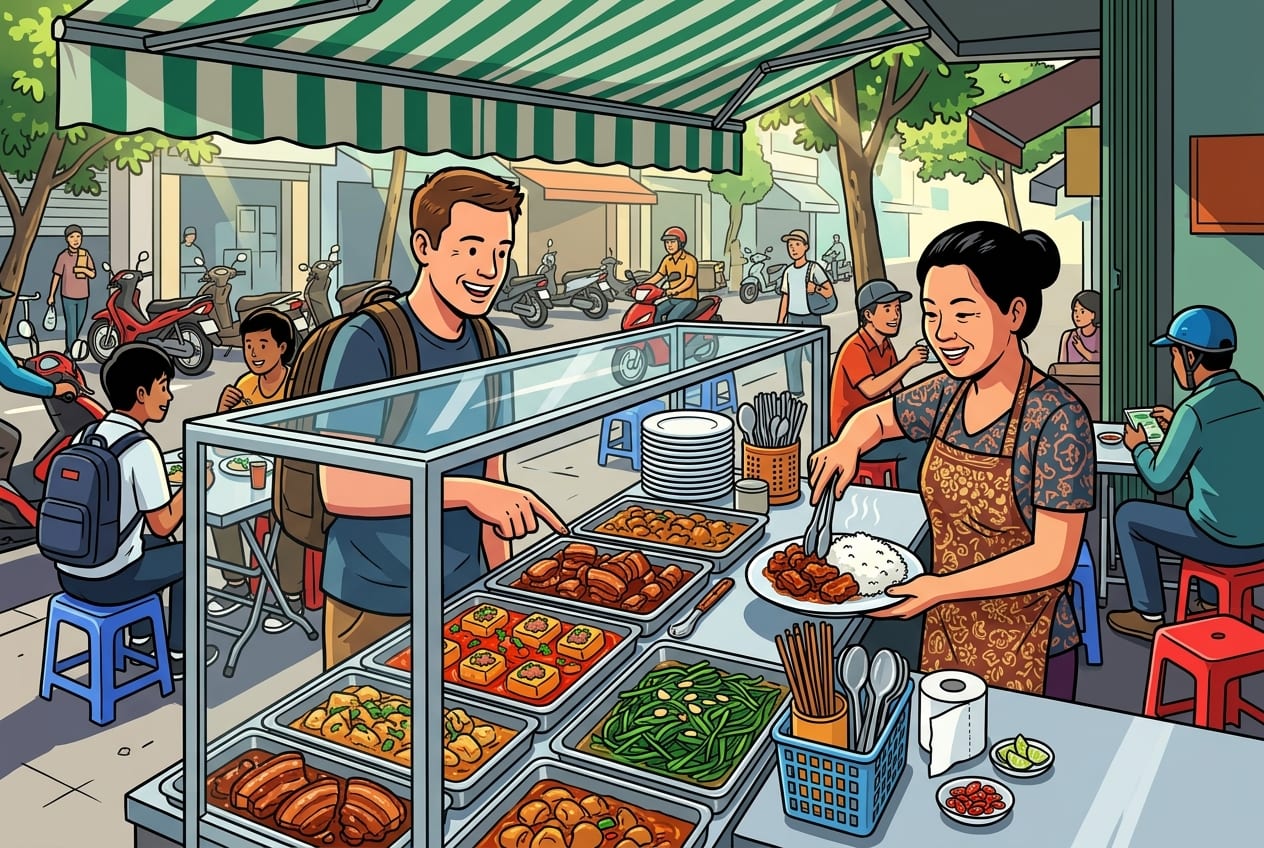
The Point-and-Eat Protocol: Your Expat Survival Guide to Vietnam's 'Cơm Bình Dân' Buffet Trays
Demystify Vietnam's legendary 'commoner's rice' stalls. Learn the step-by-step point-and-eat protocol, discover must-try dishes, and master sidewalk etiquette.
By Xinchao team
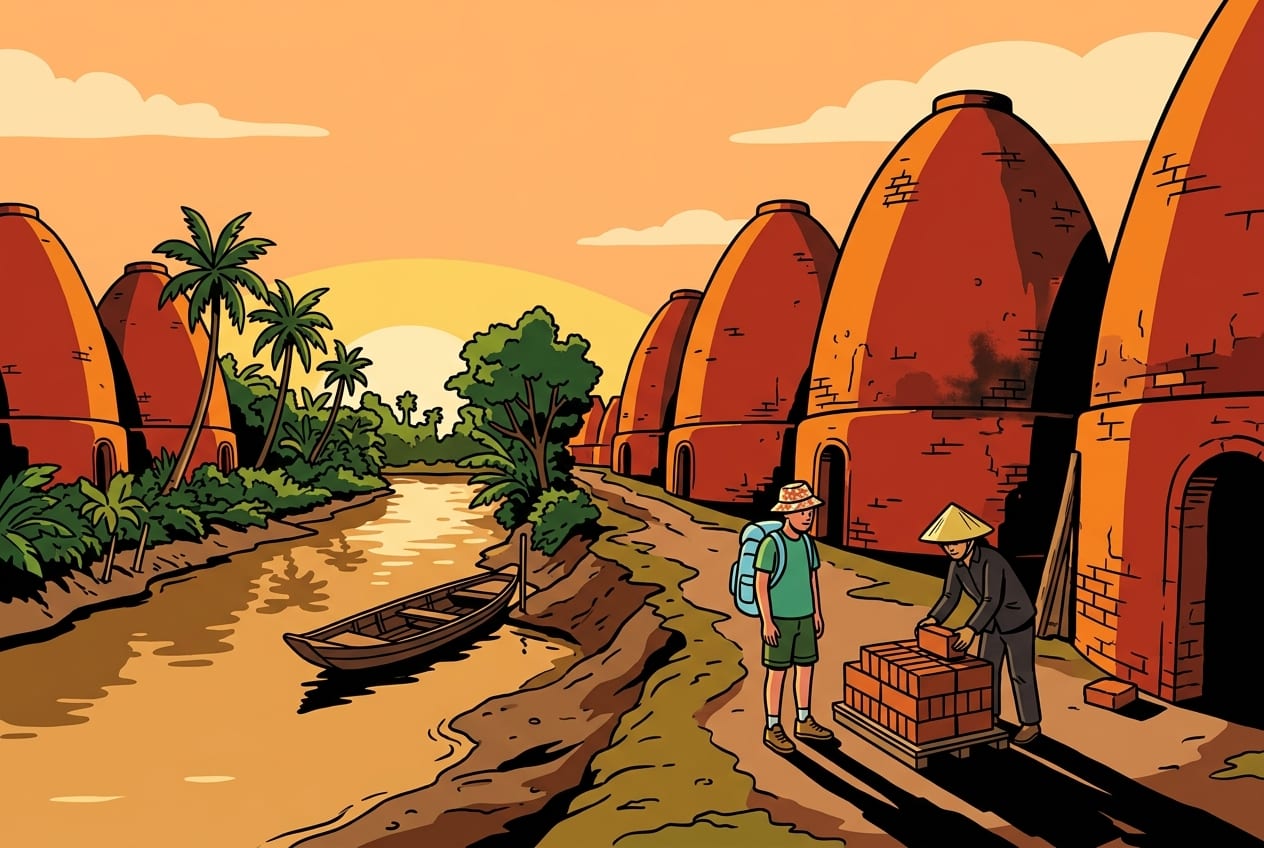
Entering the Red Kingdom: An Expat's Guide to Navigating Vĩnh Long’s Majestic Mang Thít Brick Kilns
Discover the majestic Mang Thít brick kilns of Vĩnh Long. This comprehensive expat guide covers boat tours, scooter routes, local etiquette, and the rich cultural history of the Mekong Delta's 'Red Kingdom'.
By Xinchao team
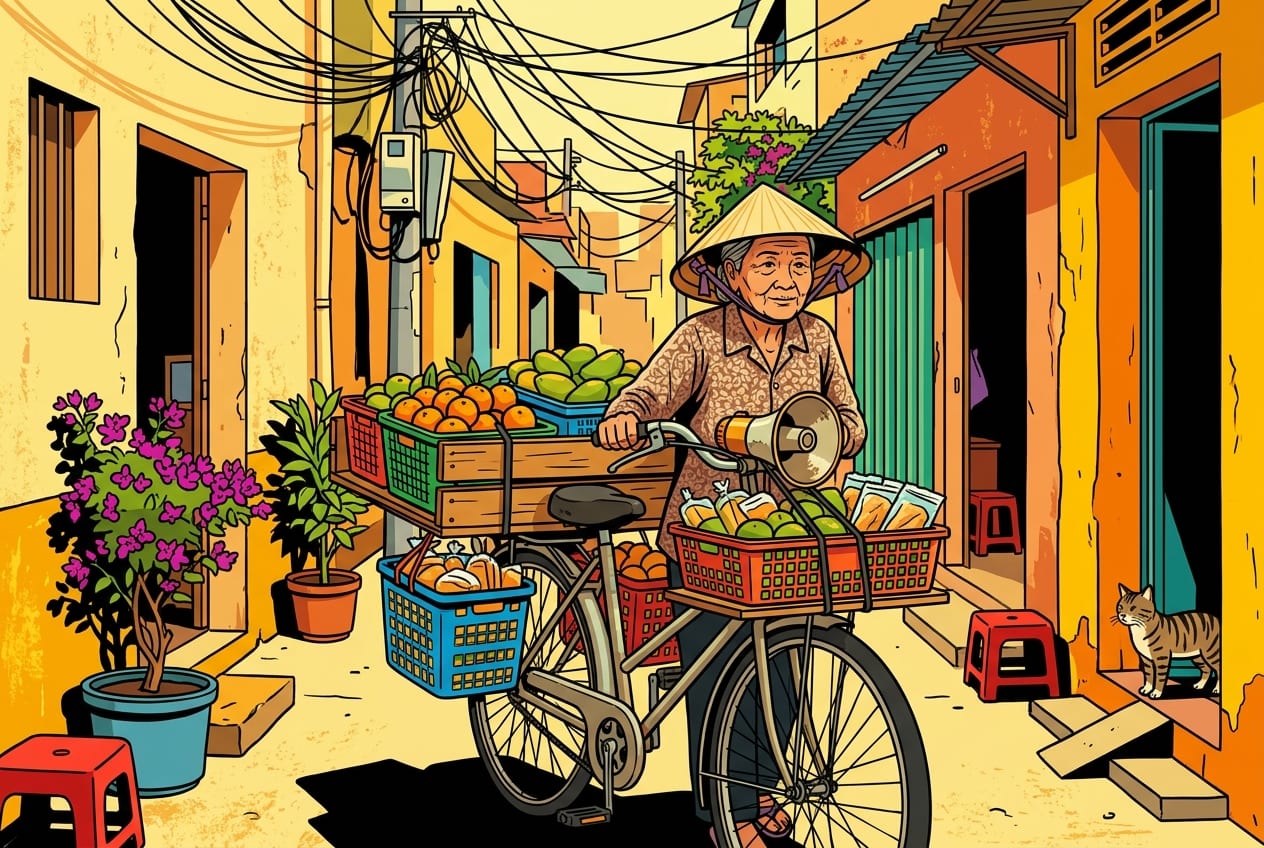
Alleyway Symphonies: Can You Decode Vietnam's Hilarious Street Vendor Cries?
What are those loud megaphone sounds in Vietnam's alleys? Learn to decode Vietnamese street vendor cries (tiếng rao) and order food like a local expat.