From Ancient Hands to Modern Homes: Why Vietnam's Traditional Craft Villages Are the Hottest New Cultural Experience (and Where to Find Them!)
Step into a living museum where centuries-old artistry thrives. Vietnam's traditional craft villages offer a rare glimpse into the nation's soul, connecting you directly with the hands that shape its heritage.
Imagine stepping back in time, not into a dusty museum, but into a vibrant, living community where the rhythm of daily life is set by the clack of a loom, the spin of a potter's wheel, or the careful arrangement of fragrant incense. This isn't a fantasy; it's the reality of Vietnam's traditional craft villages, rapidly becoming a must-do for any traveler seeking an authentic connection with the country's soul.
For centuries, these villages have been the beating heart of Vietnamese artistry, preserving skills passed down through generations. They offer more than just beautiful souvenirs; they offer a window into the cultural fabric, the spiritual beliefs, and the enduring resilience of the Vietnamese people. Each handcrafted item, from a delicate ceramic vase to a shimmering silk scarf, tells a story—a story of identity, values, and the profound connection between artisan and art.
Why Craft Villages Matter: More Than Just Souvenirs
Traditional craft villages in Vietnam are vital cultural touchstones, embodying centuries of history, artistic skill, and community spirit. They serve as living museums where ancient techniques are practiced daily, offering travelers a profound insight into Vietnamese heritage, beyond mere commercial transactions.
When you visit a craft village, you're not just buying a product; you're investing in a legacy. These communities are guardians of intangible cultural heritage, where knowledge, techniques, and even spiritual beliefs are woven into every thread, molded into every pot, and carved into every piece of wood. It's a chance to witness the meticulous dedication of artisans who often dedicate their entire lives to perfecting a single craft, carrying forward the traditions of their ancestors. This direct interaction fosters a deeper appreciation for Vietnamese culture and provides a unique context for understanding the country's artistic identity. It also provides crucial economic support directly to the artisans, helping to sustain these invaluable traditions against the tide of mass production. Learn more about cultural heritage in Vietnam.
North Vietnam's Artistic Hubs: Must-Visit Day Trips from Hanoi
Northern Vietnam, particularly around Hanoi, is home to a rich cluster of traditional craft villages, each specializing in unique arts. These destinations offer accessible and enriching day trips, allowing visitors to witness centuries-old craftsmanship and engage directly with local artisans.
Bat Trang Pottery Village: Shaping Clay, Shaping History
Bat Trang is Vietnam's most famous ceramics village, with a history spanning over 1,000 years. Located just outside Hanoi in Gia Lam District, it's a place where the earthy scent of clay fills the air, and traditional kilns dot the landscape, producing everything from intricate celadon vases to everyday dinnerware.
The village's distinctive white, celadon, and indigo-glazed ceramics are renowned for their beauty and durability. Here, you can wander through bustling workshops, watch skilled artisans deftly shape clay on spinning wheels, and even try your hand at creating your own pottery masterpiece. This hands-on experience is incredibly rewarding, giving you a tangible connection to the craft and a unique souvenir to take home. The process often involves multiple stages, from preparing the clay to firing and glazing, each step requiring immense precision and patience. It's a testament to the enduring human spirit that these techniques have been preserved for so long.
Van Phuc Silk Village: Weaving Stories, Thread by Thread
Van Phuc, located in Ha Dong District southwest of Hanoi, boasts a thousand-year legacy of exquisite silk weaving. This village is famous for its soft, lustrous, and durable silk, historically favored by Vietnamese royalty and now cherished by travelers worldwide.
Walking through Van Phuc is a sensory delight. Shimmering fabrics in a kaleidoscope of colors hang in shops, catching the light, while the rhythmic clacking of handlooms echoes through narrow alleys. You can explore workshops, observe the intricate process of silk production—from silkworms to finished fabric—and purchase beautiful garments, scarves, and home decor items. The quality of Van Phuc silk is legendary, known for its breathability and elegant drape. It's not just a textile; it's a piece of art, reflecting the dedication of generations of weavers.
Chuong Conical Hat Village: The Iconic "Non La"
Chuong Village, in Thanh Oai District, is the birthplace of the iconic Vietnamese conical hat, or "Non La." This elegant and practical hat is a powerful symbol of Vietnamese culture, particularly associated with Vietnamese women.
The creation of a Non La is a meticulous process, involving palm leaves, bamboo frames, and delicate stitching. At Chuong, you can witness artisans skillfully crafting these hats, often adorned with poetic verses or intricate patterns visible when held against the light. The Non La isn't just a fashion statement; it's a practical item that protects from both sun and rain, deeply ingrained in the daily lives of rural Vietnamese people. Owning one is like carrying a piece of Vietnam's identity with you. The artisans here often work in communal settings, sharing stories and techniques as they weave, creating a truly authentic atmosphere.
Quang Phu Cau Incense Village: A Feast for the Senses
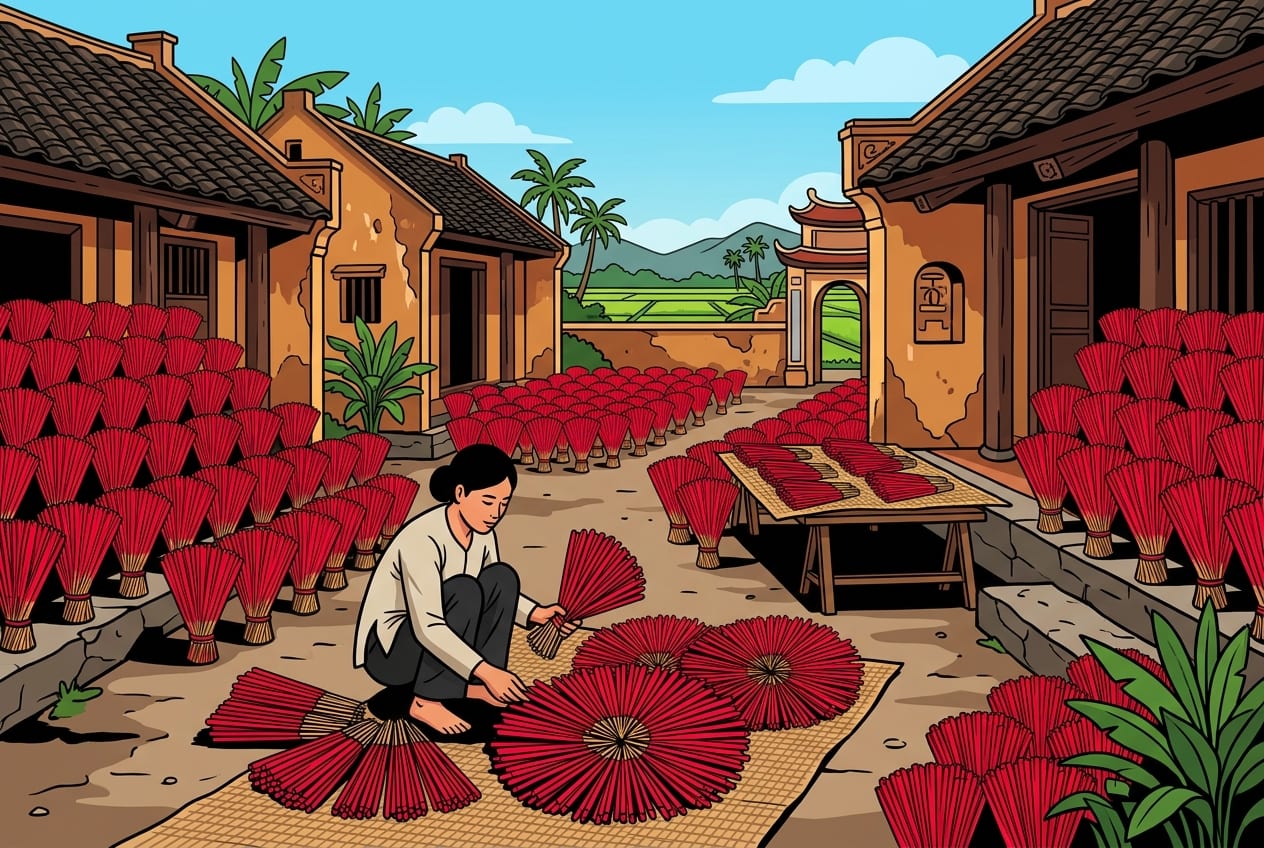
Located southwest of Hanoi, Quang Phu Cau Incense Village offers a breathtaking visual spectacle, especially during sunny weather when thousands of incense sticks are laid out to dry. The village is renowned for its traditional incense production, a craft deeply tied to Vietnamese spiritual life.
The dominant color here is a striking, vivid red, as bundles of incense sticks are arranged in large, chrysanthemum-like patterns in courtyards, creating a stunning contrast with the surrounding green rice fields. The air is filled with the subtle, sweet scent of agarwood, cinnamon, and other natural ingredients. Incense plays a significant role in Vietnamese culture, used in ancestral worship, temple offerings, and various ceremonies. Visiting Quang Phu Cau offers a unique insight into this spiritual practice and a chance to capture truly unforgettable photographs. The meticulous arrangement of the drying incense is an art form in itself, reflecting the precision and care that goes into every aspect of Vietnamese craftsmanship. You can also see the intricate process of dipping and drying the incense sticks by hand.
Central Vietnam's Artisan Spirit: Near Hoi An and Hue
Central Vietnam, a region rich in history and culture, also hosts several notable craft villages that showcase unique artistic traditions. These villages provide distinct cultural experiences, often intertwined with the historical charm of cities like Hoi An and Hue.
Thanh Ha Pottery Village & Kim Bong Carpentry Village (Hoi An)
Near the ancient town of Hoi An, Thanh Ha Pottery Village continues a 500-year tradition of making pottery from local clay. Just across the Thu Bon River, Kim Bong Carpentry Village is famed for its skilled woodworkers, whose intricate carvings and construction techniques shaped many of Hoi An's historic buildings.
In Thanh Ha, you can observe potters using traditional methods, often without a wheel, to create beautiful terracotta items. You can even try molding your own clay piece. Kim Bong is a testament to the enduring skill of Vietnamese carpenters, whose work can be seen in the elaborate communal houses and temples throughout Hoi An. Both villages offer a fascinating glimpse into the crafts that have supported and adorned this UNESCO World Heritage site for centuries. While in Hoi An, don't forget to explore its incredible food scene, often found in narrow alleys, a true cultural immersion. Read more about Hoi An's street food.
Thuy Xuan Incense Village (Hue)
Just a short distance from the imperial city of Hue, Thuy Xuan Incense Village offers another vibrant display of traditional incense making. Similar to Quang Phu Cau, this village is known for its brightly colored incense sticks, often arranged in visually stunning bundles.
Thuy Xuan provides a more intimate experience, allowing visitors to interact closely with the artisans and understand the spiritual significance of incense in Hue's imperial and religious traditions. The village is particularly beautiful against the backdrop of Hue's serene pagodas and the Perfume River, adding another layer to its cultural appeal. Visitors can often try their hand at making incense, a simple yet profound activity that connects them to a centuries-old practice. The vibrant colors of the drying incense here are often chosen to reflect traditional festive colors, making for an incredibly photogenic scene.
Beyond the Purchase: How to Truly Experience a Craft Village
To genuinely experience a Vietnamese craft village, it's essential to engage respectfully with the culture and community, looking beyond just buying souvenirs. This involves understanding local customs, interacting with artisans, and participating in the craft process itself.
Respectful Engagement: Dos and Don'ts
Engaging respectfully in Vietnamese craft villages means being mindful of local customs and the artisans' way of life. It ensures a positive experience for both visitors and the community, fostering genuine cultural exchange.
Do
- Dress modestly, especially when visiting ancestral homes or temples within the village. Shoulders and knees covered are a good rule of thumb.
- Always ask permission before taking photographs of artisans or their homes. A simple gesture or 'Xin phép chụp ảnh?' (May I take a photo?) goes a long way.
- Engage with artisans. A smile, a 'Chào bạn' (Hello friend), and showing genuine interest in their work can lead to wonderful conversations and insights.
- Bargain respectfully, but remember these are individual artists, not big corporations. A fair price supports their livelihood and preserves the craft.
- Purchase directly from workshops or reputable cooperatives to ensure your money supports the local community and artisans.
Don't
- Don't interrupt artisans mid-task without first getting their attention politely.
- Don't haggle aggressively, especially if the price is already clearly marked or very low.
- Don't treat the village like a theme park; remember it's a living community and workplace.
- Don't litter or disrespect the local environment.
- Don't assume everyone speaks English; a few basic Vietnamese phrases will be greatly appreciated.
Hands-On Workshops: Get Your Hands Dirty
Participating in hands-on workshops offers an unparalleled way to connect with Vietnamese traditional crafts. These interactive sessions allow visitors to learn basic techniques directly from local artisans, providing a deeper appreciation for the skill and effort involved in each creation.
Many craft villages now offer workshops where you can try your hand at pottery making, silk weaving, incense dipping, or even lantern crafting. This isn't just a fun activity; it's an immersive learning experience. You'll gain a deeper appreciation for the skill and patience required, and the piece you create will be a truly personal and meaningful souvenir. It's a chance to step into the artisan's shoes, even if just for an hour, and understand the dedication behind each finished product. This direct engagement fosters a more profound understanding of the cultural significance embedded in these crafts. For more on respectful cultural engagement, consider tips for visiting sacred sites like pagodas. Read about pagoda hopping in Vietnam.
Bringing Home a Piece of Vietnam: Ethical Souvenirs
Choosing souvenirs from Vietnamese craft villages means selecting items that are both beautiful and ethically sourced. By purchasing directly from artisans, visitors support local economies and help preserve traditional skills, ensuring the continuity of these valuable cultural practices.
When you buy from a craft village, you're not just acquiring an object; you're taking home a piece of Vietnamese culture and supporting the livelihoods of the families who keep these traditions alive. These are often small, family-run enterprises, and your purchase directly contributes to their ability to continue their craft and pass it on to the next generation. Look for the unique, the handmade, and the story behind each piece. A beautifully crafted ceramic bowl, a hand-embroidered silk scarf, or a bundle of fragrant incense sticks are far more meaningful than any mass-produced item. They carry the warmth of human hands and the spirit of a rich heritage. Explore Vietnam's rich cultural traditions.
Plan Your Visit: Logistics & Tips
Planning a trip to Vietnam's craft villages is straightforward, with most accessible as day trips from major cities. Consider transportation, time of visit, and how to best interact with the local environment to maximize your cultural experience.
Most Northern craft villages like Bat Trang, Van Phuc, Chuong, and Quang Phu Cau are easily reachable from Hanoi by taxi, Grab (ride-hailing app), local bus, or organized tour. For villages near Hoi An (Thanh Ha, Kim Bong) or Hue (Thuy Xuan), motorbikes, bicycles, or local taxis are convenient options. Consider going in the morning to avoid the midday heat and to see artisans at their most active. Remember to bring small bills (Vietnamese Dong) for purchases, as not all vendors may accept cards. A reusable bag for your treasures is also a good idea!
What is the best way to get to Bat Trang Pottery Village from Hanoi?
Bat Trang Pottery Village is easily accessible from Hanoi. You can take a Grab car or taxi, which offers direct convenience. Alternatively, local buses provide a more budget-friendly option; look for routes heading towards Gia Lam District. Many tour operators also offer half-day or full-day tours that include transportation and guides.
Are workshops available for travelers in Vietnamese craft villages?
Yes, many traditional craft villages actively encourage traveler participation through hands-on workshops. For example, in Bat Trang, you can try making pottery. In Van Phuc, some workshops offer insight into silk weaving. Thuy Xuan Incense Village near Hue often allows visitors to try dipping incense sticks. These workshops offer a unique, immersive cultural experience and a chance to create your own souvenir.
Practise the words you just read
Vietnamese phrases for real situations, each with native audio in both accents.
Topics
Read more
Other posts from our Vietnamese learning blog.
By Xinchao team
Sweet Sâm or Face-Melting Đắng? Your Expat Survival Guide to Cholon’s Ancient Herbal Tea Culture
Discover Saigon's ancient herbal tea culture in Cholon. Learn how to order sweet nước sâm and survive face-melting nước đắng with this expat survival guide.
By Xinchao team
The Point-and-Eat Protocol: Your Expat Survival Guide to Vietnam's 'Cơm Bình Dân' Buffet Trays
Demystify Vietnam's legendary 'commoner's rice' stalls. Learn the step-by-step point-and-eat protocol, discover must-try dishes, and master sidewalk etiquette.
By Xinchao team
Entering the Red Kingdom: An Expat's Guide to Navigating Vĩnh Long’s Majestic Mang Thít Brick Kilns
Discover the majestic Mang Thít brick kilns of Vĩnh Long. This comprehensive expat guide covers boat tours, scooter routes, local etiquette, and the rich cultural history of the Mekong Delta's 'Red Kingdom'.