Ditch the TikTok! Why Vietnam's Youth are Rediscovering Ancient Street Games (and You Can Play Too!)
Put down your phone! Vietnam's Gen Z is ditching screens for timeless fun. Dive into the vibrant world of traditional street games and find out how to connect with locals over a game of shuttlecock or mandarin squares.
Beyond the Screen: Why Vietnam's Youth Are Kicking It Old School
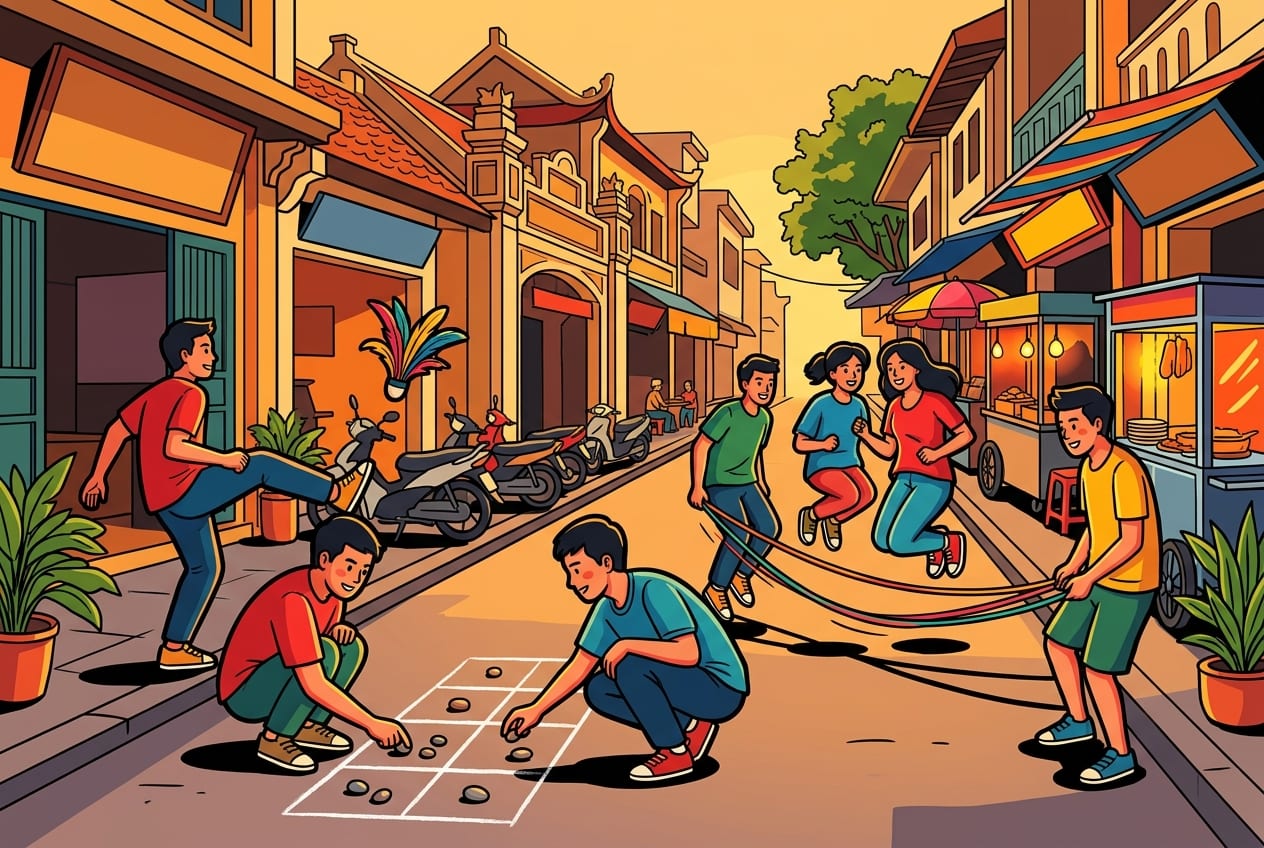
Walk through any major city in Vietnam today, and you might notice something surprising amidst the buzzing motorbikes and modern cafes: groups of young people, not glued to their smartphones, but gathered around a chalk-drawn grid, expertly kicking a feathered shuttlecock, or energetically skipping rope. This isn't just a fleeting trend; it's a vibrant cultural resurgence, a deliberate step back from the digital world to embrace the timeless joy of traditional Vietnamese street games.
In a world increasingly dominated by screens, Vietnam's youth are rediscovering the simple, profound pleasure of face-to-face interaction, physical activity, and community bonding that these ancient pastimes offer. It's a refreshing contrast to the pervasive smartphone culture, reflecting a deeper connection to their heritage and a desire for authentic, shared experiences. For travelers, this offers an incredible, spontaneous opportunity to witness and even participate in a living, breathing piece of Vietnamese culture.
Why the Digital Detox? The Heart of Vietnam's Game Revival
The resurgence of traditional street games among Vietnamese youth is driven by a desire to reconnect with cultural roots and foster community bonds. These games, integral to Vietnam's folk culture, transmit humane values, creativity, and resourcefulness across generations, offering a meaningful alternative to digital entertainment and strengthening social connections. This movement is actively supported by youth groups and government initiatives aimed at preserving and promoting traditional cultural heritage in contemporary life.
These games are far more than just ways to pass the time; they are powerful messengers of humane, ethical, and meaningful values. From fostering strategic thinking to enhancing physical agility and promoting teamwork, each game carries a piece of Vietnam's soul. They transmit beliefs, customs, and narratives that have shaped generations, reminding players of their shared identity and collective history. In a fast-changing society, these games offer a grounding force, a tangible link to a rich cultural past.
More Than Just Fun: The Values Behind the Games
Traditional Vietnamese games are designed to develop a range of skills and values beyond mere entertainment. Games like Ô ăn quan cultivate intelligence and strategic thinking, while Nhảy dây and Đá cầu significantly enhance physical agility and coordination. Group games such as Kéo co and Rồng rắn lên mây instill crucial values like teamwork, cooperation, fairness, honesty, and perseverance, fostering strong social bonds among participants.
Take Ô ăn quan, for example. This strategic board game, often played with pebbles on a chalk-drawn grid, sharpens a player's mind, teaching them to plan several moves ahead and manage their 'resources' wisely. It's a game of intellect and foresight, much like chess, but deeply rooted in Vietnamese folk tradition.
Then there's Đá cầu, the Vietnamese shuttlecock game. This isn't just about kicking a feathered object; it demands incredible agility, balance, and coordination. Players form a circle, keeping the cầu (shuttlecock) in the air using only their feet, knees, and sometimes shoulders. It's a beautiful display of skill and fluid movement.
For groups, games like Kéo co (Tug of War) and Rồng rắn lên mây (Dragon-Snake Game) are all about teamwork and communication. These aren't just about winning; they're about learning to work together, to trust your teammates, and to understand the power of collective effort. These games reinforce the communal spirit that is so central to Vietnamese culture, reminding everyone that they are part of something larger than themselves. For more on how Vietnamese culture fosters community, you might enjoy our post on Is Fish Sauce the Secret Glue Holding Vietnamese Families Together?.
Where to Find the Action: Your Guide to Joining In
Experiencing traditional Vietnamese street games is both accessible and rewarding for travelers, offering a unique window into local life. The Hoan Kiem Lake pedestrian area in Hanoi, especially during weekend evenings, is a prime location where people of all ages gather to play. Beyond this popular spot, you can find games in local parks, schoolyards, and quieter residential alleys across cities like Hanoi and Ho Chi Minh City, often using simple, readily available materials.
If you're in Hanoi, the Hoan Kiem Lake pedestrian area is your best bet, especially during weekends. From Friday evening to Sunday midnight, the streets around the lake are closed to traffic, transforming into a vibrant hub of activity. You'll see families strolling, street performers, and, most importantly, groups of people engrossed in various games. It's a fantastic atmosphere to soak in. In Ho Chi Minh City, look for similar scenes in larger parks like Tao Dan Park or Lê Thị Riêng Park, particularly in the late afternoon or early evening.
Beyond these famous spots, keep an eye out in local parks, schoolyards (after school hours), and even quieter residential alleys. The beauty of these games is their simplicity; they often require minimal equipment, utilizing readily available materials like pebbles, chalk, or simple ropes. This grassroots nature is part of their charm.
How to Join the Game: A Traveler's Etiquette Guide
To join a traditional Vietnamese street game, travelers should first observe the game in progress to understand the rules and flow. If interested, politely approach the players during a natural break and ask if you can participate. Vietnamese locals are generally very welcoming and happy to explain the rules to curious foreigners, making enthusiasm and a willingness to learn key to a positive interaction, even with language barriers. Don't be shy!
The key to joining in is simple: observe, then ask. Find a group playing a game that catches your eye. Watch for a few minutes to get a sense of the rules and the rhythm. When there's a natural pause, politely approach and make eye contact. A simple smile and a gesture towards the game, perhaps followed by a phrase like 'Cho tôi chơi với?' (Can I play?), will go a long way. Don't worry too much about perfect Vietnamese; your enthusiasm will be understood. Most locals will be delighted to have a foreigner show interest in their culture and will be happy to explain the rules, sometimes with gestures or broken English.
Do
- Observe the game before asking to join.
- Approach during a natural break in play.
- Smile and show genuine enthusiasm to learn.
- Be patient and accept explanations, even if there's a language barrier.
- Try your best, but don't worry about being perfect.
Don't
- Interrupt a game aggressively or loudly.
- Be a sore loser or excessively competitive.
- Criticize the rules or how the game is played.
- Expect players to immediately switch to English for you.
Games You'll See (and Can Play!): A Quick Intro
You'll encounter a variety of traditional games, each with its unique charm and rules. Ô ăn quan, played on a simple grid with pebbles, challenges strategic thinking. Đá cầu requires players to keep a feathered shuttlecock in the air using only their feet. Nhảy dây, a familiar jump rope game, is often played with elastic bands, emphasizing rhythm and coordination. These games are typically free and use readily available, simple equipment, making them accessible to everyone.
Ô ăn quan (Mandarin Square Capturing)
This is a two-player strategy board game. The 'board' is often drawn with chalk on the ground: a rectangle divided into ten small squares (five on each side) and two larger semicircles or squares at each end. The small squares are 'rice fields' (ô lúa), and the large ones are 'mandarin squares' (ô quan). Players distribute pebbles (or seeds, shells) from their squares, moving them around the board to 'capture' other pebbles. The goal is to capture as many pebbles as possible, especially the larger 'mandarin' pebbles. It's a game of calculation and foresight, surprisingly complex given its simple setup. For a deeper dive into the game's history and rules, check out this detailed explanation from Wikipedia.
Đá cầu (Shuttlecock Kicking)
Imagine badminton, but without rackets, and the shuttlecock is heavier, made with real feathers and a rubber base (cầu). Players stand in a circle and try to keep the cầu airborne using their feet, knees, and sometimes heads. It's a fantastic way to improve balance, agility, and coordination. There are often impressive displays of acrobatic skill involved, but beginners are usually welcomed to try simple kicks. It’s a very common sight in parks and open spaces.
Nhảy dây (Jump Rope / Elastic Band Jumping)
While jump rope is universal, in Vietnam, Nhảy dây often involves elastic bands. Two players hold the ends of a long elastic band, creating a 'rope' at different heights. Other players then jump over, into, and around the elastic, following specific patterns and increasing difficulty. It's a game of rhythm, agility, and coordination, often accompanied by playful chants. It's particularly popular with younger children and teenagers, often seen in schoolyards and quieter alleys.
Beyond the Game: Connecting with Local Culture
Participating in traditional street games offers travelers a unique opportunity to connect with Vietnamese culture on a deeper level, beyond typical tourist experiences. It's a chance to engage with locals in an authentic setting, fostering human connection and a shared understanding of heritage. This cultural exchange contributes to the preservation of these valuable traditions, ensuring they thrive in contemporary life. It also allows you to experience the vibrant, social energy of Vietnamese urban life firsthand, much like discovering the bustling street food scene or the lively cafe culture.
When you join a game of Ô ăn quan or try your hand at Đá cầu, you're not just playing; you're engaging in a profound cultural exchange. You're showing respect for local traditions and contributing, in your own small way, to their continued vitality. These interactions often lead to genuine smiles, laughter, and sometimes even new friendships, bridging cultural gaps in a way that tours and museums rarely can. It's an authentic slice of daily Vietnamese life, a testament to the community spirit that thrives despite the march of modernity. For more on how Vietnam's youth are finding community, check out Beyond the Tiny Stool: Why Vietnam's Youth Are Trading Sidewalk Brews for Board Games & Themed Cafes!.
This resurgence is a beautiful example of how a culture actively preserves its heritage while adapting to new times. It's a reminder that true connection often happens not through screens, but through shared experiences and simple, joyful interactions. Organizations like the Vietnam National Institute of Culture and Arts Studies are actively involved in promoting and documenting these traditional games, ensuring they continue to be a vibrant part of the nation's identity.
Do I need to speak Vietnamese to join a street game?
No, you don't need to be fluent in Vietnamese. While knowing a few basic phrases like "Cho tôi chơi với?" (Can I play with you?) is helpful, locals are generally very welcoming and will use gestures or simple English to explain the rules. Your enthusiasm and willingness to learn are more important than perfect language skills. Embrace the non-verbal communication and enjoy the interaction!
What kind of equipment do I need to bring to play traditional street games?
For most traditional street games, you don't need to bring any special equipment. The charm of these games lies in their simplicity, often utilizing readily available materials like pebbles, chalk, or simple ropes. If you want to try Đá cầu, you might find a feathered shuttlecock (cầu) for sale in markets, but usually, players will have their own. Just bring yourself, an open mind, and comfortable shoes!
Are these games only for kids, or can adults join too?
Absolutely not just for kids! While many children play these games, you'll often see teenagers and even adults participating, especially in games like Ô ăn quan or Đá cầu. The Hoan Kiem Lake pedestrian area, for instance, sees people of all ages enjoying the games. Don't hesitate to join in regardless of your age; it's a fantastic way to connect with locals and experience a shared cultural activity.
So, on your next trip to Vietnam, put down that phone, look up, and listen for the laughter. A game of Ô ăn quan or a round of Đá cầu might just be the most memorable, and authentic, experience you'll have.
Practise the words you just read
Vietnamese phrases for real situations, each with native audio in both accents.
Topics
Read more
Other posts from our Vietnamese learning blog.
By Xinchao team
Entering the Red Kingdom: An Expat's Guide to Navigating Vĩnh Long’s Majestic Mang Thít Brick Kilns
Discover the majestic Mang Thít brick kilns of Vĩnh Long. This comprehensive expat guide covers boat tours, scooter routes, local etiquette, and the rich cultural history of the Mekong Delta's 'Red Kingdom'.
By Xinchao team
Alleyway Symphonies: Can You Decode Vietnam's Hilarious Street Vendor Cries?
What are those loud megaphone sounds in Vietnam's alleys? Learn to decode Vietnamese street vendor cries (tiếng rao) and order food like a local expat.
By Xinchao team
Duck! Your Expat Survival Guide to Catching Flying Rice at Vietnam's Chaotic 'Cơm Niêu Đập' Restaurants
Ready for dinner and a show? Discover how to navigate Vietnam's chaotic flying clay pot rice restaurants without taking a crispy projectile to the face.