Water Puppets Are Great, But Have You Heard Hát Xẩm?
Discover Hát Xẩm, Vietnam's soulful folk music enjoying a vibrant revival. Learn why this ancient art matters and where to find live performances in Hanoi in 2026.
Beyond the Water Puppet Show: Why Hát Xẩm is Vietnam's Hottest Cultural Revival
When you think of traditional Vietnamese performances, water puppets often come to mind first, right? They're charming, no doubt! But imagine a different kind of magic, one that touches your soul with ancient melodies and stories whispered through generations. That's Hát Xẩm, a captivating Vietnamese folk music genre that’s experiencing a vibrant revival, moving beyond its traditional street-side origins to become a celebrated art form. It's a unique opportunity for travelers like you in 2026 to dive deeper into Vietnam's rich musical tapestry, far beyond the well-known tourist traps.
Hát Xẩm, once a humble street art, is now a national intangible cultural heritage, thanks to dedicated artists and youth groups who are passionately preserving and evolving it for contemporary audiences. This resurgence isn't just about entertainment; it's a powerful reconnection with ancestral roots, a source of immense national pride, and a living testament to Vietnamese resilience and storytelling. It offers a truly authentic glimpse into the heart and soul of Vietnam, an experience that resonates long after the last note fades.
What Exactly Is Hát Xẩm, Anyway? A Journey Through Time
Hát Xẩm is a traditional Vietnamese folk music genre, historically performed by blind itinerant musicians who shared tales of everyday life, love, and hardship through poignant melodies, often accompanied by simple instruments. It served as both a livelihood for the performers and a vital medium for storytelling and social commentary for the common people.
Imagine wandering the bustling streets of ancient Vietnam, perhaps sometime between the 13th and 14th centuries. You hear a distinctive, haunting melody, carried on the breeze. This is Hát Xẩm, a form of folk music that was the voice of the common person, a newspaper, and a livelihood all rolled into one. Traditionally, it was performed by blind musicians who traveled from village to village, setting up their mats on street corners or market squares. They didn't just sing; they told stories – tales of love, loss, hardship, humor, and even current events – reflecting the joys and struggles of ordinary Vietnamese life. This wasn't just entertainment; it was a way for people to connect, to share their experiences, and to find solace in shared humanity.
For locals, Hát Xẩm holds profound cultural significance. It embodies the spirit of resilience, the ability to find beauty and expression even in adversity. The fact that it's experiencing such a strong revival today is a source of immense national pride. It’s a way for younger generations to reconnect with their ancestral spiritual essence, to understand the poetic depth of their language and history. It’s about ensuring that these deeply rooted traditions don't just survive, but thrive, carrying the essence of Vietnam forward into the future.
Where to Catch the Hát Xẩm Vibe in Hanoi (2026 Edition)
The heart of Hát Xẩm's revival beats strongly in Hanoi, with several dedicated groups actively performing and promoting this cherished art form. Travelers in 2026 can seek out performances in historical venues and bustling public spaces, often on weekend evenings when the city comes alive.
Hanoi is truly the epicenter of the Hát Xẩm revival, and if you’re looking to experience it live in 2026, you're in luck! There are several prominent groups and locations where you can immerse yourself in this unique cultural experience. Think of it as finding a hidden gem that many tourists miss, giving you a truly authentic story to tell back home.
One of the most active groups is the Hanoi Xam Art Club (CLB Nghệ thuật hát Xẩm Hà Nội), established in 2023. They frequently stage performances at venues like Rạp Kim Đồng (Kim Dong Cinema) at No. 19 Hàng Bài, Hoàn Kiếm District. This is a great place to check for scheduled indoor shows, offering a more formal setting to appreciate the music.
For a more atmospheric experience, you'll want to explore the bustling Hanoi Old Quarter. Keep your eyes and ears open, especially around Hoan Kiem Lake (you might find the Xam Ha Thanh group performing at the Nam Huong Communal House on Le Thai To Street) and in front of Dong Xuan Market. These outdoor performances are often organized by groups like the Vietnam Center for Musical Arts Development and offer a spontaneous, vibrant setting, truly connecting the music to its street origins.
Another notable and historically rich location is Hồ Văn – Văn Miếu Quốc Tử Giám (Temple of Literature). Groups like CLB Xẩm 48h have performed here, often blending ancient melodies with modern interpretations, creating a bridge between the past and present in a truly iconic setting. Imagine ancient music echoing within the walls of Vietnam's first national university – it's quite an experience!
While many street performances are free, encouraging audiences to offer donations as a sign of appreciation (and to support the artists!), specific ticket prices for indoor or organized shows are not widely advertised and can vary. Your best bet for the most current information for 2026 is to monitor the social media pages and websites of these clubs (Hanoi Xam Art Club, Xam Ha Thanh, CLB Xẩm 48h) for their latest schedules, especially for weekend evening performances in Hanoi's pedestrian zones.
The Scene: What to Expect at a Live Performance
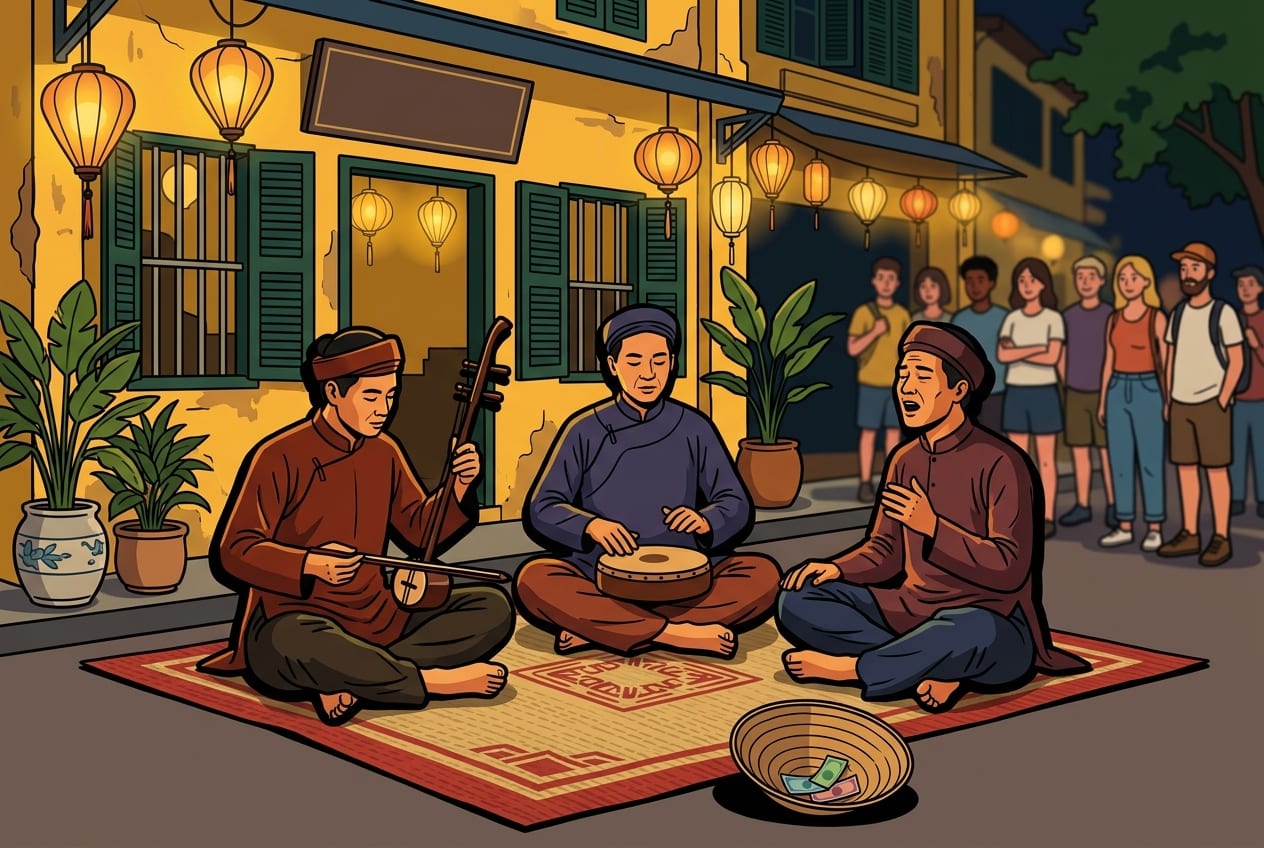
Attending a Hát Xẩm performance offers an immersive journey into Vietnamese culture. You can expect a lively yet respectful atmosphere, often in historical outdoor settings during the evening, where traditional instruments and attire create an intimate and evocative experience.
Experiencing Hát Xẩm live is a truly immersive journey, a moment where the past feels incredibly present. When you stumble upon an outdoor performance, the atmosphere is usually lively yet deeply respectful. Audiences gather informally around the performers, drawn in by the evocative sounds and stories. It's often set against the backdrop of vibrant, historical Hanoi streets, typically in the evening when the weather is cooler and the city truly comes alive with activity.
The musicians, often a small, intimate group, play a fascinating array of traditional Vietnamese instruments. You'll almost certainly hear the đàn nhị (a two-string fiddle) with its soulful, reedy voice, and the rhythmic clatter of sênh tiền (metal clappers) keeping the beat. A trống mảnh (small drum) adds depth, and sometimes you might be lucky enough to hear the unique, ethereal sound of a đàn bầu (monochord) or the crisp snap of phách bàn (wooden clappers). Each instrument tells its own story, weaving together to create a rich, textured soundscape.
Performers often wear traditional Vietnamese attire, such as simple áo dài or folk-style clothing. Don't expect flashy costumes; the beauty is in the understatement. Muted tones like earthy browns, deep blues, or creams are common, sometimes with subtle embroidered details that speak to artisanal craftsmanship. The lighting is typically ambient street lighting or simple stage lights for organized events, creating an intimate and evocative setting that allows the music and storytelling to take center stage.
Do
- Arrive on time, especially for scheduled indoor performances, to show respect for the artists.
- Silence your phone or put it on vibrate to avoid disturbing the performance.
- Applaud enthusiastically at the end of the songs or the performance to show your appreciation.
- Consider making a small donation at street performances; it directly supports the artists and their craft.
Don't
- Avoid talking or whispering loudly during the performance; it's considered disrespectful.
- Don't interrupt the artists or try to engage them in conversation while they are playing.
- Refrain from taking flash photography, as it can be distracting to both performers and the audience.
Why Hát Xẩm Matters: More Than Just Music
Hát Xẩm is more than just a musical performance; it's a living piece of Vietnamese history and culture, embodying resilience and national pride. Its revival ensures that ancestral traditions continue to inspire younger generations and offer travelers an authentic, deeply moving connection to Vietnam's soul.
In a world that often rushes towards the new, the revival of Hát Xẩm is a beautiful testament to the enduring power of tradition and the deep value Vietnamese people place on their heritage. It’s not just about preserving old songs; it’s about keeping alive the spirit of storytelling, the resilience of a people, and the unique cultural identity that makes Vietnam so special. When you listen to Hát Xẩm, you're not just hearing music; you're hearing echoes of history, the heartbeat of a nation, and the collective soul of generations.
For the Vietnamese, particularly the younger generation who are now embracing and performing Hát Xẩm, it’s a powerful way to connect with their roots. It’s a source of immense national pride, a reminder that their culture is rich, diverse, and capable of evolving while staying true to its essence. For you, the traveler, it’s an opportunity to move beyond the surface-level attractions and truly engage with the authentic heart of Vietnam. It’s an immersive, emotional journey that offers a deeper understanding and appreciation for the country and its people.
So, as you plan your trip to Vietnam in 2026, make sure to carve out time for Hát Xẩm. It’s a chance to witness a cultural renaissance, to support local artists, and to experience a side of Vietnam that is profound, authentic, and utterly unforgettable. It's a reminder that sometimes, the most captivating stories are told not with grand gestures, but with simple melodies and heartfelt words, echoing through the vibrant streets of Hanoi.
Do I need to buy tickets for Hát Xẩm performances in Hanoi?
For many outdoor street performances in areas like the Old Quarter or around Hoan Kiem Lake, entry is often free, but it's customary and appreciated to offer a small donation directly to the artists. For organized indoor shows, such as those at Kim Dong Cinema, there might be a ticket price. It's best to check the social media pages or websites of specific Hát Xẩm clubs (like Hanoi Xam Art Club) for their latest schedules and ticketing information.
What's the best time to see Hát Xẩm in Hanoi in 2026?
Hát Xẩm performances, especially outdoor ones, typically take place in the evenings, particularly on weekends. This is when the weather is cooler and Hanoi's pedestrian zones and historical areas are bustling with activity. It's a perfect time to soak in the atmosphere and enjoy the music as part of your evening stroll.
How can I find out the latest schedule for Hát Xẩm shows in 2026?
The most reliable way to find current schedules for Hát Xẩm performances in 2026 is to follow the social media pages (Facebook is very popular in Vietnam) and official websites of the prominent performing clubs. Look for 'Hanoi Xam Art Club (CLB Nghệ thuật hát Xẩm Hà Nội)', 'Xam Ha Thanh', and 'CLB Xẩm 48h'. They regularly post updates on their performance dates and locations.
Practise the words you just read
Vietnamese phrases for real situations, each with native audio in both accents.
Topics
Read more
Other posts from our Vietnamese learning blog.
By Xinchao team
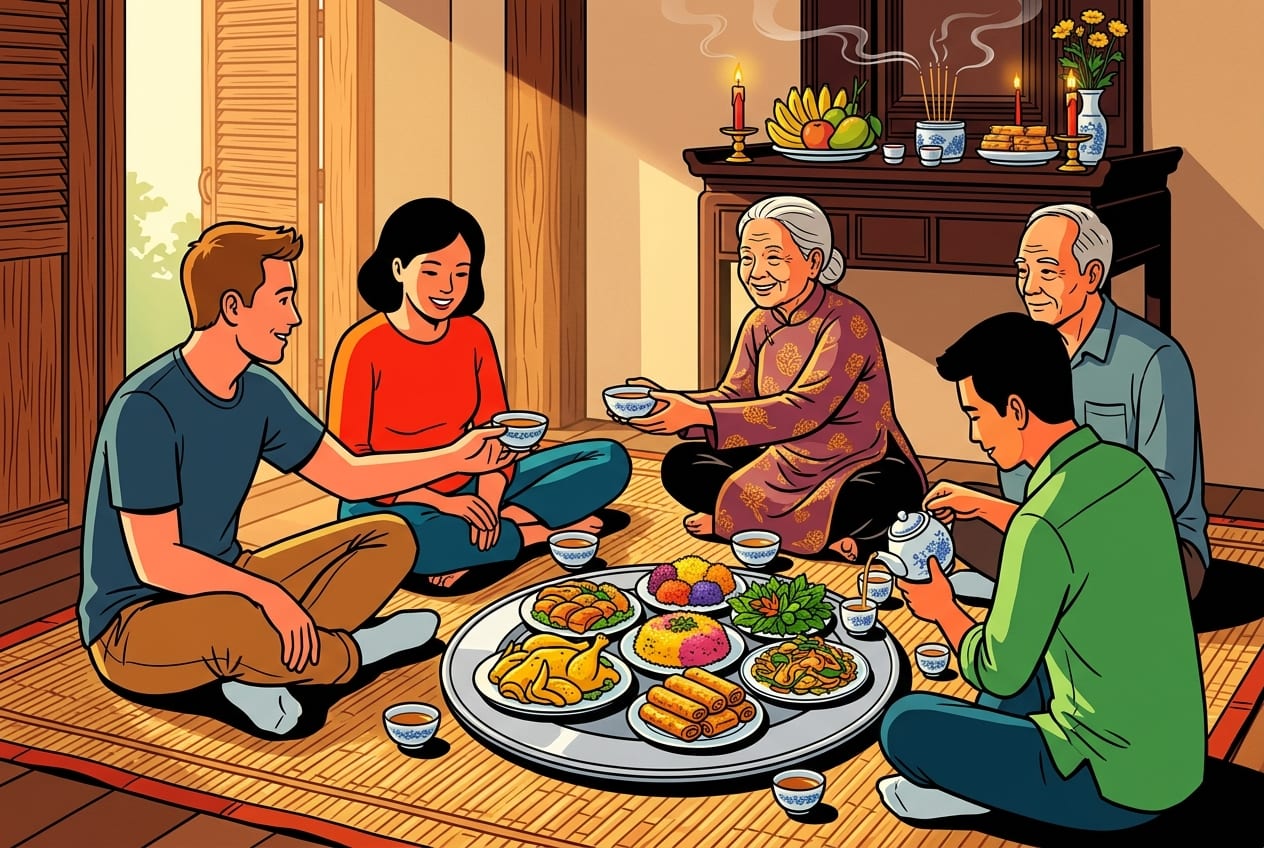
The Ultimate Honor: Your Expat Survival Guide to Attending a Vietnamese Death Anniversary (Đám Giỗ)
An invitation to a Vietnamese death anniversary (Đám Giỗ) is a milestone in any expat's journey. Learn how to pay respects at the altar, choose the right gift, and survive the legendary feast with confidence.

By Xinchao team
Spaceships on Highway 1: An Expat's Survival Guide to Vietnam's Neon-Drenched 'Cabin' Sleeper Buses
Hurtling down Vietnam's Highway 1, the modern cabin sleeper bus looks less like public transit and more like a rogue spaceship. Here is how to survive and thrive on your first overnight journey.

By Xinchao team
Chasing the Fog: Why Vietnam’s Expats Obsess Over 'Cloud Hunting' (Săn Mây)
Ready to chase the legendary seas of fog in Vietnam's Northern Highlands? Here is your ultimate expat survival guide to 'săn mây' in Tà Xùa and Y Tý.