Don't Be the First Customer! An Expat’s Guide to Vietnam's Sacred Morning Rituals of 'Mở Hàng' and 'Đốt Vía'
Step into the fascinating world of Vietnamese business superstitions. Learn why your first morning transaction is a delicate spiritual contract—and how to avoid being spiritually exorcised with fire.
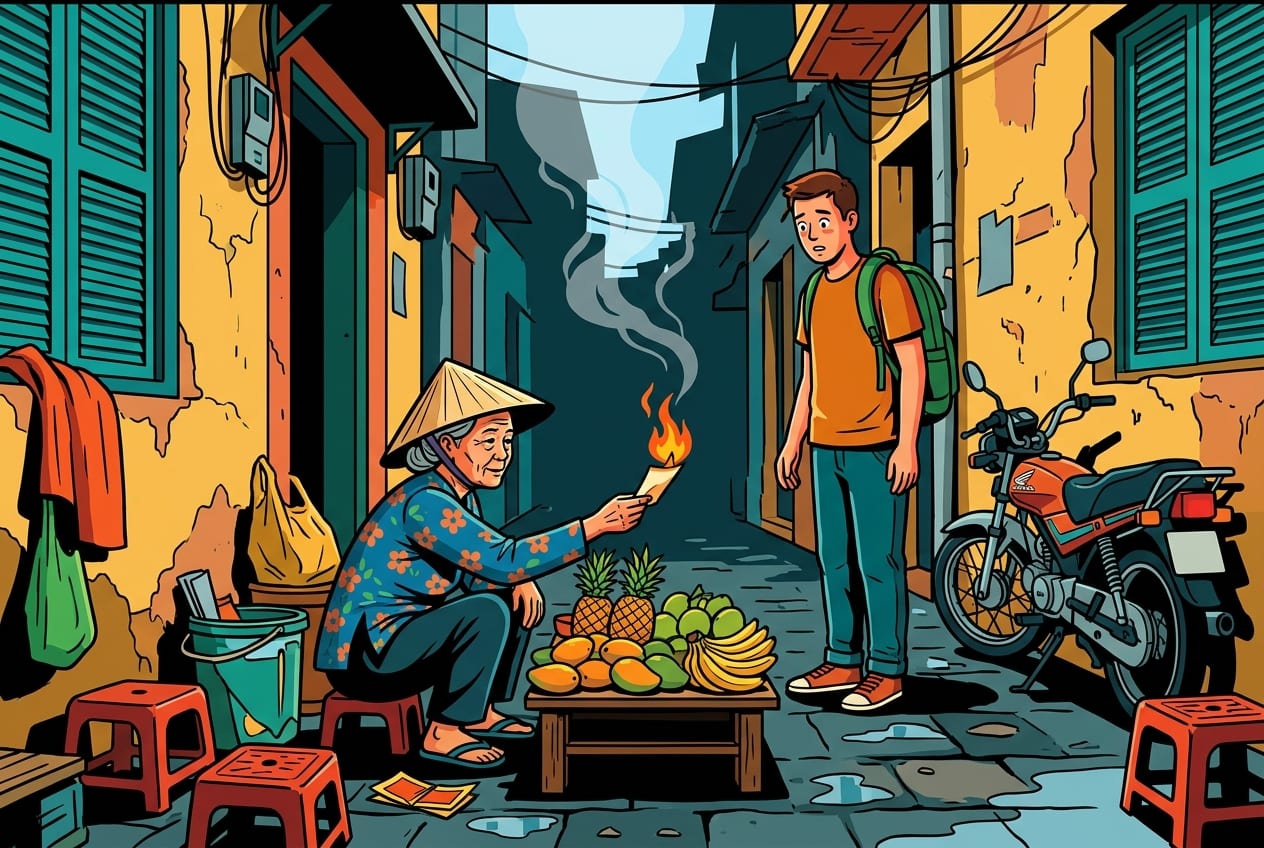
Picture this: It is 6:30 AM on a cool, misty morning in Hanoi. The air smells of star anise, cinnamon, and exhaust fumes. You have just stepped out of your apartment, eager to kickstart your day with a rich, dark Vietnamese coffee. You spot a small street-side stall where a middle-aged woman is setting up her plastic stools. You walk up, point to a bag of local coffee beans, and ask, 'How much?' She quotes a price. You shake your head, offer half of that amount, and when she refuses, you walk away. To you, it is just a standard, harmless interaction. To her, you have just spiritually cursed her entire business day.
In Vietnam, the start of the business day is not merely a matter of unlocking doors and turning on the lights. It is a delicate spiritual negotiation. If you are an expat living in Vietnam, understanding these unwritten cultural laws is not just about polite integration—it is about everyday survival. Two concepts dominate this morning landscape: mở hàng (the opening sale) and đốt vía (burning the bad energy). Let's dive deep into why these rituals exist and how you can navigate them without causing a neighborhood scene.
What is Mở Hàng? The Spiritual Weight of the First Customer
Mở hàng, the Vietnamese morning ritual of the first sale, is a sacred spiritual negotiation believed to dictate a business's financial fortune for the day. Shop owners evaluate the customer's spiritual energy, or vía, seeking light, decisive buyers to guarantee a prosperous day of trading.
In the Vietnamese worldview, which is heavily influenced by ancestral worship and folk beliefs, business success is not purely about hard work or marketing. It is deeply tied to spiritual luck. The very first transaction of the day—known as mở hàng—is believed to set the energetic tone for the next twenty-four hours. If this initial transaction goes smoothly, the rest of the day will be a breeze, with customers lining up and money flowing freely. If it goes poorly, the vendor faces a day of empty tables, spoiled food, and financial loss.
Central to this belief is the concept of vía (spiritual temperament or energy). According to Vietnamese tradition, every human carries a specific spiritual energy. This energy can be broadly categorized as vía lành (light, lucky, and pleasant energy) or vía dữ (heavy, unlucky, and difficult energy). You can read more about how these spiritual concepts shape daily life in Vietnam on the Wikipedia page on Vietnamese folk religion.
A person with vía lành is characterized by a cheerful demeanor, quick decision-making, and a polite, generous attitude. When they buy something, they do not hesitate, complain, or argue. Conversely, someone with vía dữ is demanding, indecisive, overly critical, or prone to bargaining aggressively. If you happen to be the first customer of the day and you exhibit these traits, you are bringing heavy, stagnant energy to the shop's doorstep.
The Fiery Exorcism: What Happens When You Get 'Đốt Vía'ed
Đốt vía is a Vietnamese spiritual cleansing ritual where vendors burn paper to exorcise heavy, unlucky energy left by an indecisive or demanding morning customer. By waving the flame over their merchandise, shopkeepers believe they reset their stall's spiritual balance and protect their daily revenue.
If you accidentally bring bad energy to a shop—either by bargaining aggressively first thing in the morning, asking too many questions and walking away, or demanding a refund—you will likely witness a dramatic ritual. This is called đốt vía (literally 'burning the spirit' or 'burning the bad energy').
To exorcise the lingering bad luck you left behind, the vendor will take a small scrap of paper, a piece of old newspaper, or a sheet of ritual joss paper. They will light it on fire and wave the flickering flame near the entrance of the shop, over their merchandise, or even directly behind your retreating back as you walk away. As the smoke rises, they might mutter a short incantation to chase the heavy energy away.
While this might look like an act of hostility or anger to an outsider, it is actually a defensive spiritual cleanup. The vendor is not necessarily angry at you personally; they are simply terrified of the financial ruin your 'heavy spirit' might cause for the rest of their day. This practice is deeply rooted in superstitions in Vietnam that have survived centuries of modernization.
The Expat’s Unwritten Rules: How to Avoid Morning Shopkeeper Wrath
To respect the Vietnamese morning ritual of mở hàng, expats should avoid bargaining before 9:00 AM, make quick purchasing decisions, and carry physical cash. If you ask for a price early in the day, committing to a small purchase prevents leaving behind negative spiritual energy.
Navigating Vietnam's bustling morning streets requires a bit of cultural tact. If you want to avoid being the target of a fiery đốt vía ritual, memorize these unwritten social rules:
1. Never bargain before 9:00 AM. If you are shopping at a local wet market, a street-side clothing boutique, or a family-run grocery stall early in the morning, accept the first price quoted with a smile. If you feel the price is too high, simply decline politely and move on before starting a negotiation. Bargaining early in the morning is considered highly disrespectful because it introduces conflict and hesitation into the day's first transaction.
2. Be a decisive buyer. In Vietnamese street culture, asking 'How much?' (Bao nhiêu?) first thing in the morning is seen as an unwritten agreement that you are highly interested in buying. If you ask for the price, get an answer, and immediately walk away, you have broken the spiritual flow. If you realize you do not want the item, try to buy a cheap alternative instead—such as a small bottle of water, a lighter, or a single piece of fruit. This ensures the vendor still gets their mở hàng sale, keeping their spirits high.
3. Pay with physical cash if possible. While digital payments like VietQR and MoMo are incredibly common now, physical cash is still king for the very first transaction of the morning. Physical money is tangible; it can be touched, counted, and physically tapped against the merchandise to 'spread the wealth' and attract more customers. Handing over a crisp bill with both hands is the ultimate sign of respect.
4. Let someone else go first. If you know you are a picky shopper who likes to browse, compare, and ask a lot of questions, simply wait. Grab a cup of coffee first (perhaps comparing how coffee is served in Hanoi versus Saigon) and watch the market. Once you see another customer successfully complete a purchase at that specific stall, the mở hàng spell is cast, and you are free to browse and bargain to your heart's content.
Do
- Smile and pay cheerfully if you are the first customer of the morning.
- Use physical cash for your early morning purchases to symbolize tangible luck.
- Be polite and make quick decisions when buying street food or market goods before 9:00 AM.
Don't
- Do not negotiate, argue, or ask for discounts during the first transaction of the day.
- Do not ask for a price and then walk away empty-handed if the shop has just opened.
- Do not demand refunds or exchanges first thing in the morning.
Modern Cashless Vietnam Meets Ancient Superstitions
Despite the rise of digital QR codes and e-wallets in modern Vietnam, sacred business superstitions like mở hàng remain deeply influential. Even in contemporary urban boutiques and trendy cafes, vendors still prioritize the spiritual quality of their first transaction of the day.
You might think that in modern, tech-savvy Vietnam, these ancient superstitions are fading away. After all, young Vietnamese consumers are highly digital, paying for their trendy cheese teas with instant bank transfers and ordering groceries via apps. However, these cultural beliefs remain fiercely alive, even in the most modern settings.
Whether you are visiting a traditional wet market or exploring a modern lifestyle hub like Saigon Book Street, you will find that business owners of all generations respect these boundaries. Even young entrepreneurs running chic clothing brands in Hanoi or trendy cafes in Ho Chi Minh City will carefully select a friend with a 'lucky spirit' (vía lành) to be their very first customer on opening day.
Understanding these rituals is a window into the deep-seated spiritual life of Vietnam. It shows that beneath the frantic, high-speed energy of modern Vietnamese cities lies a quiet, respectful relationship with the invisible world. By respecting the morning ritual of mở hàng, you are not just being a good customer; you are showing the local community that you understand and value their daily hopes for prosperity and peace.
What should I do if I accidentally ask for the price of an item first thing in the morning but realize I don't want it?
Do not panic or run away. To keep the vendor's morning energy positive, look for a very cheap, small alternative at their stall—like a bottle of water, a small snack, or a pocket tissue. Buying something small ensures they get their 'mở hàng' transaction, saving their daily luck and your reputation.
Is the 'đốt vía' ritual meant to insult me personally as a foreigner?
No, it is not a personal insult. While it can feel shocking to see a vendor waving a burning piece of paper behind you, they are practicing 'spiritual hygiene.' They believe they are clearing away the heavy, stagnant energy left behind by an incomplete transaction, not attacking your character.
Does 'mở hàng' apply to large supermarkets or international chain convenience stores?
Generally, no. Large, corporate supermarkets, international chains (like Circle K or 7-Eleven), and high-end shopping malls do not practice these rituals. The belief is highly concentrated in traditional wet markets, street food stalls, family-run shops, and independent boutiques where the owner's personal livelihood is directly tied to daily cash flow.
Practise the words you just read
Vietnamese phrases for real situations, each with native audio in both accents.
Topics
Read more
Other posts from our Vietnamese learning blog.

By Xinchao team
The Cat-and-Mouse Game of Hanoi's Train Street: Your 2026 Survival Guide to Visiting Safely (and Legally)
How do you navigate the guards, barricades, and narrow tracks of Hanoi's Train Street in 2026? Learn the insider rules to visit safely, legally, and respectfully.

By Xinchao team
Midnight at the Cemetery: Why Thousands of Vietnamese Pilgrims Flock to Cô Sáu under the Stars
Discover the deep history, essential etiquette, and practical steps for participating in Côn Đảo's famous midnight pilgrimage to the grave of Cô Sáu.

By Xinchao team
Beyond the Beach: Why You Must Experience Ninh Thuan’s Mystical Cham Kate Festival
Ready to go beyond the beach? Experience Ninh Thuan's mystical Cham Kate Festival at Po Klong Garai. Learn the deep cultural meanings, crucial etiquette, and expert survival tips for expats.