Step Into the Hut: How to Play (and Win) Central Vietnam’s Musical Bingo, Bài Chòi
Step up to the bamboo hut and immerse yourself in Central Vietnam's most vibrant street game. This guide explains the history, rules, and local etiquette of Bài Chòi.
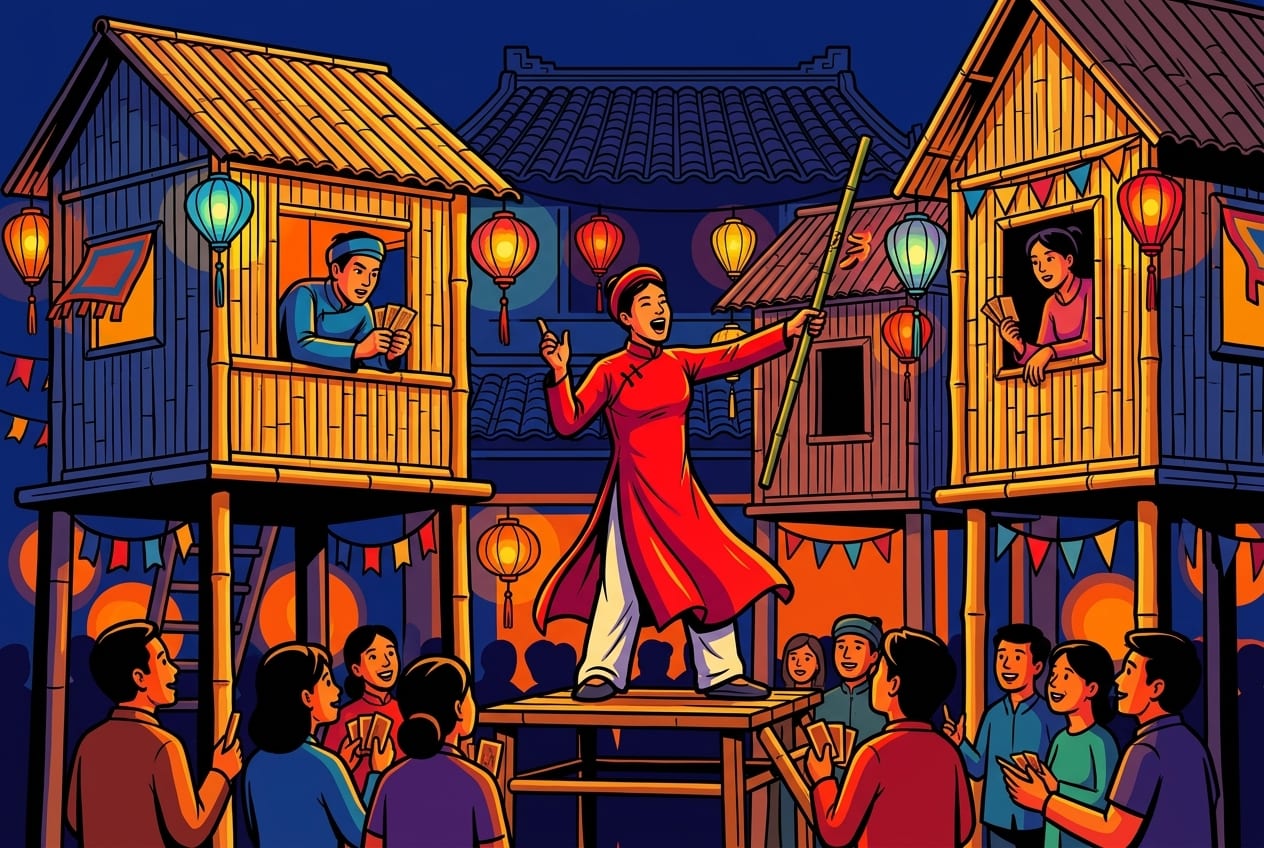
If you find yourself wandering the lantern-lit banks of the Hoai River in Hoi An or strolling along the Han Riverfront in Da Nang on a weekend night, you will inevitably encounter a mesmerizing soundscape. The rhythmic clack of wooden clappers, the resonant boom of a brass gong, and the soaring, poetic melodies of a folk singer fill the humid night air. You have stumbled upon Bài Chòi, Central Vietnam’s beloved street game that plays out like a theatrical, musical version of bingo. For the uninitiated expat, the scene can look beautifully chaotic: locals perched in elevated bamboo huts, shouting in regional dialects, while performers in elegant silk garb command a central stage. But once you understand the cultural heartbeat behind the game, you will realize it is one of the most welcoming, joyful community rituals in the country.
What is Bài Chòi? Central Vietnam's Musical Masterpiece
Bài Chòi is a traditional Vietnamese performing art and folk game combining music, poetry, and acting. Recognized by UNESCO as Intangible Cultural Heritage, it functions as a form of musical bingo where players match wooden cards to poetic riddles sung by local performers on an open-air street stage.
To truly appreciate why locals gather around the game night after night, you have to look back centuries. Originating as a practical pastime for peasants guarding their crops from wild animals in the mountainous regions of Central Vietnam, farmers built elevated bamboo huts (chòi) to keep watch. To ward off sleep, loneliness, and the dark of the jungle, they would sing songs and shout riddles to one another from hut to hut. Over time, this rustic communication system evolved into a highly structured, theatrical card game. In 2017, the UNESCO's official registry inscribed the Art of Bài Chòi as an Intangible Cultural Heritage of Humanity, cementing its status as a vital piece of Vietnam’s living history.
Unlike western bingo, which relies on a dry reading of numbers, Bài Chòi is a celebration of oral literature, comedy, and daily life. The songs sung during the game—known as dân ca (folk songs)—are filled with witty wordplay, satirical commentary on local gossip, moral lessons, and playful double entendres. It serves as a communal living room where neighbors and visitors alike sit side-by-side, sharing a laugh and enjoying the cool evening breeze.
The Sensory Spectacle: What You See and Hear
A typical Bài Chòi game features nine to eleven elevated bamboo huts arranged in a U-shape around a central stage. The vibrant performance area is illuminated by warm silk lanterns, filled with the sounds of wooden clappers, and dominated by actors dressed in brilliant red and blue traditional silk Áo Dài.
The visual landscape of a game is a striking, sensory-rich spectacle. The dominant colors are a warm, festive palette of crimson red, bright canary yellow, and the natural, earthy browns of raw bamboo. The entire setup is arranged in a U-shape, placing the central stage at the heart of the action. The performers, known as Hiệu, command this stage. They are dressed in elegant, traditional silk Áo Dài (often in brilliant red or royal blue with gold embroidery) or rustic Áo Bà Ba, topped with conical hats (Nón Lá) or traditional turbans (Khăn Đóng).
Under the tropical night sky, the entire scene is bathed in the warm, golden glow of hanging silk lanterns, casting long shadows on the historic yellow-walled merchant houses of the background. The air is filled with the scent of nearby street food, the gentle breeze from the river, and the rhythmic clack of wooden clappers (sanh sứa) and brass gongs. It is a lively, theatrical atmosphere that invites you to forget the stresses of daily life and simply exist in the moment.
Step-by-Step: How to Play Bai Choi Vietnam
To play, buy a three-pronged wooden card for 20,000 to 30,000 VND, sit in a bamboo hut, and listen to the host's poetic riddles. When your card's symbol is called, collect a flag from the runner; three flags win the round, prompting you to shout 'Tới!' and beat a wooden drum.
Do not let the language barrier intimidate you; the game is highly visual and incredibly easy to join. Here is exactly how to play and win your first round of Bài Chòi in Central Vietnam:
1. Buy your card: Approach the organizers near the stage and purchase a three-pronged wooden or bamboo card (thẻ bài). In 2025–2026, ticket prices remain very affordable, holding steady at a modest 20,000 to 30,000 VND ($0.80 – $1.20 USD) per card. Each prong on your card features a distinct folk art symbol or a character derived from simplified Chinese characters.
2. Find your seat: Climb up into one of the elevated bamboo huts if you want the full traditional experience, or grab a seat on the plastic stools surrounding the central stage. Sitting on these stools is a classic Vietnamese street experience, much like mastering the plastic stool at a local noodle stall.
3. Listen for your symbols: The Hiệu will draw a bamboo stick from a central cylinder. Instead of just reading the name of the symbol, they will sing a cryptic, poetic riddle hinting at the symbol on that stick. For example, they might sing a poem about the beauty of a faithful wife to hint at the symbol for 'fidelity'.
4. Claim your flag: If you hear or see that your symbol has been called, wave your card. A runner will quickly bring a small, triangular yellow or red flag to place on your bamboo stick. Don't worry if your Vietnamese is limited; the runners are highly attentive and will point out your matches if you look confused.
5. Declare victory: Once you collect three flags (matching all three symbols on your card), shout "Tới!" (meaning "Arrived!" or "Won!") and beat the small wooden drum or gong provided in your hut. You will be crowned the winner of the round and awarded a traditional souvenir, such as a handmade silk lantern, a clay toy (tò he), or a small cash prize of around 50,000 to 100,000 VND.
Why Language Apps Won't Prepare You for the Street
Standard language apps fail at Bài Chòi because the game relies on Central Vietnamese dialects, homophones, and highly localized cultural puns. The singers improvise poetic verses that require an understanding of regional slang, making active listening and visual cues from helpful local runners essential for expats trying to win.
If you have spent months practicing on standard language apps, you might expect to understand the numbers or basic words called out during the game. However, as discussed in our guide on why your language app isn't enough for Vietnam, street-level Vietnamese is a completely different beast. Central Vietnamese dialects feature distinct tones, heavy accents, and unique vocabulary that differ significantly from standard Northern or Southern Vietnamese.
In Bài Chòi, the linguistic challenge is doubled because the Hiệu do not speak; they sing in a stylized, theatrical folk style. They use ancient idioms, homophones, and local puns that even Vietnamese tourists from Hanoi or Saigon sometimes struggle to decode. The beauty of the game is that you do not need to be fluent to enjoy it. The theatrical expressions of the performers, the physical gestures of the crowd, and the helpful assistance of the local game runners bridge the language gap perfectly.
Do
- Laugh along with the crowd even if you do not understand the joke; the energy of the game is contagious.
- Cheer enthusiastically for other winners to show community spirit.
- Keep your game card clearly visible so the local runners can help you spot matches.
- Treat the performers with the same respect you would show actors in a formal theater.
Don't
- Do not hesitate to climb into the bamboo huts; they are open to everyone, including foreign travelers.
- Avoid blocking the central stage area where the performers move and act.
- Do not leave your seat mid-round if you can avoid it, as it can disrupt the flow of the game runners.
Where to Find the Best Games in Central Vietnam
The most famous Bài Chòi games run nightly in Hoi An's Ancient Town along the Hoai River. You can also experience lively weekend games near Da Nang’s Dragon Bridge on the Han Riverfront, or attend highly authentic, large-scale community matches at Nguyen Tat Thanh Square in Quy Nhon.
If you are planning your itinerary, here are the top places to experience and play Bai Choi Vietnam in 2025–2026:
Hoi An Ancient Town: The open-air stage by the Hoai River on Bach Dang Street is the most atmospheric venue in the country. Operating nightly from 7:00 PM to 9:30 PM, it is highly interactive and very welcoming to international tourists. You can find more information about local events on the Vietnam National Authority of Tourism website.
Da Nang City: For a more modern, urban twist on the tradition, check out the lively weekend performances along the Han Riverfront, located near the eastern side of the famous Dragon Bridge. The games here are loud, energetic, and draw a fantastic mix of young locals and expats.
Quy Nhon: Often considered the historical cradle of the art form, Quy Nhon hosts highly authentic, large-scale games at Nguyen Tat Thanh Square during festivals and weekends. If you want to see Bài Chòi played with deep historical reverence and minimal tourist catering, this is the place to go.
Do I need to understand Vietnamese to win a round of Bài Chòi?
No, you do not need to speak or understand Vietnamese to win. The game cards feature distinct visual symbols and Chinese characters. Additionally, the game runners are incredibly attentive; if they see you holding a card with a matching symbol, they will point it out and hand you a flag automatically.
Can children participate in the game?
Absolutely! Bài Chòi is a wholesome, family-friendly community event. Children love sitting in the elevated bamboo huts, waving the wooden cards, and beating the drums when someone wins. It is a fantastic way to introduce kids to traditional Vietnamese art forms.
What kind of prizes can you win in Bài Chòi?
Prizes are symbolic and traditional rather than high-value. Winners typically receive beautiful handmade silk lanterns, traditional clay toys (tò he), or small cash prizes ranging from 50,000 to 100,000 VND (~$2 to $4 USD). The real prize is the applause of the crowd and the honor of beating the victory drum!
Practise the words you just read
Vietnamese phrases for real situations, each with native audio in both accents.
Topics
Read more
Other posts from our Vietnamese learning blog.

By Xinchao team
The Cat-and-Mouse Game of Hanoi's Train Street: Your 2026 Survival Guide to Visiting Safely (and Legally)
How do you navigate the guards, barricades, and narrow tracks of Hanoi's Train Street in 2026? Learn the insider rules to visit safely, legally, and respectfully.

By Xinchao team
Midnight at the Cemetery: Why Thousands of Vietnamese Pilgrims Flock to Cô Sáu under the Stars
Discover the deep history, essential etiquette, and practical steps for participating in Côn Đảo's famous midnight pilgrimage to the grave of Cô Sáu.

By Xinchao team
Beyond the Beach: Why You Must Experience Ninh Thuan’s Mystical Cham Kate Festival
Ready to go beyond the beach? Experience Ninh Thuan's mystical Cham Kate Festival at Po Klong Garai. Learn the deep cultural meanings, crucial etiquette, and expert survival tips for expats.