Mastering the Plastic Stool: A Beginner's Guide to Vietnamese Street Food Etiquette
Learn the unspoken rules of Vietnam's street food scene. From using two hands to sharing condiments, master the social hacks of the plastic stool culture.
The Magic of the Low Plastic Stool
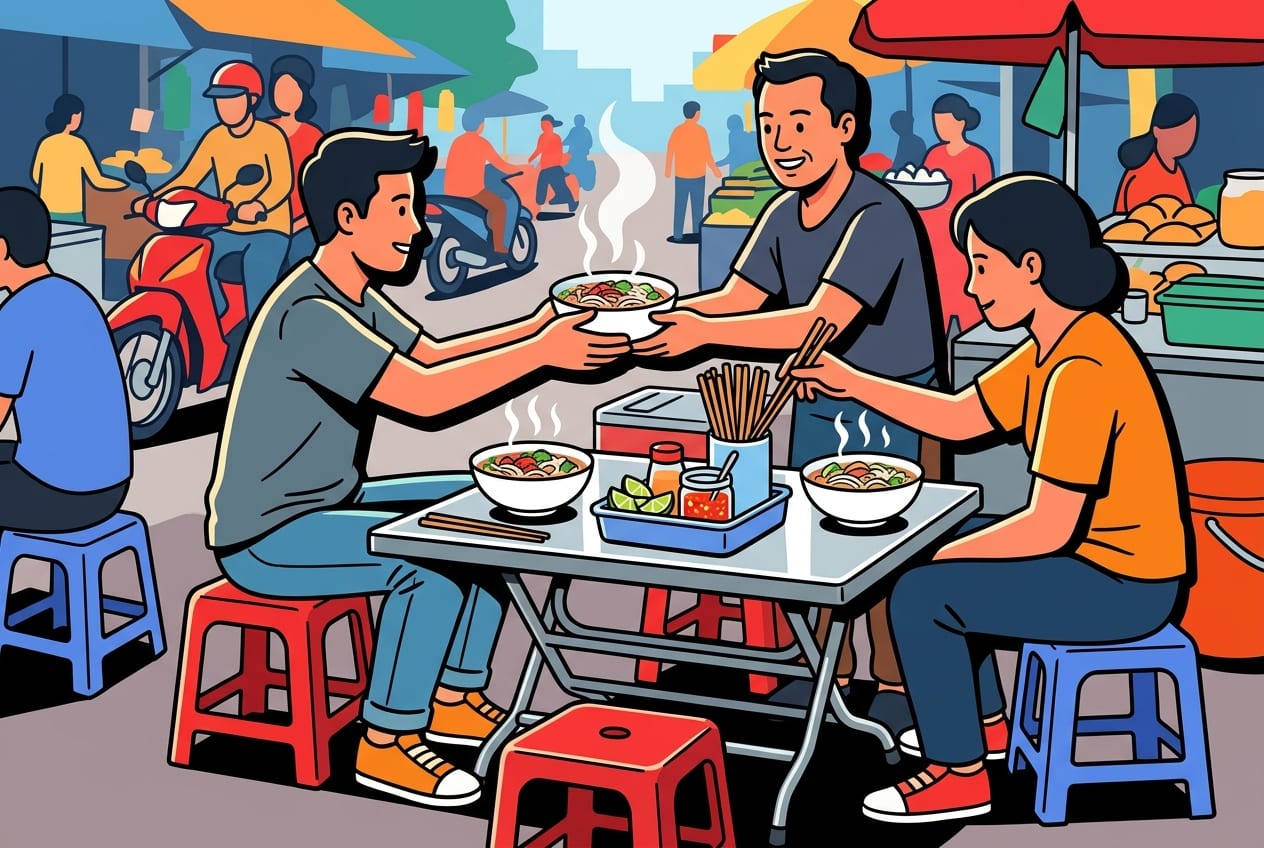
When you first arrive in Vietnam, you might be surprised to see grown adults sitting on tiny, colorful plastic stools that look like they belong in a kindergarten classroom. But in Vietnam, the 'vỉa hè' (sidewalk) is the great equalizer. Whether you are a wealthy businessman in a tailored suit or a student on a budget, everyone sits at the same height. This setup isn't just about saving space; it's about a culture of closeness and community. Eating on the street means you are part of the city's heartbeat, sharing the same air, the same humidity, and often the same condiment jar as the person next to you.
Understanding the etiquette of these stalls is the fastest way to transition from a 'tourist' to a 'guest.' Vietnamese culture is deeply rooted in respect and 'tình cảm' (affection/feeling). Even in the middle of a noisy, chaotic street, there is a delicate dance of manners happening. By learning a few simple hacks, you won't just get better service; you'll show the locals that you value their way of life.
The 'Two-Hand' Rule and Respect
If there is one rule that will immediately make you look like a local expert, it is using two hands. In Vietnam, giving or receiving something with only one hand can sometimes feel dismissive or lazy, especially when interacting with someone older than you. When the vendor hands you a steaming bowl of Phở or Bún Chả, reach out with both hands to take it. Similarly, when you hand over your money at the end of the meal, use both hands or place your left hand on your right elbow as you give the cash. It is a small gesture that signals, 'I respect you and the food you have prepared.'
This focus on respect also extends to how you handle your tools. Before you eat, you will often see a container of chopsticks and spoons. It is common practice to take a paper napkin, squeeze a bit of lime juice on it, and wipe down your utensils. This isn't necessarily because they are dirty, but it's a ritual of preparation. If you are eating with a local friend, it is a very kind gesture to wipe a pair of chopsticks and hand them to your friend first using both hands.
Do
- Use both hands when giving or receiving money and food.
- Wipe your chopsticks and spoon with a napkin and a squeeze of lime before eating.
- Keep your feet tucked under your stool; stretching them out can trip people in tight spaces.
- It is okay to slurp! It shows the cook that you are enjoying the hot broth.
Don't
- Don't stick your chopsticks vertically into a bowl of rice; it looks like incense for the dead.
- Don't point at people or food with your chopsticks.
- Don't worry about the floor—it is common to drop napkins or lime peels on the ground (they sweep later), though many modern stalls now provide small bins.
Navigating the Condiment Caddy
Every street food table has a 'caddy' filled with jars. You’ll usually find chili sauce, pickled garlic, fresh limes, and fish sauce. The hack here is to taste the broth first before adding anything. Vietnamese chefs take great pride in the balance of their broth. Once you've tasted it, feel free to customize. If you like it spicy, add the chili, but do so in small increments. If you are sharing a dipping sauce (like the one served with spring rolls), try not to 'double-dip' if the bowl is communal. Instead, pour a little into your own small side dish if one is provided.
Do I need to leave a tip at street food stalls?
Tipping is not expected at street food stalls or casual local eateries. The price listed is what you pay. However, if the service was exceptional, you can leave the small change (like 5,000 or 10,000 VND), but don't feel obligated. A sincere 'Cảm ơn' (Thank you) is often more appreciated.
Is it rude if I don't finish everything in my bowl?
Not at all! Vietnamese portions can be generous. While it's good to show you enjoyed it, leaving a bit of broth or some herbs is perfectly fine. The most important thing is that you enjoyed the experience and didn't rush through the meal.
Finally, when it's time to pay, don't wait for a check to be brought to your table. In the world of street food, you usually call out to the vendor or walk up to the cooking station. You can simply say 'Tính tiền' (Calculate the money). It’s a fast, efficient system that keeps the stools turning over for the next hungry customer.
Practise the words you just read
Vietnamese phrases for real situations, each with native audio in both accents.
Topics
Read more
Other posts from our Vietnamese learning blog.
By Xinchao team
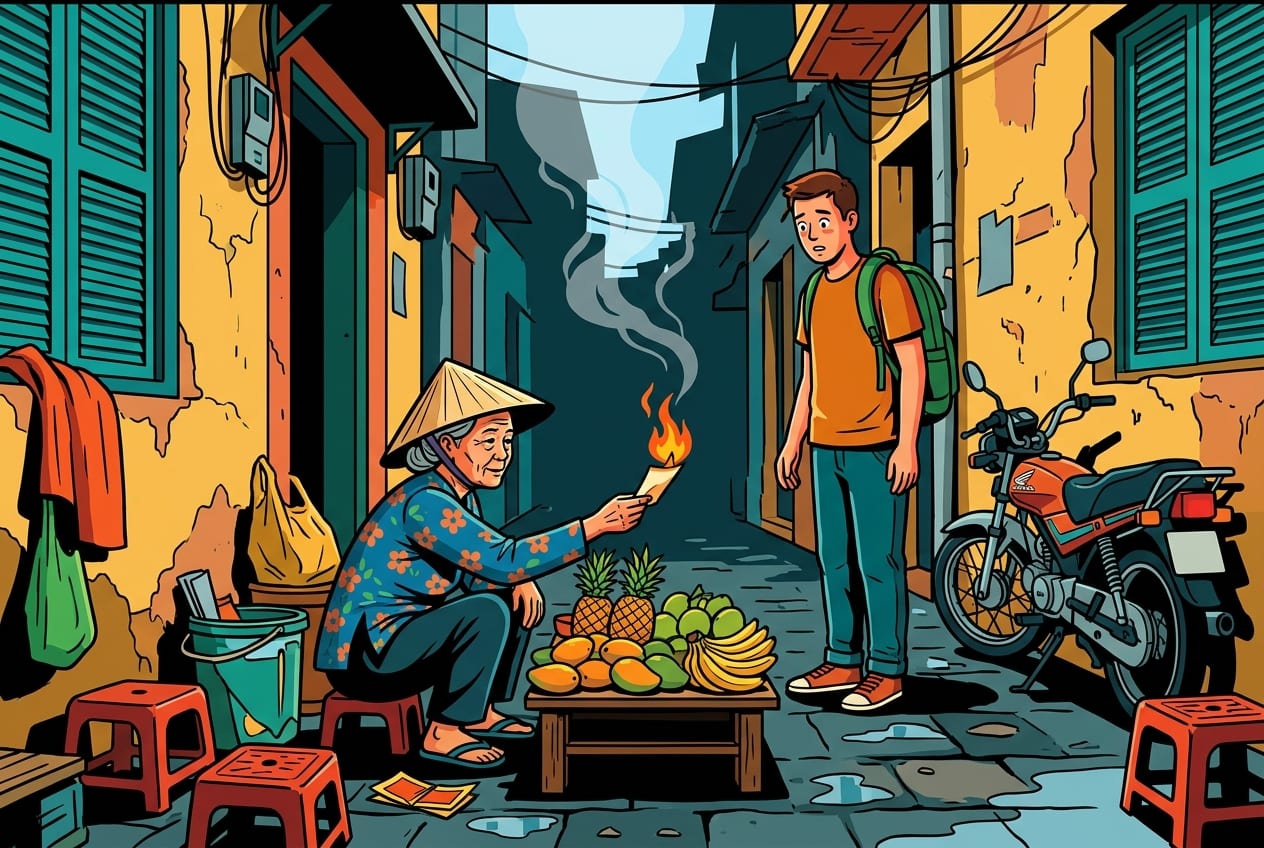
Don't Be the First Customer! An Expat’s Guide to Vietnam's Sacred Morning Rituals of 'Mở Hàng' and 'Đốt Vía'
Ever wondered why a Vietnamese street vendor looked terrified when you asked for a price early in the morning? Welcome to the delicate, sacred rituals of Mở Hàng and Đốt Vía.
By Xinchao team
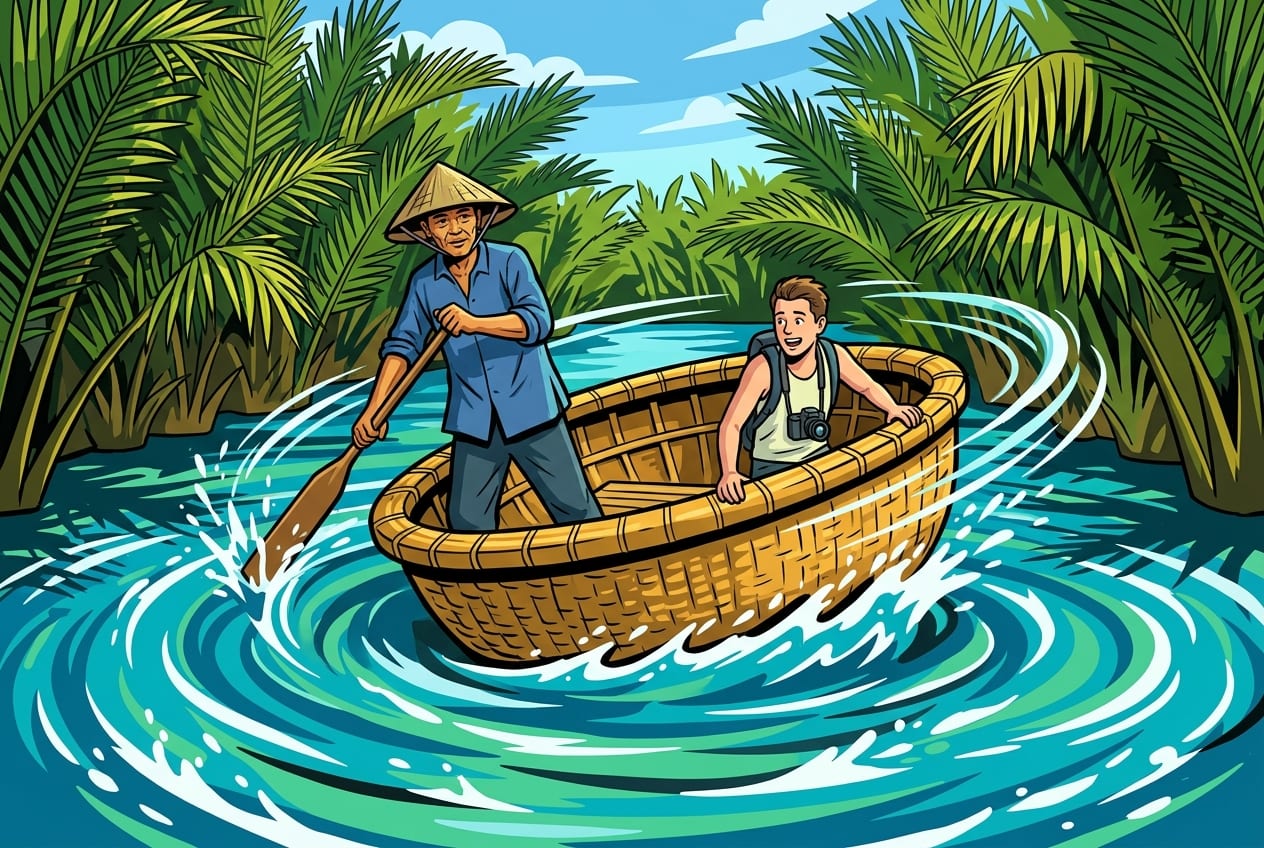
Survival of the Spinnest: Your Expat Guide to Navigating Hoi An’s Dizzying Basket Boat Culture
Get ready to spin! Dive into the history, pricing, and survival tips for navigating Hoi An's iconic basket boats in Cam Thanh Coconut Forest.
By Xinchao team
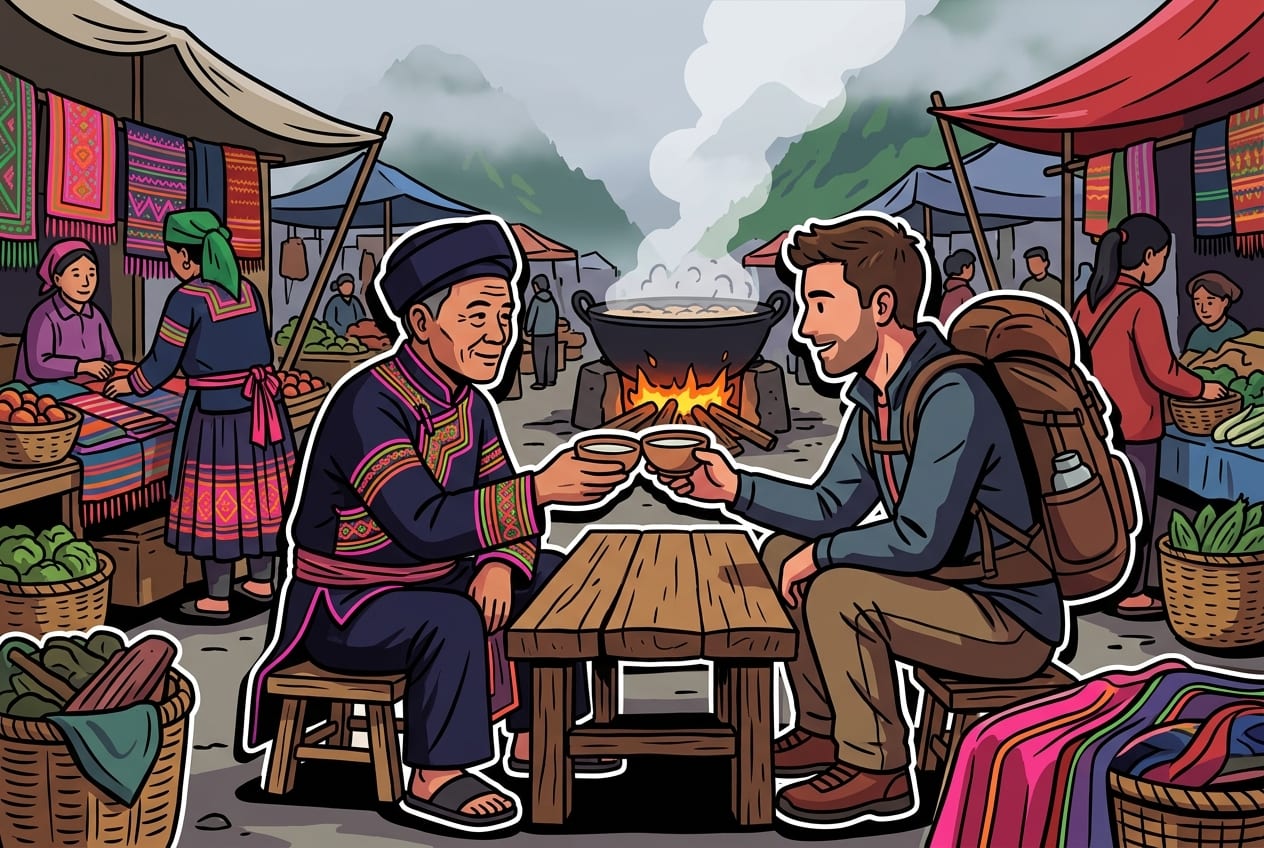
A Bowl of Corn Wine and a Handshake: Your Expat Survival Guide to Highland Market Etiquette in Ha Giang
Ready to brave the legendary Sunday markets of Ha Giang? Discover the essential rules of highland etiquette, from sharing a bowl of fiery corn wine to mastering the physical handshake ritual.