Chasing the "Tiger Cages": Your Guide to Finding Hanoi's Coolest Cafes Hidden in Soviet-Era "Nhà Tập Thể"
Venture beyond the tourist trails of the Old Quarter to explore the crumbling, historic apartment blocks where Hanoi's youth have built an underground retro-cafe revolution.
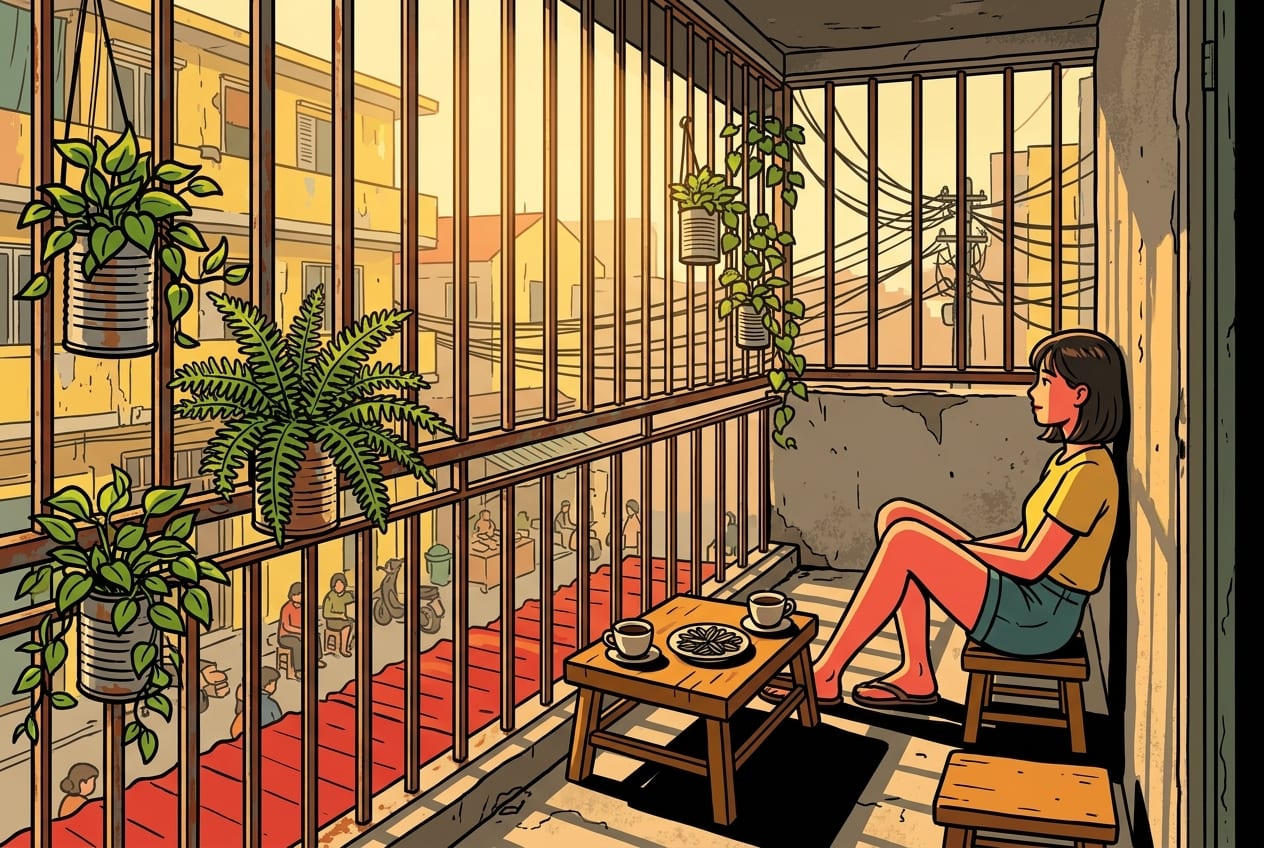
To truly understand the soul of Hanoi, you have to look past the neon signs of the Old Quarter and look upward at the crumbling, concrete monoliths known as Nhà Tập Thể. Built between the 1960s and 1980s, these Soviet-style collective housing blocks are living monuments to Hanoi's past. Today, they host a thriving, secret world of retro-cool cafes tucked away inside iron-grated balcony extensions called chuồng cọp (literally "tiger cages"). For local Gen Z and Millennials, sipping a slow-dripped robusta in these historic spaces is a romantic nod to their parents' past and a peaceful escape from modern high-rises.
The Secret Concrete Jungle: What are Hanoi’s Soviet-Era 'Nhà Tập Thể'?
Hanoi's Soviet-era "Nhà Tập Thể" are mid-century collective housing blocks built between the 1960s and 1980s to house state workers during the post-war subsidy era. Today, these weathered, mustard-yellow concrete structures have transitioned from austere communist living quarters into vibrant, nostalgic cultural hubs filled with hidden retail and cafes.
To appreciate these spaces, you have to understand the era that birthed them. During the lean post-war subsidy era, known in Vietnamese as Thời bao cấp, the state distributed housing to families based on their job and family size. These sprawling concrete blocks were modeled after Soviet-style communal apartments, designed to foster a sense of egalitarian, collective living. You can learn more about the development of the capital city on the official Britannica Hanoi page.
Decades later, these blocks have aged into beautiful, weathered relics. The walls are painted a signature faded mustard-yellow (vàng nghệ), accented by peeling paint, moss-green (xanh rêu) wooden shutters, and a chaotic canopy of overhead electrical cables. Walking into a Nhà Tập Thể courtyard is like stepping into a time capsule where the rush of 21st-century Hanoi suddenly slows down to a crawl.
What is a 'Tiger Cage' (Chuồng Cọp) and Why Do We Drink Coffee in Them?
A "tiger cage" (chuồng cọp) is an iron-grated balcony extension welded onto Hanoi's collective apartments to expand living space. Hanoi's youth drink coffee inside them to connect with the raw, lived history of their parents' generation, transforming these cramped, industrial structures into cozy, plant-filled creative sanctuaries.
As families grew during the late 20th century, the tiny, government-allotted apartments became incredibly cramped. To claw back precious square footage, residents took matters into their own hands. They welded makeshift, iron-grated balcony cages onto the exterior walls, letting them hang out over the courtyards below. Locals colorfully nicknamed these steel-cage extensions chuồng cọp (tiger cages).
Today, creative local entrepreneurs have converted these steel cages into the seating areas of Hanoi's coolest cafes. Sitting inside a chuồng cọp surrounded by hanging ferns and vintage relics feels like being suspended in mid-air above the city's daily hustle. While enjoying the view, you can sample the local brew and contemplate the regional differences in drink names—such as why your coffee is 'brown' in Hanoi but 'milky' in Saigon.
How to Hunt for Hidden Cafes: A Step-by-Step Survival Guide
Finding Hanoi's hidden cafes requires ignoring GPS glitches, locating hand-painted entrance signs in dark alleys, and ascending dim, wire-draped concrete stairwells. By following the scent of roasting beans and the sound of indie music, travelers can transition from active residential corridors into peaceful, sunlit balcony oases.
Finding these hidden gems is half the fun, but it can be intimidating for first-time visitors. Your phone's GPS will likely spin in circles once you enter the dense concrete canyons of a housing block. To find your way, keep your eyes peeled for tiny, hand-painted wooden signs or a single warm lightbulb hanging at the entrance of a dark ground-floor alleyway.
Once you find the entrance, you must ascend the dim, winding concrete stairwells. These staircases are active residential pathways: they are often damp, smell of home-cooked bún chả, and are draped in a chaotic web of black utility wires. Do not turn back! Simply follow the faint sound of indie music or the sweet aroma of roasted coffee beans until you emerge into a sunlit, plant-draped oasis.
When it comes to paying for your drinks, things have modernized. While cash is always accepted, almost all hidden cafes now prefer instant QR code bank transfers (VietQR) or MoMo mobile digital wallets. Many foreign travelers can easily use these digital payment methods by linking their international cards to local payment apps.
The Best 'Nhà Tập Thể' Cafes to Explore in Hanoi
The top collective housing cafes in Hanoi include Cư Xá Cà Phê in Khương Thượng, famous for egg coffee and 1990s childhood nostalgia, and Cà Phê Sổ in Nghĩa Tân, known for its quiet artist community and slow-dripped robusta. These spots offer authentic retro-cool atmospheres priced between 35,000 and 65,000 VND.
If you want to experience the absolute pinnacle of this hidden cafe subculture, make your way to Cư Xá Cà Phê. Located on the second floor of Block A11 inside the Khương Thượng collective housing block in Đống Đa District, this cafe is legendary among local youth. They specialize in nostalgic childhood snacks from the 1990s, served alongside rich, frothy cà phê trứng (egg coffee) and creamy bạc xỉu. The interior is decorated with vintage floral-patterned peacock blankets (chăn con công), old rotary phones, and retro thermos flasks.
For a quieter, more artistic vibe, head to Cà Phê Sổ, hidden deep within the leafy, nostalgic blocks of Tập thể Nghĩa Tân in Cầu Giấy District. Here, local artists and writers gather on low-slung wooden stools (ghế đẩu) to drink traditional slow-dripped robusta while listening to the hum of the courtyard below. Drinks at both spots are incredibly affordable, ranging from 35,000 to 65,000 VND ($1.40 – $2.60 USD).
Etiquette and Social Rules in Active Residential Blocks
Visiting active "Nhà Tập Thể" blocks requires travelers to respect the residents' daily lives by keeping voices quiet in echoey stairwells, yielding to elders, and avoiding photographing private spaces or drying laundry. This respectful behavior preserves the delicate balance between local housing and Hanoi's modern cafe culture.
It is crucial to remember that these historic housing blocks are not museum exhibits—they are active, tight-knit residential communities. The concrete stairwells act like giant megaphones, echoing every sound directly into people's living rooms. When climbing up to a cafe, always keep your voice down to a whisper.
Additionally, respect the privacy of the locals. Never point your camera at residents' private apartments, drying laundry, or daily chores without explicit permission. When navigating the narrow, winding steps, always yield the right of way to elders carrying heavy groceries. By practicing these simple rules of respect, you help ensure that these unique creative sanctuaries can continue to coexist peacefully with the local communities.
Do
- Keep your voice to a whisper when walking up the narrow concrete stairwells.
- Yield the stairs to elderly residents carrying groceries or laundry.
- Always ask for permission before taking photos of residents or their private doorsteps.
- Try using VietQR or MoMo for a seamless local payment experience.
Don't
- Do not touch or disturb the water meters, mailboxes, or hanging electrical wires.
- Do not block the narrow stairwells with large bags or heavy camera tripods.
- Avoid making loud noises or shouting inside the enclosed balconies.
Is it safe to walk through these dark, old Nhà Tập Thể stairwells?
Yes, they are highly safe! While they look dim, weathered, and covered in tangled wires, these are active, tight-knit family residential buildings. The residents are accustomed to seeing cafe-goers, but always remain polite, quiet, and respectful of their private spaces.
Can I pay with credit cards at these hidden cafes?
Most of these tiny, hidden cafes do not accept international physical credit cards. However, they almost all accept cash (VND) or local digital payments like VietQR and MoMo, which can often be linked to international accounts.
How do I find the entrance if my Google Maps is confused?
Look for a small, hand-painted wooden sign or a glowing lightbulb at the entrance of a ground-floor alleyway. If you get completely lost, politely ask a local resident by pointing and saying 'cà phê?'—they will usually smile and point you toward the correct stairwell.
Practise the words you just read
Vietnamese phrases for real situations, each with native audio in both accents.
Topics
Read more
Other posts from our Vietnamese learning blog.

By Xinchao team
The Cat-and-Mouse Game of Hanoi's Train Street: Your 2026 Survival Guide to Visiting Safely (and Legally)
How do you navigate the guards, barricades, and narrow tracks of Hanoi's Train Street in 2026? Learn the insider rules to visit safely, legally, and respectfully.

By Xinchao team
Midnight at the Cemetery: Why Thousands of Vietnamese Pilgrims Flock to Cô Sáu under the Stars
Discover the deep history, essential etiquette, and practical steps for participating in Côn Đảo's famous midnight pilgrimage to the grave of Cô Sáu.

By Xinchao team
Beyond the Beach: Why You Must Experience Ninh Thuan’s Mystical Cham Kate Festival
Ready to go beyond the beach? Experience Ninh Thuan's mystical Cham Kate Festival at Po Klong Garai. Learn the deep cultural meanings, crucial etiquette, and expert survival tips for expats.