Burning a Paper Tesla for the Ancestors: Decoding Vietnam's Wildly Creative 'Vàng Mã' Rituals
Step into the smoky, colorful world of Vietnam's ancestral rituals, where ancient filial piety meets modern consumerism in a blaze of paper Teslas, iPhones, and luxury villas.
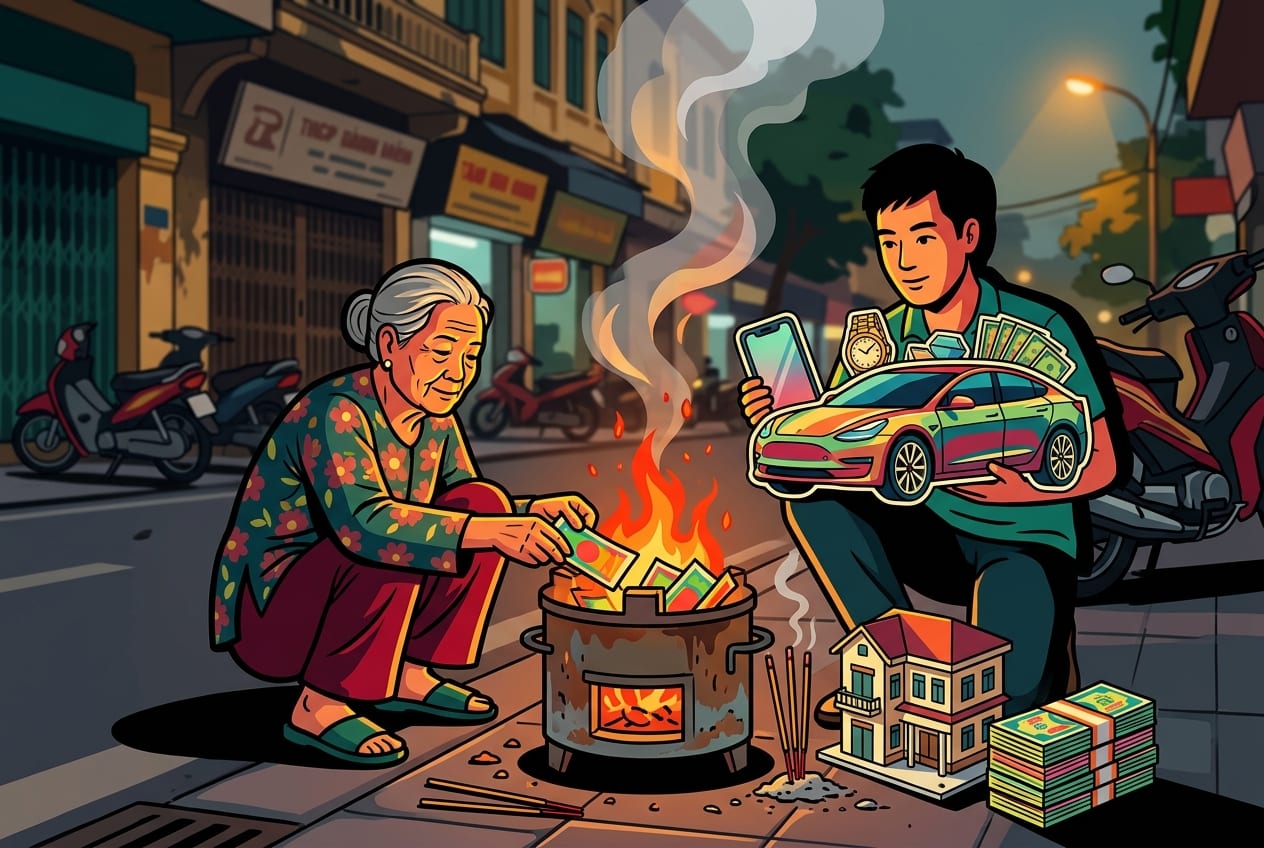
If you find yourself wandering the labyrinthine streets of Hanoi’s Old Quarter or the historic alleys of Ho Chi Minh City’s Cholon district at dusk, you will likely encounter a mesmerizing, slightly smoky spectacle. On the gray concrete sidewalks, tucked between parked motorbikes and tiny plastic stools, locals tend to small, glowing metal drums. Inside, brilliant orange and red flames consume what look like miniature luxury goods: designer handbags, sleek smartphones, bundles of high-denomination currency, and even incredibly detailed paper replicas of electric sports cars.
This is the art of burning joss paper in Vietnam, known locally as vàng mã. Far from a quirky modern fad, this practice is a deeply rooted spiritual tradition that bridges the gap between the earthly realm and the afterlife. For travelers, witnessing a burning ceremony is a window into the warm, complex heart of Vietnamese family life. It is an experience where ancient mysticism meets the grit of the modern street, filling the humid night air with the sweet, heavy scent of burning sandalwood incense.
What is Vàng Mã? The Spiritual Tech Support of Vietnam
Vàng mã is the Vietnamese practice of burning realistic paper replicas of money, clothes, and modern luxury items to send to ancestors in the afterlife. Rooted in ancient spiritual traditions, this ritual ensures deceased relatives have everything they need to live comfortably in the spirit world while protecting the living family.
At its core, the ritual is an expression of filial piety (hiếu), the foundational pillar of Vietnamese family structure. In Vietnam, death is not a final departure but a transition to another state of being. Ancestors are believed to continue existing in a parallel spiritual realm, from which they watch over, protect, and bless their living descendants. However, this relationship is reciprocal: the living must care for the dead.
To leave an ancestor without resources in the afterlife is considered a failure of familial duty. Thus, families burn paper offerings to physically transmit these goods through the medium of fire. Once reduced to delicate gray ash and rising smoke, these items are believed to materialize in the spirit world, ready for use by the family's departed loved ones.
"As on Earth, So in the Underworld": The Soul of Trần Sao Âm Vậy
The core philosophy of 'trần sao âm vậy' dictates that the afterlife mirror the physical world. Because living people now enjoy advanced technology and luxury goods, Vietnamese families believe their ancestors also require paper iPhones, electric vehicles, and designer gear to maintain their social standing and comfort in the spirit realm.
To understand why a Vietnamese grandmother might burn a paper credit card or a high-tech gadget, one must grasp the popular folk concept of "trần sao âm vậy" (literally: as on earth, so in the underworld). The spiritual realm is not envisioned as a cloud-filled paradise of static peace, but rather as a bustling, bureaucratic reflection of our own world.
If we require passports to travel, so do the ancestors. If we need a stable 5G connection to call our friends, surely the spirits need a paper iPhone 16 Pro Max to keep in touch with their neighbors in the afterlife. This charming philosophy means that as the material world upgrades, the spiritual world must receive its software updates as well. It is a beautiful blend of deep respect and practical, everyday logic that keeps the tradition lively and relevant for younger generations.
From Paper Tunics to Paper Teslas: The Modern Upgrade
Vietnam’s joss paper offerings have evolved from simple paper currency into highly detailed replicas of modern consumer goods like Tesla Model Ys and iPhone 16s. This creative shift reflects the country’s rapid economic growth, transforming traditional filial piety into a colorful, modern display of spiritual consumerism.
Historically, vàng mã consisted of basic sheets of bamboo paper stamped with gold or silver foil representing currency, along with simple paper tunics and shoes. However, in tandem with Vietnam's rapid economic rise over the last few decades, the joss paper industry has experienced an explosion of consumerism. Today, specialized shops offer an astonishing array of paper replicas that mirror the desires of contemporary society.
Step into a shop and you will find paper villas complete with miniature solar panels, designer Chanel handbags, Rolex watches, Heineken beer cans, and even paper passports and credit cards. For those wanting to send their ancestors on a high-end commute, there are paper Honda SH motorbikes and Tesla Model Ys. Prices range from a modest 30,000 VND ($1.20 USD) for a basic set of paper clothes to upwards of 1,500,000 to 3,000,000 VND ($60 - $120 USD) for custom-built, life-sized paper motorbikes or multi-story luxury mansions.
Where the Magic is Made: Hàng Mã and Song Hồ Village
Most of Vietnam’s exquisite joss paper is crafted in Song Hồ Village in Bắc Ninh province and sold on Hanoi’s historic Hàng Mã Street. These hubs drive a multi-million-dollar industry, where artisans handcraft incredibly realistic, miniature paper replicas of luxury villas, credit cards, and vehicles for nationwide distribution.
The epicenter of this wildly creative, multi-million-dollar industry lies in two primary locations in northern Vietnam. The first is Hàng Mã Street in Hanoi's Old Quarter. For centuries, this street has been the go-to destination for festive decorations and paper goods. Walking down Hàng Mã is a sensory overload: a dense canopy of red lanterns, shiny foil decorations, and stacks of paper offerings waiting to be sold.
However, the true production powerhouse is Song Hồ Village in Bắc Ninh province, a short drive from Hanoi. In this unique craft hub, nearly the entire village is dedicated to designing, cutting, pasting, and shipping paper goods. Artisans here study real-world consumer trends closely, ensuring their paper Teslas and luxury villas match the exact aesthetic of the latest models on the market. If you are planning a cultural trip to northern Vietnam, exploring these craft hubs alongside a peaceful pagoda-hopping guide will give you a profound appreciation for the country's spiritual landscape.
Micro-Burning: Balancing Ancestral Duty with Green Cities
To combat air pollution and fire hazards in dense cities, modern Vietnamese families are shifting from burning massive piles of paper to 'micro-burning.' This practice involves choosing fewer, highly detailed symbolic items, allowing urban residents to fulfill their spiritual duties while respecting local environmental regulations and urban safety.
As vibrant and visually striking as these rituals are, they have run into the realities of modern urban living. In recent years, both the Vietnamese government and the Buddhist Sangha of Vietnam have actively discouraged excessive burning. The dense smoke from burning tons of paper across major cities during festivals causes severe air pollution, and the open flames present significant fire hazards in crowded alleyways.
According to reports by major international media outlets like Reuters, authorities have encouraged citizens to scale back their offerings. This has led to a fascinating social shift: the rise of "micro-burning." Instead of burning massive, cheap piles of paper, urban families increasingly opt for a few highly detailed, symbolic luxury items. This conscious compromise allows locals to maintain their spiritual duties and show respect to their lineage without compromising the safety and air quality of their modern neighborhoods.
Sidewalk Etiquette: How to Observe the Ritual Safely and Respectfully
When observing sidewalk burnings, travelers should maintain a respectful distance and avoid stepping over or disturbing the burning metal bins. Do not laugh or point at the whimsical paper items; instead, observe quietly and ask for polite permission before taking photos of families conducting these sacred ancestral rites.
For travelers, witnessing a sidewalk burning is a beautiful, intimate moment of local life. However, because this is a sacred religious rite, maintaining proper etiquette is essential. The best times to observe these rituals are on the 1st and 15th days of every lunar month, as well as during major festivals like Tết (Lunar New Year) and Vu Lan (Hungry Ghost Festival).
When you see a family burning offerings, remember that the metal drum (lò hóa vàng) is a sacred portal. According to local beliefs, spirits gather directly around the flames to collect their gifts. Stepping over the bin, kicking the ashes, or disturbing the area is considered highly disrespectful. Observe quietly from a distance, and avoid laughing or making fun of the whimsical nature of the items. To learn more about how to navigate complex social situations in Vietnam, check out our guide on Vietnamese wedding etiquette or our deep dive into the rules of the local Quán Nhậu.
Do
- Maintain a respectful distance of at least a few steps from the burning metal bins.
- Keep your voice down and observe the family with quiet respect.
- Smile and nod politely to the family members holding incense before taking any photos.
- Appreciate the incredible craftsmanship of the paper items sold in shops on Hàng Mã Street.
Don't
- Never step over, kick, or disturb the burning bins or the resulting ashes on the sidewalk.
- Do not laugh, point, or make fun of the whimsical paper luxury goods like beer cans or cars.
- Never touch or handle paper offerings that have already been prepared for a ritual without permission.
- Avoid blowing on the ashes or the fire, as this is believed to disrupt the spirits gathering their gifts.
Is it disrespectful for a foreign traveler to buy vàng mã as a souvenir?
Not at all! Shopkeepers on Hàng Mã Street are happy to sell these items to anyone. Buying a beautifully crafted paper smartphone, passport, or miniature luxury watch is a wonderful way to support the local economy and own a unique piece of Vietnamese folk art. Just handle them gently, as they are fragile.
Why do I sometimes see people pouring rice, salt, or wine onto the ashes after burning?
This is a finishing touch to the ritual. Pouring rice and salt is an offering to wandering, hungry spirits who might not have families of their own to care for them, ensuring they do not steal from your ancestors. Splashing a bit of wine or water onto the hot ashes is believed to seal the spiritual transaction, sending the goods safely to the correct ancestral recipients.
Are there specific guidelines on what types of paper goods are burned for different ancestors?
Yes. Families carefully select items that match the personality, age, and gender of the deceased. For a grandfather who loved riding motorbikes, a family might burn a paper Honda Cub. For a young relative, they might burn the latest paper gaming console or fashionable clothes. It is a highly personalized act of love, ensuring the gift truly suits the recipient.
Ultimately, the practice of burning joss paper in Vietnam highlights the enduring strength of family bonds. It shows that in Vietnamese culture, the line between life and death is thin, held together by memory, respect, and a surprising amount of creative humor. For further reading on the cultural significance of spiritual practices in East Asia, you can explore Wikipedia's overview of joss paper to see how this beautiful tradition connects communities across borders.
Practise the words you just read
Vietnamese phrases for real situations, each with native audio in both accents.
Topics
Read more
Other posts from our Vietnamese learning blog.

By Xinchao team
The Cat-and-Mouse Game of Hanoi's Train Street: Your 2026 Survival Guide to Visiting Safely (and Legally)
How do you navigate the guards, barricades, and narrow tracks of Hanoi's Train Street in 2026? Learn the insider rules to visit safely, legally, and respectfully.

By Xinchao team
Midnight at the Cemetery: Why Thousands of Vietnamese Pilgrims Flock to Cô Sáu under the Stars
Discover the deep history, essential etiquette, and practical steps for participating in Côn Đảo's famous midnight pilgrimage to the grave of Cô Sáu.

By Xinchao team
Beyond the Beach: Why You Must Experience Ninh Thuan’s Mystical Cham Kate Festival
Ready to go beyond the beach? Experience Ninh Thuan's mystical Cham Kate Festival at Po Klong Garai. Learn the deep cultural meanings, crucial etiquette, and expert survival tips for expats.