The Ultimate Honor: Your Expat Survival Guide to Attending a Vietnamese Death Anniversary (Đám Giỗ)
To be invited to a Vietnamese death anniversary is one of the highest cultural honors an expat can receive. Here is how to navigate the rituals, gifts, and legendary feasts like a seasoned local.
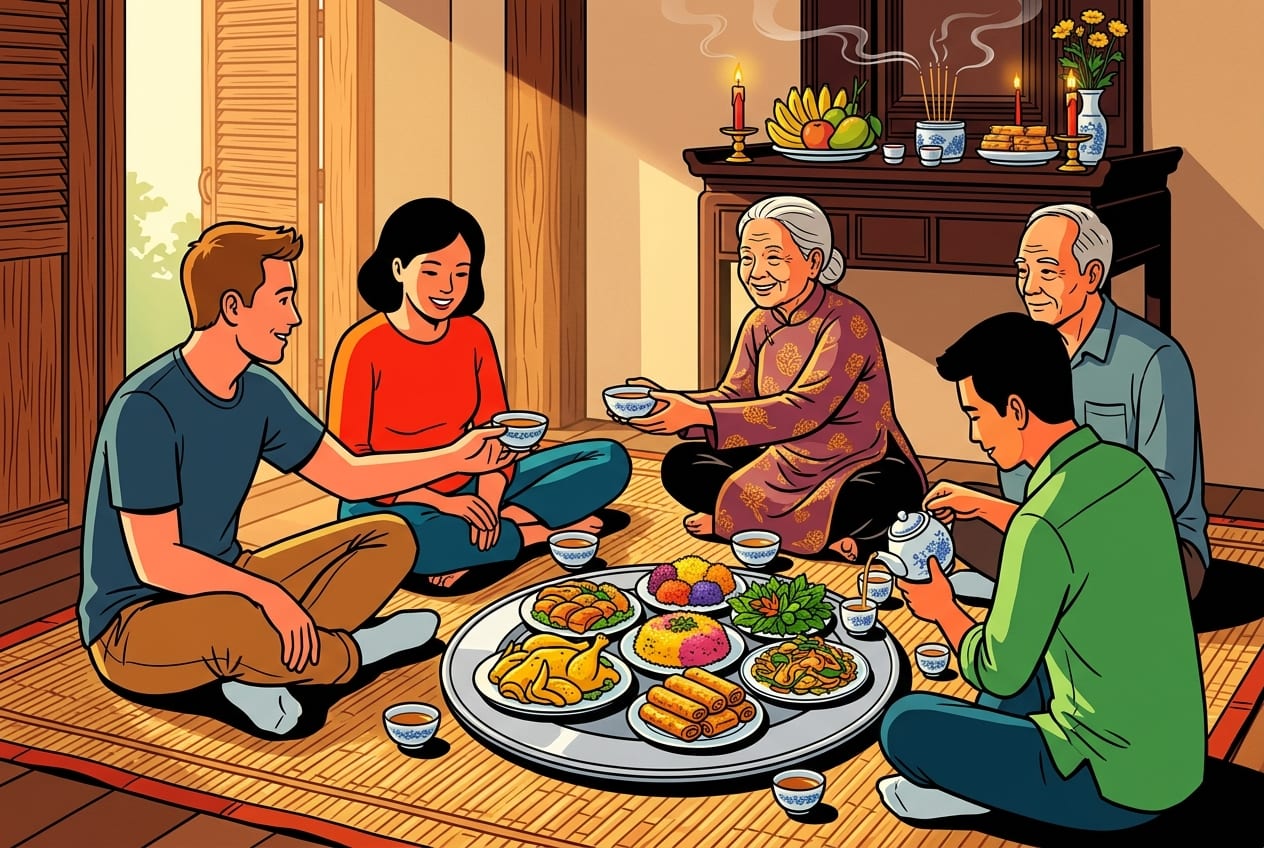
Living in Vietnam as an expat offers countless opportunities to witness local life, but few milestones match the honor of being invited to a family’s Đám Giỗ (death anniversary). If you are expecting a somber, tearful gathering akin to a Western memorial service, you are in for a surprise. In Vietnam, a death anniversary is a vibrant, sensory-rich celebration of life, lineage, and filial piety (đạo hiếu). It is a sacred day when the boundary between the living and the dead thins, and the ancestor is believed to return to earth to feast and bless the family.
For locals, this event serves as a vital social glue. It reunites extended families, reinforces community ties, and subtly establishes social hierarchy. As an expat, your invitation means you are no longer viewed as just a passing tourist; you are considered a trusted friend of the family. To help you navigate this complex, beautiful tradition with grace and confidence, we have compiled this comprehensive survival guide to attending a Vietnamese death anniversary.
What is a Đám Giỗ and Why is It Celebrated?
A Đám Giỗ is a traditional Vietnamese death anniversary celebrated annually on the lunar calendar to honor deceased ancestors. Rather than a somber funeral, it is a lively family reunion that fulfills the duty of filial piety, inviting the ancestor's spirit back to earth to feast with and bless the living family.
To understand the Đám Giỗ, one must understand ancestor worship in Vietnam. This practice is not a formal religion but a core cultural pillar practiced by almost all Vietnamese, regardless of their Buddhist, Christian, or secular affiliations. Families believe that ancestors continue to exist in a parallel spiritual realm, watching over their descendants. Neglecting the death anniversary is considered a grave failure of filial piety.
On this day, the household undergoes a transformation. The eldest male of the lineage usually leads the solemn rituals at the altar (bàn thờ), serving as the bridge between generations. Meanwhile, the women of the family traditionally dominate the kitchen, waking up at dawn to prepare elaborate multi-course feasts. This gender-based division of labor, heavily influenced by historical Confucian values, remains a common sight in both rural villages and modern urban apartments.
Gift-Giving Etiquette: What to Bring in 2025–2026
When attending a Vietnamese death anniversary, guests should bring high-quality gifts like premium imported fruit baskets, fine red wine, or bird's nest boxes costing between 500,000 and 2,000,000 VND. These gifts show deep respect for the family's ancestors and help offset the host's elaborate preparation expenses.
You should never arrive at a Đám Giỗ empty-handed. Because the feast is prepared as an offering to the deceased before the living consume it, your gift is symbolically presented to both the ancestors and the hosts. The gold standard for an expat guest is a premium, beautifully wrapped fruit basket (giỏ trái cây).
In urban centers like Hanoi or Ho Chi Minh City, expats favor high-end boutique chains such as Klever Fruits, Mia Fruit, or Farmers Market. A curated basket of imported cherries, Japanese grapes, and local mangoes is highly prized. Alternatively, a bottle of fine imported red wine or a box of premium bird's nest (Yến Sào Khánh Hòa) is an excellent choice. Here is a breakdown of typical gifting expenses for 2025–2026:
Gift Options and Estimated Costs:
- Premium Fruit Basket: 500,000 - 1,500,000 VND (~$20 - $60 USD) at specialty stores like Klever Fruits or Mia Fruit.
- Imported Wine / Spirits: 600,000 - 2,000,000 VND (~$25 - $80 USD) from retailers like Red Apron Fine Wines or Warehouse.
- Premium Bird's Nest (Yến Sào): 1,000,000 - 3,000,000 VND (~$40 - $120 USD) from reputable brands like Yến Sào Khánh Hòa.
Depending on the family, the event may take place in a high-rise apartment in Saigon's Vinhomes Central Park, a narrow multi-story tube house in Hanoi’s Ba Đình district, or a sprawling ancestral courtyard home in the Mekong Delta. No matter the setting, your thoughtful gift demonstrates that you respect the gravity of the occasion.
Altar Etiquette: How to Pay Respects (Thắp Hương)
To pay respects at the ancestral altar, hold one or three lit incense sticks with both hands near your forehead, bow deeply three times while silently wishing for the ancestor's peace, and place them in the brass burner. Always dress modestly in smart-casual attire to show proper respect.
Upon arrival, you will immediately notice the ancestral altar (bàn thờ), which serves as the visual and spiritual focal point of the home. It is typically adorned with glowing red candles, polished brass incense burners, fresh yellow chrysanthemums (hoa cúc), and plates of fresh fruit. The air is thick with the sweet, woody aroma of burning sandalwood incense, curling in delicate blue-grey smoke rings toward the ceiling.
Before you approach the altar, make sure you are dressed appropriately. Modesty is key: opt for smart-casual attire, such as a collared polo or shirt with long trousers for men, and a conservative midi-dress or blouse with pants for women. Avoid shorts, sleeveless tops, or overly bright, flashy party wear. If you are unsure about social interactions, take a moment to understand how the unique Vietnamese smile can be used to navigate polite greetings and ease any initial awkwardness.
The Ritual of Offering Incense
The act of offering incense, or thắp hương, serves as a spiritual bridge connecting the living with the deceased. It requires careful, respectful posture, holding the sticks with both hands to show humility, and placing them securely in the burner without blowing on the flame to avoid bad luck.
If the host invites you to pay respects (thắp hương), do not be intimidated. It is a profound gesture of acceptance. Step up to the altar, take one or three lit incense sticks with both hands, and hold them near your forehead. Close your eyes, bow deeply three times while silently wishing for the ancestor's peace and happiness in the afterlife, and then carefully place the sticks into the brass incense burner. If the flame flares up, gently wave your hand to extinguish it—never blow on the incense with your mouth, as this is considered disrespectful.
The Feast (Cỗ Giỗ): Eating, Drinking, and Surviving the Toasts
The Đám Giỗ feast, or cỗ giỗ, is a culinary celebration featuring traditional dishes like boiled chicken, sticky rice, and spring rolls. It begins after the eldest male invites everyone, transitioning into a lively social gathering where guests bond over food, drinks, and rhythmic toasts like 'Một, hai, ba, dô!'
Once the formal rituals wrap up, the environment shifts from solemn reverence to a bustling, joyous banquet. In many homes, tables are set up in narrow alleyways under temporary blue-and-white canvas canopies, or laid out on traditional woven bamboo mats (chiếu) on the floor. The tables are loaded with symbolic dishes: a glistening, golden-skinned whole boiled chicken (gà luộc) with its head intact, vibrant orange sticky rice colored with baby jackfruit (xôi gấc), and neatly sliced squares of green bánh chưng (square sticky rice cake).
Before picking up your chopsticks, wait for the host or the eldest family member to formally invite everyone to eat (mời). When the eating begins, you will also be introduced to Vietnam's legendary drinking culture. Be prepared for endless choruses of "Một, hai, ba, dô!" (1, 2, 3, cheers!). You can learn more about these lively drinking dynamics in our guide to Vietnam's roaring toast culture.
If you wish to pace yourself, keep your glass filled with ice, or politely decline by placing a hand over your glass and explaining that you cannot drink due to health or transportation reasons. Modern hosts are increasingly understanding of this. Focus instead on enjoying the incredible variety of food, sharing stories, and embracing the warm hospitality of your hosts.
Do
- Dress modestly (collared shirts, long trousers, or conservative midi-dresses).
- Use both hands when giving gifts, receiving food, or holding incense.
- Wait for the elders to invite everyone to eat before starting your meal.
- Bring a high-quality gift, such as a premium fruit basket or fine wine.
Don't
- Do not wear shorts, tank tops, or exceptionally bright, flashy party clothes.
- Do not blow on the incense sticks with your mouth to extinguish a flame.
- Do not point your chopsticks directly at other guests or stick them vertically into a rice bowl.
- Do not bring up highly sensitive or somber topics; remember, this is a celebration of life.
Is it acceptable for a non-Vietnamese expat to perform the incense ritual at the altar?
Yes, it is highly appreciated! If the host invites you to offer incense (thắp hương), it is a sign of deep trust and respect. Simply hold the incense with both hands near your forehead, bow deeply three times, and place them in the burner. If you do not feel comfortable due to personal religious beliefs, a polite bow of the head near the altar is also perfectly acceptable.
What should I do if I cannot drink alcohol at the Đám Giỗ feast?
You can absolutely decline politely. Place your hand over your glass when someone offers a pour, smile, and explain that you cannot drink due to riding a motorbike (which is highly respected under Vietnam's strict zero-tolerance DUI laws) or for health reasons. You can raise a glass of water, soda, or ice instead to participate in the energetic 'Một, hai, ba, dô!' toasts.
Are children welcome to join a Đám Giỗ celebration?
Yes, children are very welcome. A Đám Giỗ is a multi-generational family event where you will see everyone from newborns to great-grandparents. Children bring lively energy to the gathering, which families believe pleases the spirits of the ancestors who love to see their lineage thriving.
Attending a Đám Giỗ is more than just sharing a meal; it is an immersive window into the heart of Vietnamese family life. By showing up with a thoughtful gift, dressing respectfully, and participating in the rituals with an open heart, you will forge bonds with your hosts that go far beyond typical expat-local interactions. For more cultural insights and practical survival tips, explore Encyclopaedia Britannica's overview of ancestor worship or read our other guides to mastering daily life in Vietnam.
Practise the words you just read
Vietnamese phrases for real situations, each with native audio in both accents.
Topics
Read more
Other posts from our Vietnamese learning blog.

By Xinchao team
The Cat-and-Mouse Game of Hanoi's Train Street: Your 2026 Survival Guide to Visiting Safely (and Legally)
How do you navigate the guards, barricades, and narrow tracks of Hanoi's Train Street in 2026? Learn the insider rules to visit safely, legally, and respectfully.

By Xinchao team
Midnight at the Cemetery: Why Thousands of Vietnamese Pilgrims Flock to Cô Sáu under the Stars
Discover the deep history, essential etiquette, and practical steps for participating in Côn Đảo's famous midnight pilgrimage to the grave of Cô Sáu.

By Xinchao team
Beyond the Beach: Why You Must Experience Ninh Thuan’s Mystical Cham Kate Festival
Ready to go beyond the beach? Experience Ninh Thuan's mystical Cham Kate Festival at Po Klong Garai. Learn the deep cultural meanings, crucial etiquette, and expert survival tips for expats.