Why is the "Vietnamese Smile" the most confusing answer ever?
Learn how to survive language barriers in Vietnam with essential phrases like 'Tôi không hiểu' and tips for navigating the polite culture of saving face.
The Mystery of the Polite Nod and the Saving Face Culture
In Vietnamese culture, 'saving face' is a crucial social concept that often leads locals to nod or smile even when they do not understand you. This polite gesture is intended to maintain a positive atmosphere and avoid embarrassment for both parties, rather than being a literal agreement with your specific statement or question.
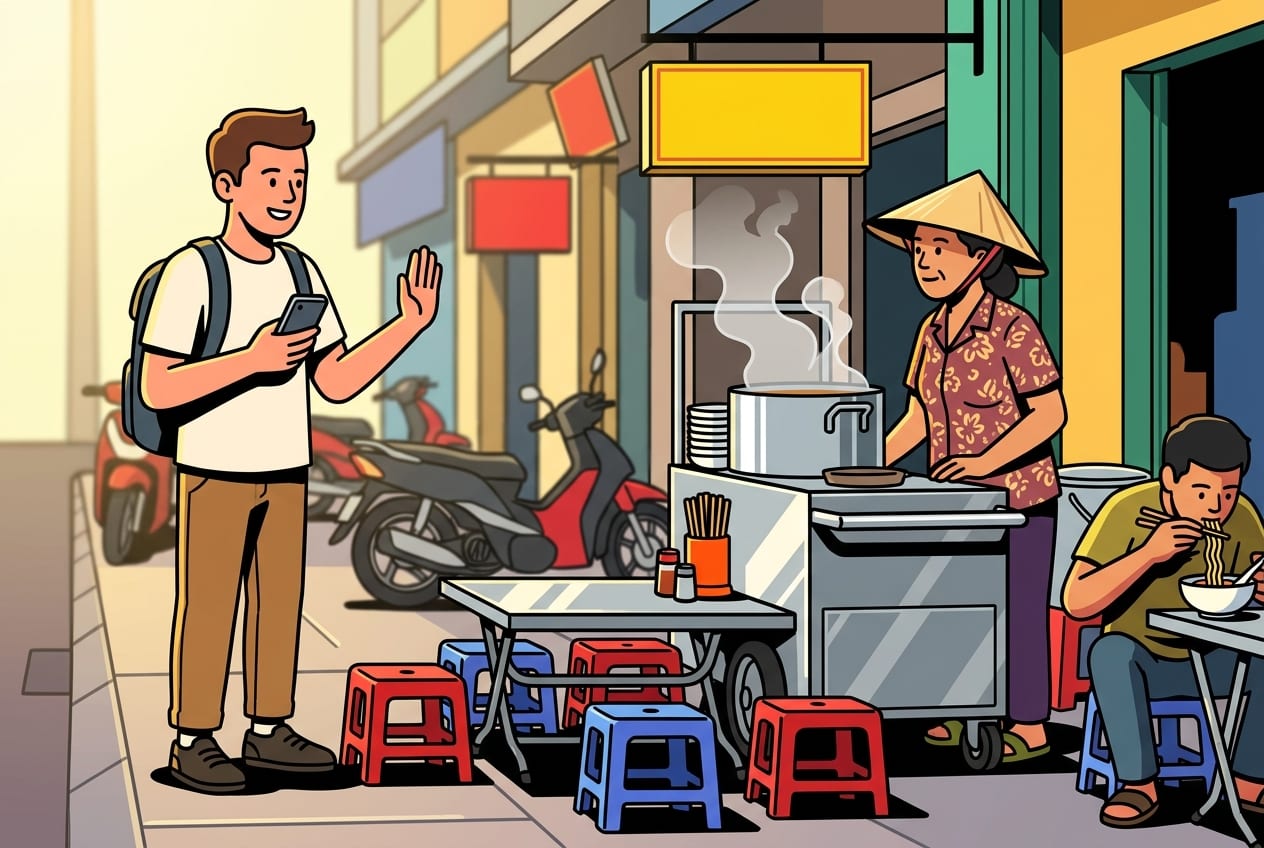
Picture this: You are standing on a sun-drenched sidewalk in Hanoi or Saigon. The smell of rich beef broth wafts from a stainless steel cart. You ask the vendor, 'Does this have peanuts? I am allergic.' The vendor, wearing a beautiful floral shirt and a traditional conical hat, looks at you, beams a wide, friendly smile, and nods enthusiastically. You think, 'Great, no peanuts!' But wait—did she actually understand you, or is she just being incredibly polite? In Vietnam, a smile is often a social bridge. It fills the gap when words fail. If a local doesn't understand your English, they might smile and nod to keep the interaction 'smooth' and avoid making you feel bad about the language barrier. This is the 'Saving Face' culture in action. It’s not meant to be deceptive; it’s meant to be kind. However, for a traveler trying to navigate a menu or find a bus, it can be a bit confusing.
To navigate this, you need to look for more than just a nod. Watch the eyes. If the eyes look a bit puzzled while the mouth is smiling, it’s time to break out your secret linguistic weapons. Understanding this cultural nuance is the first step toward successful communication. It shifts your perspective from frustration to empathy. You realize that the person across from you isn't trying to ignore your question; they are trying to be a good host in a language they might not have mastered. This is where a few key Vietnamese phrases become more than just words—they become tools for genuine connection.
Your Secret Weapons: Essential Survival Phrases
Mastering a few basic phrases like 'I don't understand' or 'Please speak slowly' changes the dynamic of an interaction from confusion to cooperation. These linguistic tools signal to the local person that you are trying to engage respectfully, prompting them to simplify their language or use helpful hand gestures.
When you use a little bit of Vietnamese, the 'wall' of the language barrier often crumbles. Even if your pronunciation isn't perfect, the effort is deeply appreciated. It shows you aren't just a tourist passing through; you are a guest who cares about the local way of life. The two most important phrases you can carry in your pocket are 'Tôi không hiểu' (I don't understand) and 'Nói chậm được không?' (Can you speak slowly?).
Mastering 'Tôi không hiểu' (I don't understand)
The phrase 'Tôi không hiểu' is a respectful way to admit confusion, preventing further miscommunication and encouraging the speaker to find another way to convey their message. It is a vital tool for travelers to reset an interaction when the 'Vietnamese smile' starts to feel like a linguistic dead end.
Using 'Tôi không hiểu' is like hitting a reset button. Imagine you are at that food stall, and the vendor is explaining the different types of noodles available. She is speaking quickly, her hands moving over the bowls of herbs and lime wedges. You are lost. Instead of just nodding back (and potentially getting a bowl of something you didn't want), you say, 'Tôi không hiểu.' Watch the transformation! Usually, the vendor will stop, chuckle, and perhaps point to the ingredients one by one. It breaks the cycle of 'polite nodding' and gets you both on the same page. It is much better to admit you are lost early than to end up three miles away in the wrong taxi or with a dish you can't eat.
The Power of 'Nói chậm' (Speak slowly)
Asking someone to 'speak slowly' using 'Nói chậm' acknowledges that the communication gap is a shared challenge, making the local person more likely to use simpler words and gestures. This phrase is particularly effective in busy street environments where background noise and rapid-fire speech can overwhelm even the most prepared travelers.
Vietnamese is a tonal language, which means it sounds very musical but also very fast to the untrained ear. One sentence can sound like a single, long word. When you ask someone 'Nói chậm được không?' you are giving them permission to slow down. Often, locals speak fast because they are excited or because they assume you might know more than you do. By asking them to slow down, you often see them start to use 'Vinglish' (a mix of Vietnamese and English) or more descriptive hand signals. It turns a one-sided lecture into a two-sided conversation. It’s the difference between being a spectator and being a participant in the street life around you.
Beyond Words: Body Language and the Plastic Stool Strategy
Communication in Vietnam is a physical experience that involves gestures, eye contact, and the shared environment of the street. Using your body language effectively, such as pointing respectfully or mimicking actions, can bridge the gap when your vocabulary fails, especially in the informal setting of a sidewalk café.
In the research scene described earlier, the traveler is using their hands while holding a smartphone. This is the 'Plastic Stool Strategy.' When you sit on those low red and blue stools, you are at eye level with the vendor. You aren't looking down on them; you are in their world. Use your hands! If you want a smaller portion, show it with your fingers. If you want to pay, make a 'writing' motion in the air for the bill. If you are asking for the price, you can point to the money in your hand with a questioning look. Combined with 'Tôi không hiểu,' these gestures are incredibly powerful. The street is loud, full of motorbikes and shouting, so visual cues are often more reliable than spoken words anyway.
The Smartphone as a Peace Treaty
In the modern Vietnamese street scene, smartphones serve as essential bridges between languages, allowing for instant translation and visual aids that clarify complex requests. However, technology should be used as a supplement to personal interaction, maintaining the warmth and eye contact that are central to Vietnamese social etiquette.
Don't be afraid to use translation apps, but do it politely. Instead of just shoving a screen in someone's face, make eye contact first, smile, and then show the screen. Many vendors now have their own smartphones and might even use voice-to-text to talk back to you! It’s a common sight: a traveler and a grandmother in a conical hat, both leaning over a glowing screen to figure out if the soup has pork or beef. This shared moment of technology and tradition is a beautiful part of modern Vietnam. Just remember to say 'Cảm ơn' (Thank you) afterward to close the interaction with the same warmth it began with.
Do
- Smile often; it keeps the interaction friendly even when you are confused.
- Use 'Tôi không hiểu' early to avoid long, confusing explanations.
- Point to items or use hand gestures to clarify your needs.
- Be patient; the vendor is likely trying just as hard as you are.
Don't
- Don't get frustrated or raise your voice; this causes 'loss of face' for everyone.
- Don't assume a nod always means 'yes'—it often just means 'I hear you'.
- Don't shove your phone screen directly into someone's face without a greeting.
Why Locals Love Your 'Bad' Vietnamese
Trying to speak Vietnamese, even poorly, is a sign of respect that locals deeply appreciate, often leading to better service and warmer interactions. The effort to bridge the cultural divide through language is seen as a gesture of friendship, making your travel experience much more personal and rewarding.
Vietnamese people are very proud of their language and culture. When they hear a foreigner try to say 'Nói chậm' or 'Tôi không hiểu,' their faces usually light up. They know their language is difficult for outsiders. Your 'bad' pronunciation isn't a failure; it’s a compliment. It tells them, 'I like your country enough to try speaking your tongue.' This often leads to extra herbs in your soup, a seat further away from the motorbike exhaust, or simply a more genuine conversation. You might find yourself invited to sit longer, or the customer on the next stool might chime in to help translate. This communal atmosphere is the heart of Vietnam's street culture.
Why does the vendor keep talking in fast Vietnamese even after I said 'Tôi không hiểu'?
This is very common! Often, the vendor is trying to use different words or examples to help you understand, or they might be asking a follow-up question like 'Do you want chili?' Don't panic. Just stay calm, use the 'Nói chậm' phrase, and try to use gestures to narrow down what they might be asking.
Is it rude to use a translation app for every single interaction?
It's not rude, but it can be slow and feel a bit 'robotic.' It is better to use your voice for simple things like 'Thank you' or 'I don't understand' and save the phone for complex things like food allergies or specific directions. This keeps the human connection alive.
What should I do if I think someone is nodding 'Yes' but they actually mean 'No'?
If you are unsure, ask a clarifying question that requires a different answer. For example, instead of 'Is this the bus to the airport?' (where they might just nod), try pointing and asking 'Where does this bus go?' If they still nod, use your 'Tôi không hiểu' phrase and look for a sign or a second opinion.
In the end, navigating the language barrier in Vietnam is less about being a perfect linguist and more about being a patient human. Whether you are sitting on a tiny plastic stool or standing at a busy intersection, remember that a smile, a few key phrases, and a respectful 'Tôi không hiểu' will get you much further than any dictionary ever could. Enjoy the soup, embrace the confusion, and keep talking—one slow word at a time.
Hear these phrases
Each one is recorded in both the northern and southern accent.
Topics
Read more
Other posts from our Vietnamese learning blog.
By Xinchao team
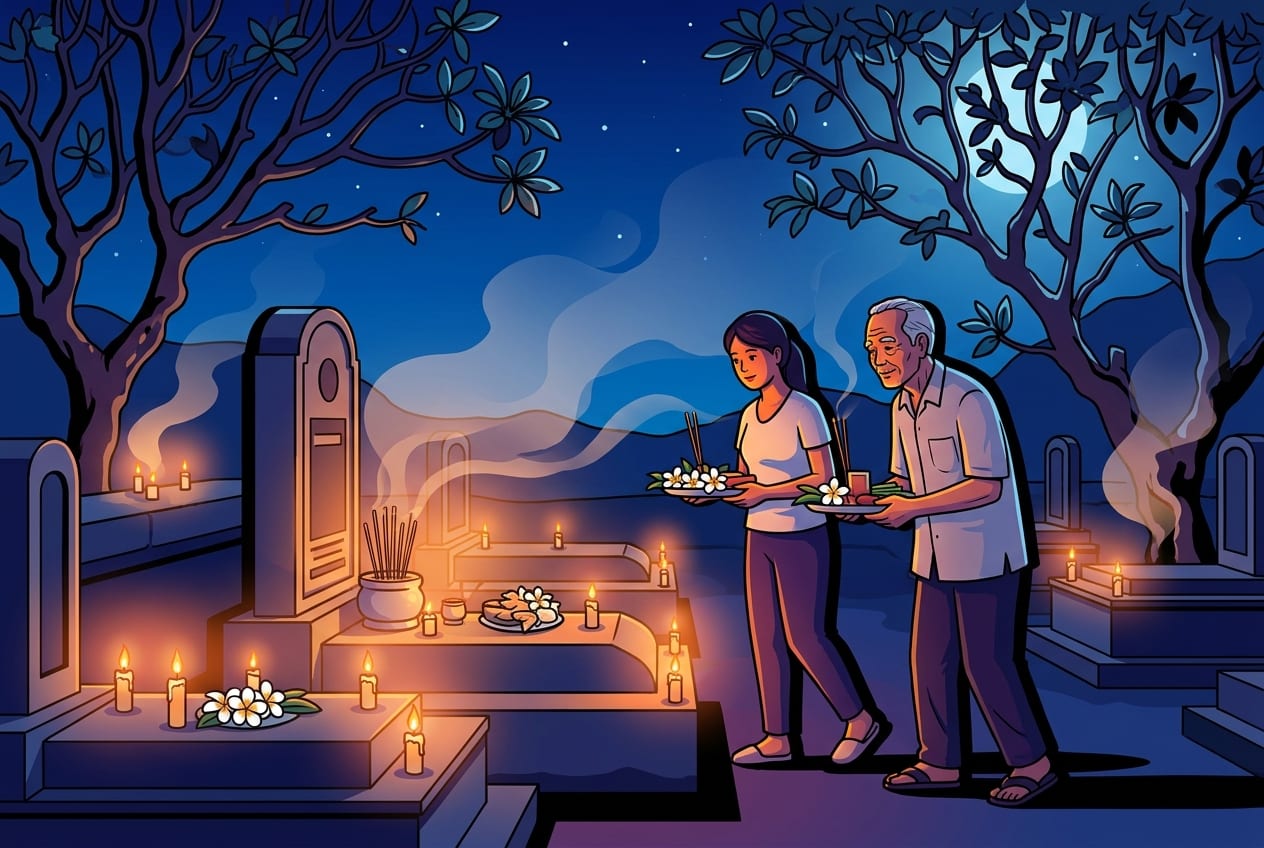
Midnight at the Cemetery: Why Thousands of Vietnamese Pilgrims Flock to Cô Sáu under the Stars
Discover the deep history, essential etiquette, and practical steps for participating in Côn Đảo's famous midnight pilgrimage to the grave of Cô Sáu.
By Xinchao team
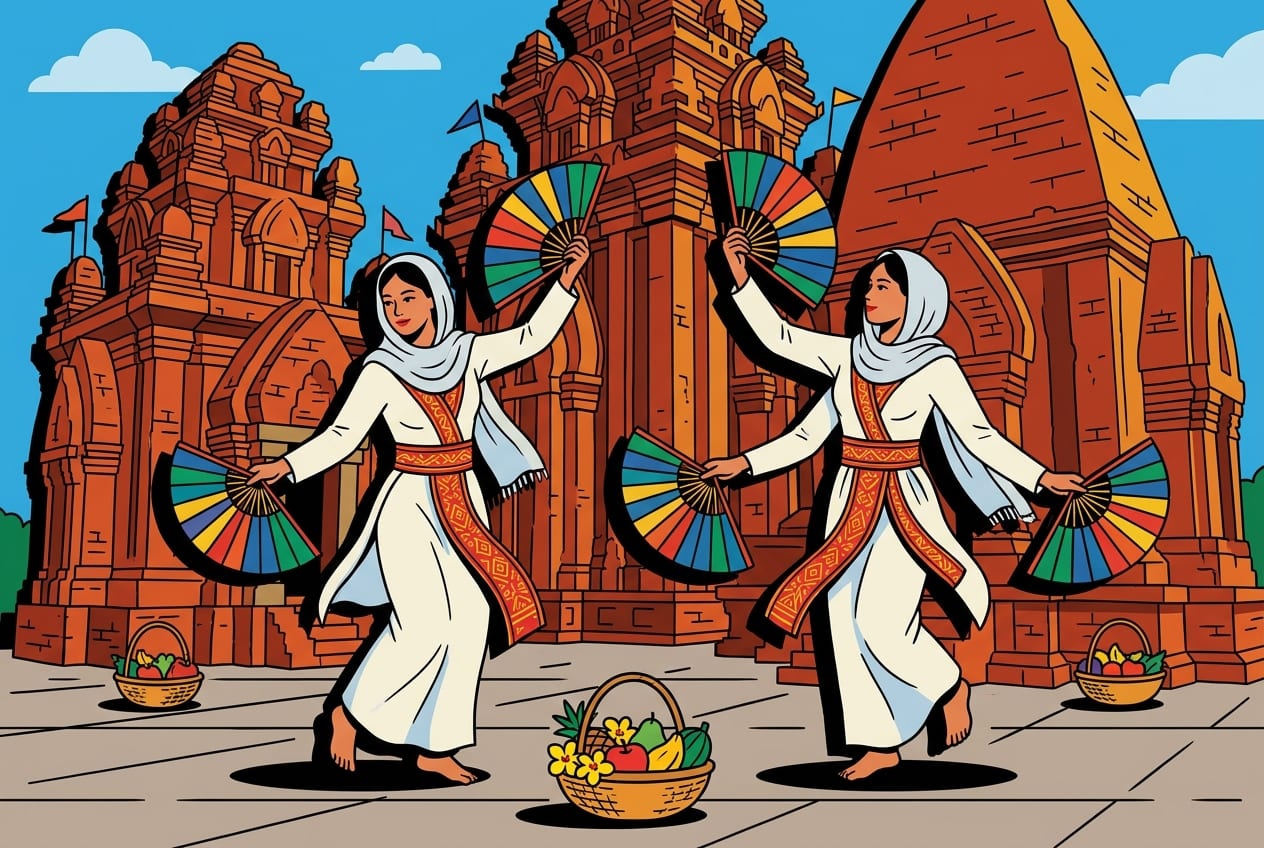
Beyond the Beach: Why You Must Experience Ninh Thuan’s Mystical Cham Kate Festival
Ready to go beyond the beach? Experience Ninh Thuan's mystical Cham Kate Festival at Po Klong Garai. Learn the deep cultural meanings, crucial etiquette, and expert survival tips for expats.
By Xinchao team
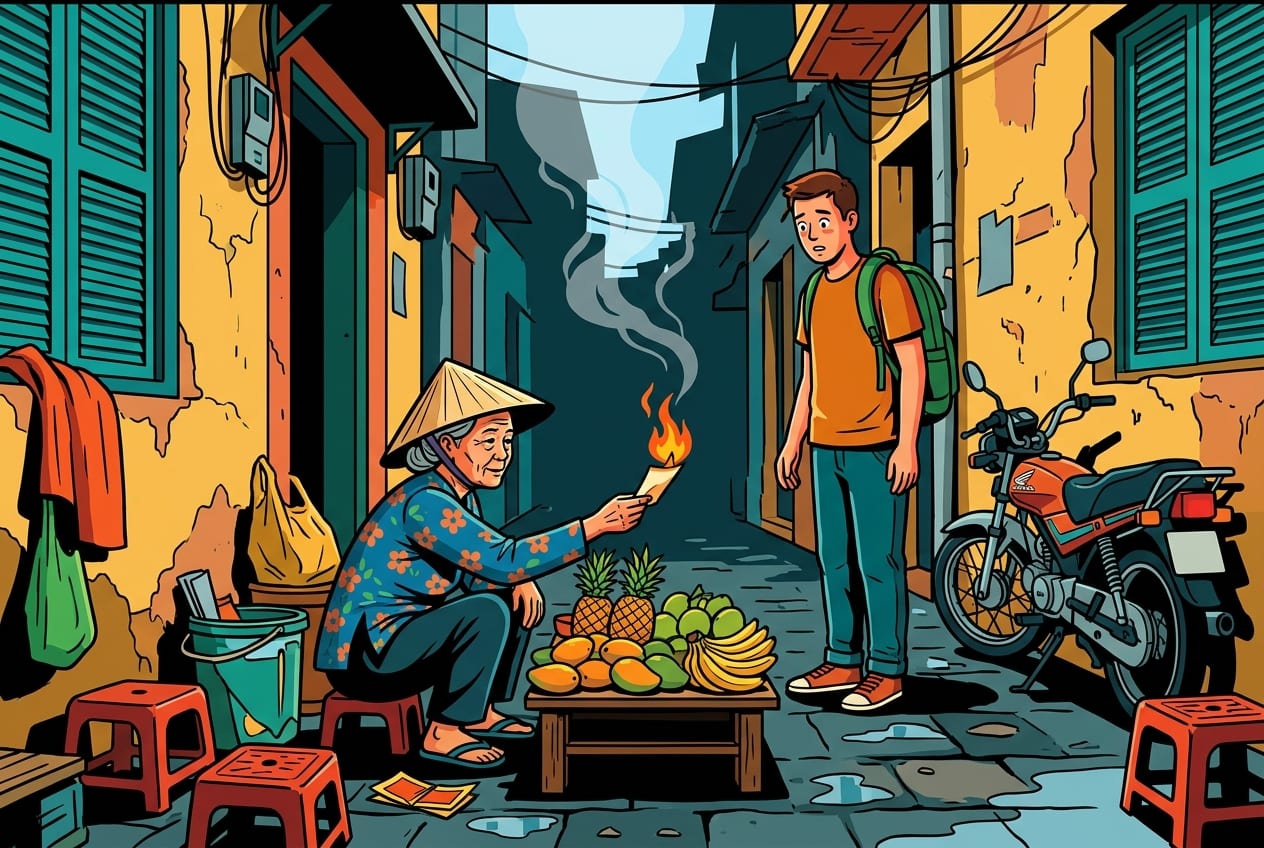
Don't Be the First Customer! An Expat’s Guide to Vietnam's Sacred Morning Rituals of 'Mở Hàng' and 'Đốt Vía'
Ever wondered why a Vietnamese street vendor looked terrified when you asked for a price early in the morning? Welcome to the delicate, sacred rituals of Mở Hàng and Đốt Vía.