Why Do These Boats Have Eyes? The Wild, Sacred Legend of Mekong’s 'Mắt Ghe'
Ever wondered why the wooden boats of the Mekong Delta are painted with giant, staring eyes? Dive into the ancient legend of 'Mắt Ghe' and discover the essential river etiquette you need to know before stepping on board.
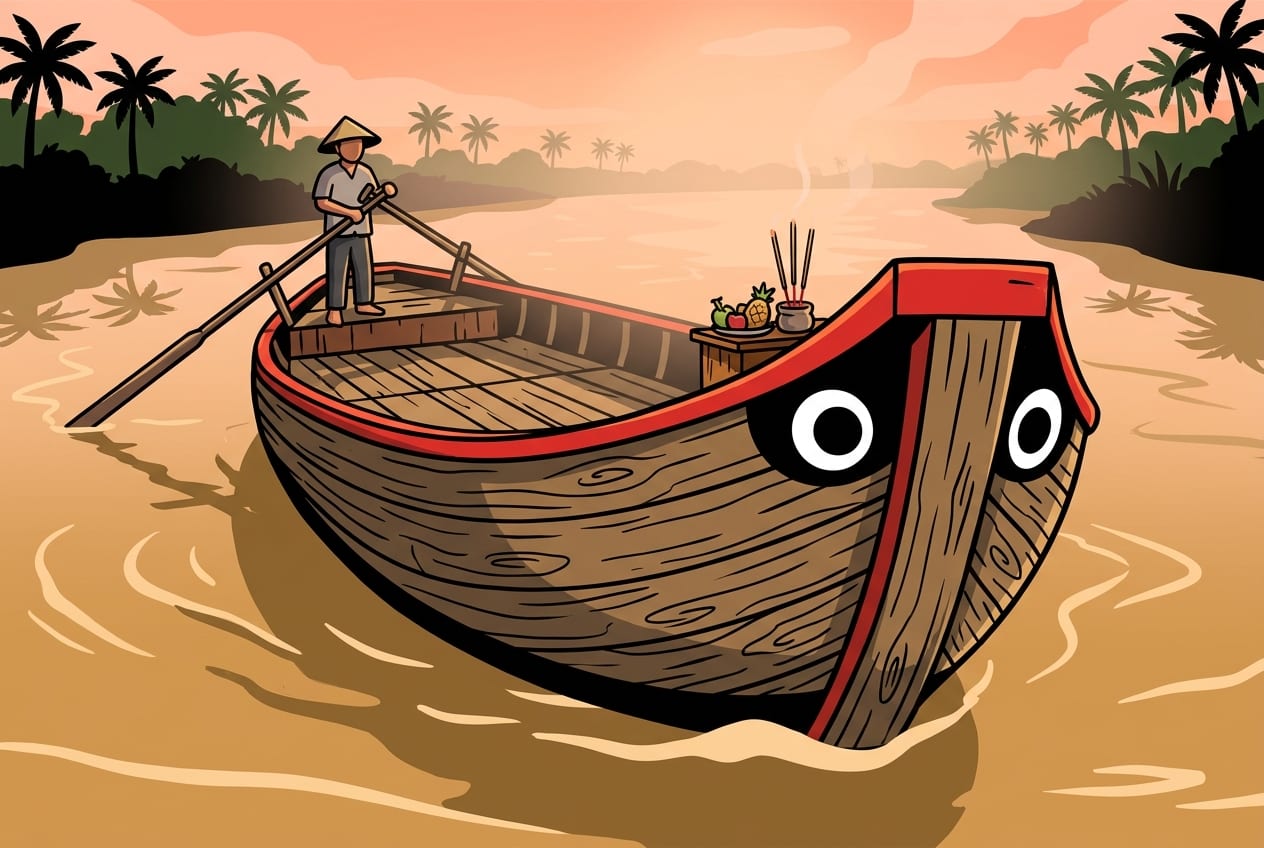
Imagine floating down a misty, chocolate-brown river at 5:30 AM, surrounded by the low rumble of diesel engines and the sweet aroma of freshly sliced pineapples. As the morning fog lifts, you look around and make a startling realization: every single wooden boat on the water is staring right back at you. Painted onto the bows of these vessels are massive, highly expressive, almond-shaped eyes. They aren't just decorative doodles; they are a vital, living part of southwestern Vietnamese river culture.
For travelers embarking on a Mekong Delta river cruise, these eyes—known locally as Mắt Ghe—are the first clue that the river is not just a highway, but a living, breathing spiritual realm. To the people of the delta, a boat is not merely a collection of planks and nails. It is a sentient guardian, a member of the family, and a protective entity that keeps them safe from the unpredictable forces of nature. Before you step on board, understanding the ancient legend and strict etiquette surrounding these eyes is essential to being a respectful traveler.
The Living Vessel: Why Mekong Delta Boats Wear a Pair of Eyes
Painted eyes on Mekong Delta boats, known as Mắt Ghe, originated as a clever survival tactic to scare off dangerous crocodiles and river monsters. Over centuries, this practice evolved into a deep spiritual belief that the eyes serve as the boat's soul, guiding sailors safely through treacherous, foggy waterways.
To understand why these eyes exist, we have to travel back in time to when the Mekong Delta was an untamed, wild frontier. Long before modern concrete bridges spanned the rivers, early Vietnamese settlers navigated a labyrinth of swampy waterways that were heavily populated by massive estuarine crocodiles and legendary river beasts. For fishermen and traders, a simple trip down the river was a gamble with life and death. To protect themselves, clever sailors began carving and painting giant, menacing eyes on the bows of their wooden boats. The goal was simple: trick the crocodiles into thinking the boat was an even larger, more terrifying aquatic predator, convincing them to keep their distance.
Over the generations, as the crocodiles faded from the main channels, the practice of painting Mắt Ghe transformed from a practical survival trick into a deeply rooted spiritual belief system. The eyes became the 'soul' of the boat. Sailors believe that without eyes, a boat is blind and helpless, unable to 'see' hidden sandbars, navigate dangerous whirlpools, avoid collisions in the thick morning fog, or locate abundant schools of fish. The eyes are believed to possess an active consciousness, watching over the family that lives and works on the water.
The Sacred Awakening: The Ritual of Lễ Khai Mắt Ghe
The Lễ khai mắt ghe is a sacred eye-opening ceremony performed by a local priest or elder before a new wooden boat is launched. By painting the pupils onto the bow, the ritual spiritually awakens the vessel, transforming raw timber into a living, breathing guardian protected by river deities.
A boat in the Mekong Delta does not simply become a boat when the carpentry is finished. It remains a lifeless piece of wood until it undergoes a highly sacred eye-opening ceremony called Lễ khai mắt ghe. This ritual is a beautiful example of Vietnam's rich tapestry of spiritual practices, combining elements of animism, ancestor worship, and folk religion. According to local customs, which align with broader Southeast Asian maritime traditions documented by UNESCO's cultural heritage resources, a boat builder or owner will invite a respected local elder or priest to perform the ceremony before the vessel ever touches the water.
During the ceremony, an altar is set up on the bow of the boat, laden with offerings such as fresh fruit, boiled chicken, sticky rice, incense, and rice wine. The priest recites prayers to invite the protective water goddess, Bà Cậu, to reside within the vessel. The climax of the ritual occurs when the priest dips a brush into red and black paint and carefully paints the pupils onto the eyes. At that exact moment, the boat is considered 'awake' and alive. From then on, the boat is treated with the same respect as a living family member.
Cruising the Delta in 2025–2026: Where to See Mắt Ghe in Action
To witness these iconic eye-painted boats, travelers should visit Cần Thơ, Châu Đốc, or Bến Tre. Experiences range from budget-friendly private morning sampan tours at Cai Rang Floating Market for $20 to $32 USD, to multi-day luxury voyages aboard boutique vessels like Mekong Eyes Cruises costing up to $350 USD.
If you are planning a trip to Vietnam, witnessing these beautiful, eye-painted boats in their natural element is an absolute must. The best places to see them are the bustling water highways of Cần Thơ (specifically the famous Cai Rang Floating Market), An Giang (Châu Đốc), and the quiet, coconut-shaded canals of Bến Tre. To make the most of your visit, check out our comprehensive floating markets guide to understand how trading works on the water.
For an immersive experience, travelers have two main options. If you prefer a raw, local adventure, you can head to the Ninh Kiều Wharf in Cần Thơ early in the morning. Hiring a private, local wooden sampan to tour the Cai Rang Floating Market costs between 500,000 to 800,000 VND ($20 to $32 USD) for a 3-to-4-hour morning trip. For those seeking multi-day luxury, high-end boutique cruise lines like Mekong Eyes River Cruises (whose vessels are beautifully styled after traditional eye-painted boats) and Victoria Mekong Cruises offer premium itineraries. A 2-day, 1-night boutique cruise on a traditional wooden vessel ranges from $180 to $350 USD per person, combining modern comforts with an up-close look at authentic river life.
Captain’s Orders: Crucial Mekong Boat Etiquette You Must Follow
Mekong Delta river etiquette dictates that travelers must never step on, sit on, or point their feet at the boat's bow. Because the bow is considered the sacred head of the living vessel and the home of its protective goddess, violating this space is believed to bring severe misfortune.
Because the boat is considered a living, sacred entity, there are several strict social rules that travelers must follow when boarding. The absolute most important rule is never to step on, sit on, or point your feet at the bow (the nose) of the boat. The bow is considered the 'head' of the living vessel and the sacred dwelling place of the boat's protective deity, Bà Cậu. Stepping here is viewed as a direct, deeply offensive insult to the spirit of the boat and the captain's livelihood, and is believed to bring terrible luck to the voyage.
When boarding, always step directly onto the main deck or the center of the boat, never on the very tip of the bow. Additionally, do not touch, deface, or pose disrespectfully near the painted Mắt Ghe. To capture the best photos and experience the river at its liveliest, make sure to arrive at the docks by 5:30 AM. The morning mist, soft golden light, and active trading at the floating markets peak before the heat of the day sets in, offering a breathtaking, respectful glimpse into this ancient way of life.
Do
- Step directly onto the main deck or center of the boat when boarding.
- Greet your boat captain with a warm smile and a respectful nod.
- Arrive at the docks by 5:30 AM to capture the best morning light and active market trading.
- Ask for permission before taking close-up photos of local vendors and their boats.
Don't
- Never step on, sit on, or point your feet at the bow (nose) of the boat.
- Do not touch, lean against, or block the painted 'Mắt Ghe' (boat eyes).
- Avoid throwing any trash or plastic into the sacred waters of the Mekong River.
- Do not make loud, disruptive noises that might disturb the peace of the river spirits.
What happens if a traveler accidentally steps on the bow of a Mekong boat?
If you accidentally step on the bow, it is considered a serious breach of local etiquette because the bow is the sacred 'head' of the boat where the protective deity resides. If this happens, apologize sincerely to the captain immediately. To make amends, you can show respect by bowing slightly and stepping back onto the main deck. Some captains may feel the need to burn a small stick of incense to appease the spirits and ward off bad luck.
Are the boat eyes painted differently depending on the region of the Mekong?
Yes, there are subtle regional variations in how Mắt Ghe are painted! In some areas of the Mekong Delta, the eyes are rounder and more alert, while in others, they are elongated and almond-shaped. The colors can also vary, though they almost always feature high-contrast combinations like black and white pupils set against vibrant turquoise, deep blue, or bright red backgrounds to ensure they are highly visible to river spirits and underwater creatures.
Do modern fiberglass and metal boats in the Mekong Delta still have painted eyes?
While the tradition is most strictly observed on traditional wooden boats (sampans and barges), many modern fiberglass and metal vessels in the Mekong Delta still paint eyes on their bows. Even as technology changes, the deep-seated cultural belief in the protective power of Mắt Ghe remains strong among local river communities, proving that spirituality and modern utility can coexist beautifully on the water.
Practise the words you just read
Vietnamese phrases for real situations, each with native audio in both accents.
Topics
Read more
Other posts from our Vietnamese learning blog.

By Xinchao team
The Cat-and-Mouse Game of Hanoi's Train Street: Your 2026 Survival Guide to Visiting Safely (and Legally)
How do you navigate the guards, barricades, and narrow tracks of Hanoi's Train Street in 2026? Learn the insider rules to visit safely, legally, and respectfully.

By Xinchao team
Midnight at the Cemetery: Why Thousands of Vietnamese Pilgrims Flock to Cô Sáu under the Stars
Discover the deep history, essential etiquette, and practical steps for participating in Côn Đảo's famous midnight pilgrimage to the grave of Cô Sáu.

By Xinchao team
Beyond the Beach: Why You Must Experience Ninh Thuan’s Mystical Cham Kate Festival
Ready to go beyond the beach? Experience Ninh Thuan's mystical Cham Kate Festival at Po Klong Garai. Learn the deep cultural meanings, crucial etiquette, and expert survival tips for expats.