Why is your coffee sitting on a tiny plastic chair?
Master the art of Vietnamese sidewalk coffee. Learn why we sit on tiny stools, how to order like a local, and the secret behind the free glass of tea.
The Sidewalk Symphony: Why We Sit Low
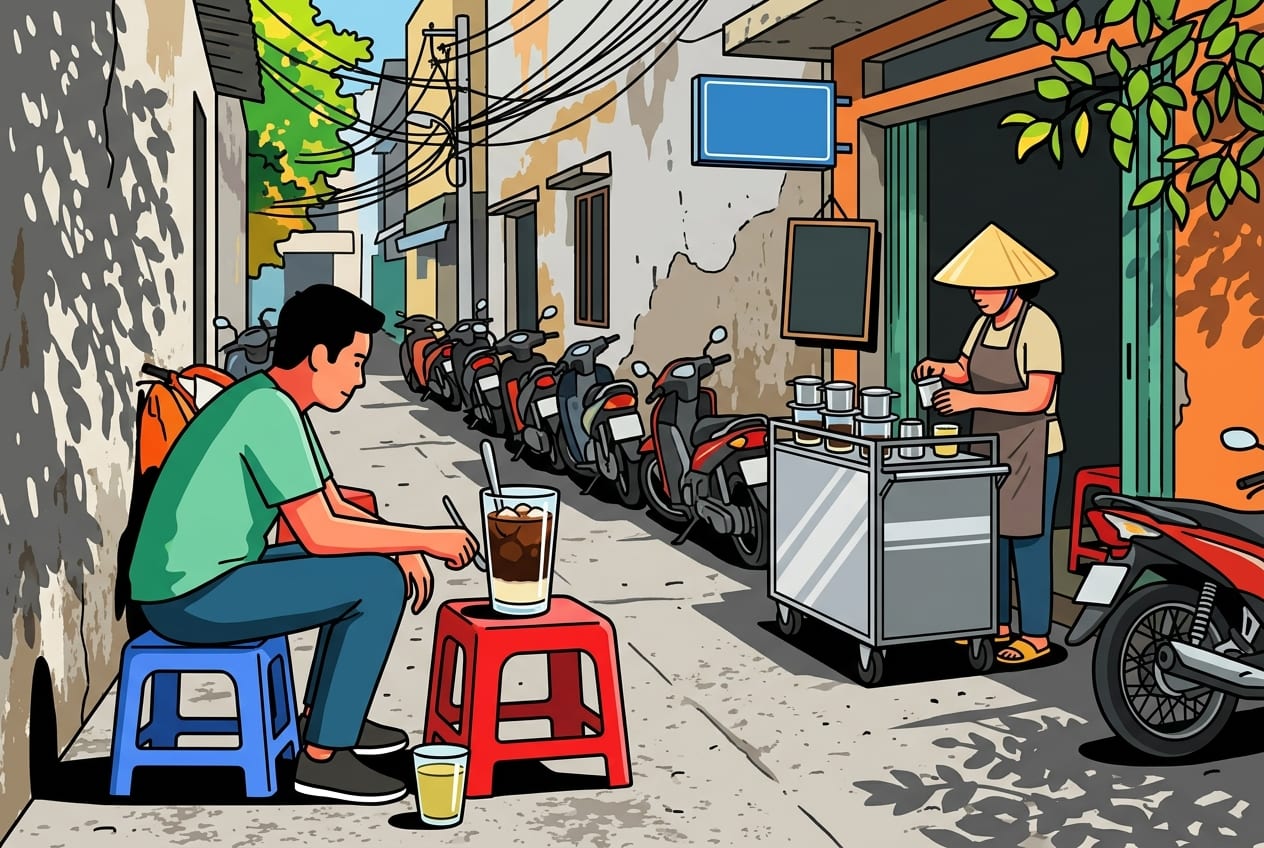
Sidewalk coffee, or "cà phê vỉa hè," is the heartbeat of Vietnam’s social life. These tiny plastic stools allow people to reclaim public space, turning narrow alleys into communal living rooms where news is shared, business is conducted, and the heat of the day is managed through slow sipping and people-watching.
When you first arrive in a Vietnamese city like Saigon or Hanoi, you might wonder why grown adults are perched on furniture that looks like it belongs in a kindergarten. This is the 'vỉa hè' (sidewalk) culture. It isn't because we lack space for big chairs; it's because these stools represent a specific kind of freedom. They are light, easy to move when the rain starts, and even easier to stack when the shop closes for the night. More importantly, sitting low to the ground changes your perspective. You aren't looking down on the street; you are part of it. You are at eye level with the passing motorbikes, the wandering street vendors, and the neighborhood cats.
In the narrow alleyways (hẻm), the coffee stall is the neighborhood's central nervous system. People don't just go there for caffeine; they go there to 'hóng hớt' (gossip or catch up on news). The proximity of the stools means you might accidentally bump elbows with a CEO or a construction worker. In the world of Vietnamese coffee, everyone is equal once they sit on a red plastic stool. The atmosphere is thick with the scent of dark roasted Robusta beans, often roasted with a hint of butter or cacao, creating that signature chocolatey aroma that defines the Vietnamese morning.
The Phin Filter: Why Patience is the Main Ingredient
The "Phin" filter is a gravity-driven metal dripper that produces a thick, syrupy concentrate. Unlike espresso, which uses pressure, the Phin requires patience, allowing the hot water to slowly extract the intense oils and caffeine from robusta beans, resulting in a flavor profile that is uniquely bold and chocolatey.
If you are in a rush, you are in the wrong place. The 'Phin' is the traditional metal filter that sits atop your glass. It consists of a cup, a press-disk, and a lid. Watching the coffee drip, one dark bead at a time, is a form of meditation for locals. We call this 'cà phê đợi' (waiting coffee). The slow drip ensures that the water has maximum contact time with the coffee grounds, which are almost exclusively Robusta beans. Robusta has nearly double the caffeine of Arabica, which is why Vietnamese coffee feels like a 'rocket fuel' kick to your system.
While you wait, you’ll notice the layer of thick, white sweetened condensed milk at the bottom of the glass. We use condensed milk because, historically, fresh milk was hard to find and even harder to keep fresh in the tropical heat. Over decades, the combination of bitter, high-caffeine coffee and the creamy, sugary hit of condensed milk became the national standard. It’s a balance of extremes: the dark and the light, the bitter and the sweet. Once the dripping stops, you take your long stainless steel spoon and stir vigorously until the liquid turns a beautiful, creamy caramel color. Only then do you pour it over the ice.
Decoding the Menu: Sữa Đá vs. Bạc Xỉu
Understanding the coffee menu requires knowing the ratio of caffeine to sweetness. "Cà phê sữa đá" is the standard powerhouse, while "bạc xỉu" offers a gentler, milkier experience for those who prefer more condensed milk than coffee, reflecting a historical adaptation for those who found the original brew too intense.
If you find the standard 'Cà phê sữa đá' (Iced Coffee with Milk) too strong, you need to know about 'Bạc xỉu.' The name comes from the Cantonese phrase 'Bạc tẩy xỉu phé,' which roughly translates to 'white with a little bit of coffee.' It was originally created by the Chinese community in Saigon for children or women who wanted to join the coffee culture but couldn't handle the intensity of the pure brew. It’s mostly milk with a splash of coffee for flavor. It’s the perfect 'entry-level' drink for travelers who aren't ready for the full-strength experience.
The Secret Sidekick: Why the Free Tea?
"Trà đá," or iced tea, is the essential companion to any Vietnamese coffee order. It serves as a palate cleanser to cut through the heavy sweetness of condensed milk and provides hydration in the tropical humidity, allowing customers to occupy a table for hours while only paying for one coffee.
You will notice that almost every coffee order comes with a secondary, smaller glass of pale yellow liquid. This is 'Trà đá' (iced tea), and it is usually free. Why? Because Vietnamese coffee is incredibly rich and sweet. The tea acts as a palate cleanser. Between sips of the thick, syrupy coffee, you take a gulp of the light, jasmine or lotus-scented tea to refresh your mouth. It also keeps you hydrated in the 30-degree Celsius heat.
There is also a social reason for the tea. In Vietnam, we don't 'grab a coffee and go.' We 'đi cà phê' (go coffeeing), which is a verb that can last two hours. Once your coffee is finished, you continue to sip your tea. The vendor will often come by and refill your tea glass for free. This is a silent signal that you are welcome to stay as long as you like. It turns a 30,000 VND ($1.20) purchase into a whole morning of entertainment and relaxation.
How to Order Like a Local Legend
Ordering coffee in Vietnam is less about formal menus and more about direct, vocal communication. Using the word "Ơi" to catch the vendor's attention is a cultural norm that signals friendliness and familiarity, ensuring your order is heard over the roar of passing motorbikes and the general street noise.
Don't wait for a waiter to bring you a leather-bound menu. At a local gem, the 'menu' is often just a chalkboard or a mental list. To get attention, use the magic word: 'Ơi!' If the vendor is older than you, say 'Cô ơi!' (Auntie!) or 'Chú ơi!' (Uncle!). If they look like a peer, 'Em ơi!' works perfectly. Pointing at the Phin filter or the condensed milk tin is a totally acceptable way to communicate if your Vietnamese is still rusty. Most vendors in these 'local gems' have been making coffee for 30 years—they can read your mind (and your caffeine cravings) from a mile away.
Do
- Stir your coffee thoroughly before adding it to the ice to ensure the milk is fully mixed.
- Expect to share your small table with a stranger if the shop is crowded; it's part of the communal vibe.
- Use both hands when receiving your drink or paying as a sign of respect.
- Keep an eye on your belongings, though most alley stalls are very safe and community-monitored.
Don't
- Don't drink the coffee straight from the Phin filter; it's meant to be diluted with ice.
- Don't feel pressured to leave as soon as your cup is empty; linger and enjoy the tea.
- Don't be surprised if a motorbike parks right next to your stool; just tuck your feet in!
The Alleyway Etiquette: Motorbikes and Personal Space
Navigating a crowded coffee alley involves a silent dance with parked motorbikes and fellow patrons. Respecting the "vibe" means keeping your voice at a conversational level while being prepared to shift your stool slightly to let a bike pass, illustrating the flexible and communal nature of Vietnamese urban architecture.
In a Vietnamese alleyway, the line between 'shop' and 'street' is invisible. You might be sitting on your stool when a resident needs to squeeze their motorbike through to get home. The etiquette here is simple: be fluid. You might need to pick up your stool and move six inches to the left, then move back once the bike passes. No one gets angry; it’s just the rhythm of the city. This flexibility is what makes Vietnamese street life so resilient and vibrant.
Also, notice the 'motorbike wall.' Most customers park their bikes in a row facing the street. This creates a small barrier between the coffee drinkers and the traffic. If you see a space, park your bike there, but make sure you don't block the entrance to someone’s house. The 'house' part of the alley is sacred, even if the 'sidewalk' part is public. If you aren't sure where to put your bike, the 'chú bảo vệ' (security uncle) or the vendor will point you to the right spot with a quick wave of their hand.
Choosing Your Gem: How to Spot the Best Stall
Finding the best coffee stall usually involves looking for "the crowd and the age." A vendor who has occupied the same corner for decades, serving a mix of elderly men and young professionals, usually indicates a recipe that has survived the test of time and a "gu" (taste) that is authentic.
The best coffee isn't found in the shops with the neon signs and air conditioning. It’s found where the stools are the most weathered and the vendor is wearing a floral 'bộ đồ' (pajama-style outfit) and a sun hat. Look for the 'old man' test: if you see a group of elderly men sitting for hours with a single cup of coffee and a newspaper (or a smartphone), that place has the best 'gu' (taste). These veterans of the street know exactly where the beans are sourced and which vendor doesn't skimp on the quality of the condensed milk.
Another sign of a local gem is the 'Trà đá' quality. If the tea is fragrant and cold, it shows the vendor cares about the small details. Some places even serve 'Trà dứa' (pineapple leaf tea), which has a sweet, nutty aroma that perfectly complements the heavy coffee. These stalls don't need marketing; their reputation is built on the consistent 'drip-drip-drip' of the Phin and the loyalty of the neighborhood. When you find a spot like this, you haven't just found a coffee shop; you've found a piece of the city's soul.
Why is the coffee served in such a small glass compared to a Starbucks latte?
Vietnamese coffee is a concentrate. Because it is made with Robusta beans and dripped slowly, it has much more caffeine and flavor per ounce than a standard drip coffee. Drinking a large mug of it would likely give you heart palpitations! It is meant to be sipped slowly as the ice melts and dilutes the strength.
I don't like sweet things. Can I order it without condensed milk?
Yes! You should order 'Cà phê đen đá' (Iced Black Coffee). However, be warned: without the milk, the bitterness of the Robusta is very intense. You can ask for 'ít đường' (little sugar) if you want to take the edge off without the creaminess of milk.
Is the ice safe to drink in these street stalls?
In major cities like Saigon and Hanoi, most street vendors buy 'ice factory' ice, which is made from purified water and delivered in large bags. Look for 'ice tubes' (with a hole in the middle) rather than crushed ice chunks, as the tubes are almost always factory-made and safe for travelers.
Hear these phrases
Each one is recorded in both the northern and southern accent.
Topics
Read more
Other posts from our Vietnamese learning blog.
By Xinchao team
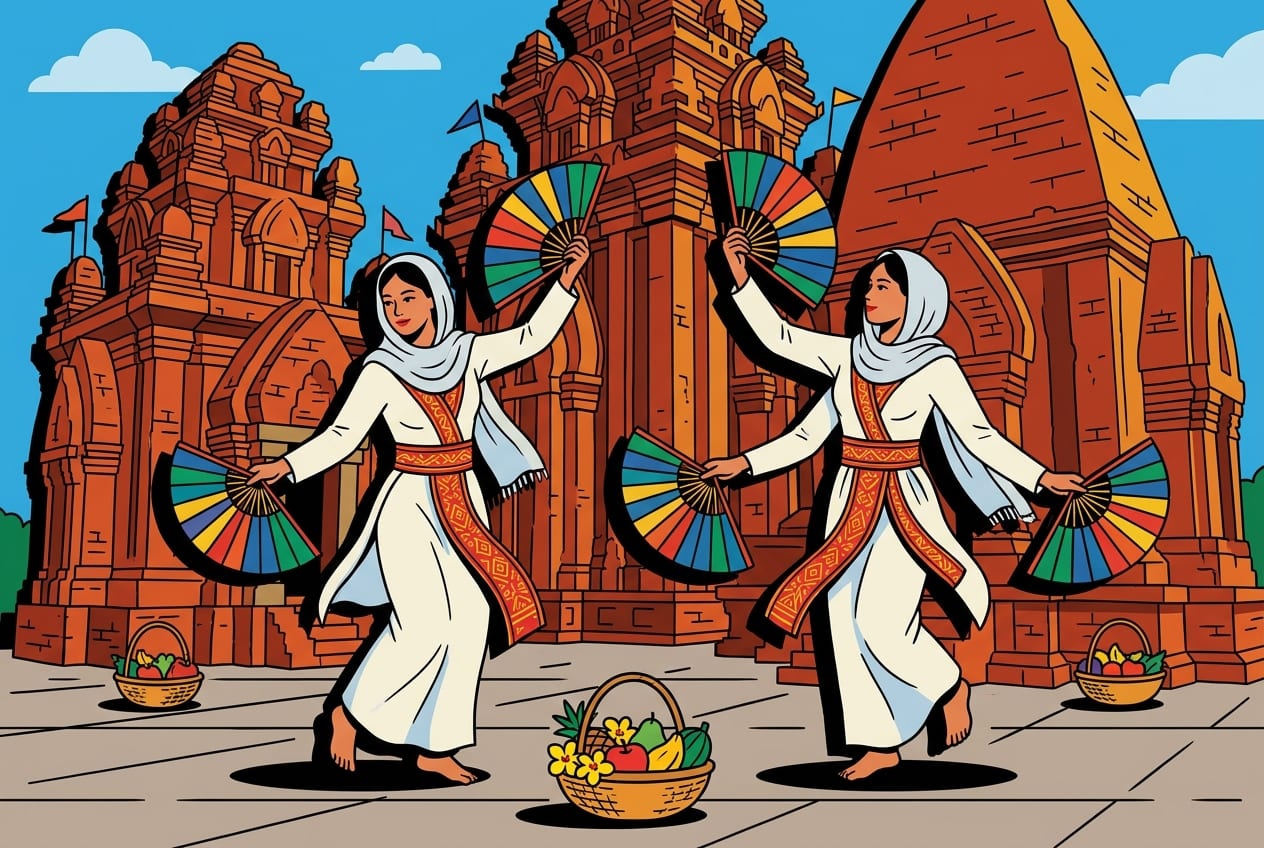
Beyond the Beach: Why You Must Experience Ninh Thuan’s Mystical Cham Kate Festival
Ready to go beyond the beach? Experience Ninh Thuan's mystical Cham Kate Festival at Po Klong Garai. Learn the deep cultural meanings, crucial etiquette, and expert survival tips for expats.
By Xinchao team
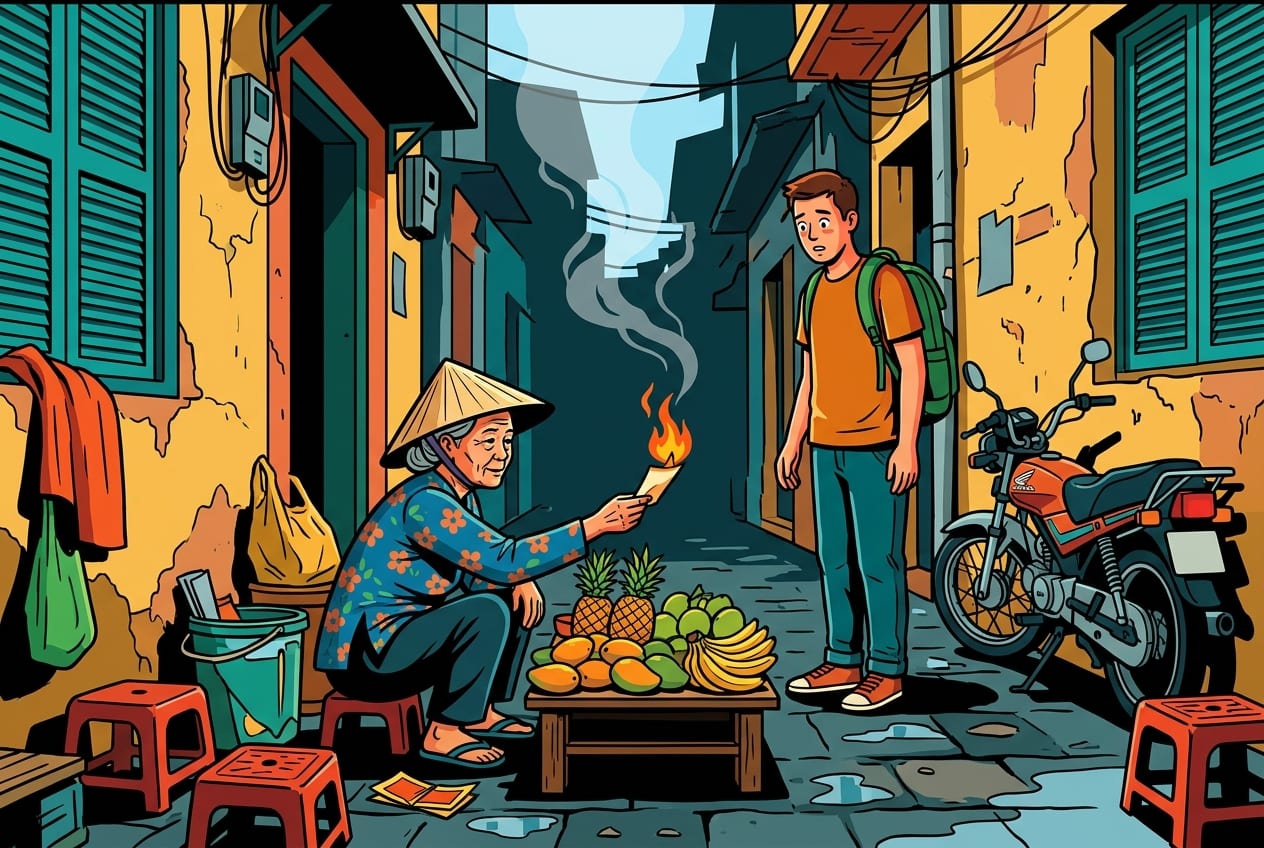
Don't Be the First Customer! An Expat’s Guide to Vietnam's Sacred Morning Rituals of 'Mở Hàng' and 'Đốt Vía'
Ever wondered why a Vietnamese street vendor looked terrified when you asked for a price early in the morning? Welcome to the delicate, sacred rituals of Mở Hàng and Đốt Vía.

By Xinchao team
Survival of the Spinnest: Your Expat Guide to Navigating Hoi An’s Dizzying Basket Boat Culture
Get ready to spin! Dive into the history, pricing, and survival tips for navigating Hoi An's iconic basket boats in Cam Thanh Coconut Forest.