Why is Your Grab Driver Offering Fruit to His Motorbike? Inside Vietnam's Fascinating 'Cúng Xe' Ritual
If you've spent more than five minutes on a Vietnamese street, you've likely seen a high-tech ride-hailing scooter adorned with fresh marigolds and a plate of mangoes. Here is the beautiful, spiritual reason behind this modern-meets-ancient practice.
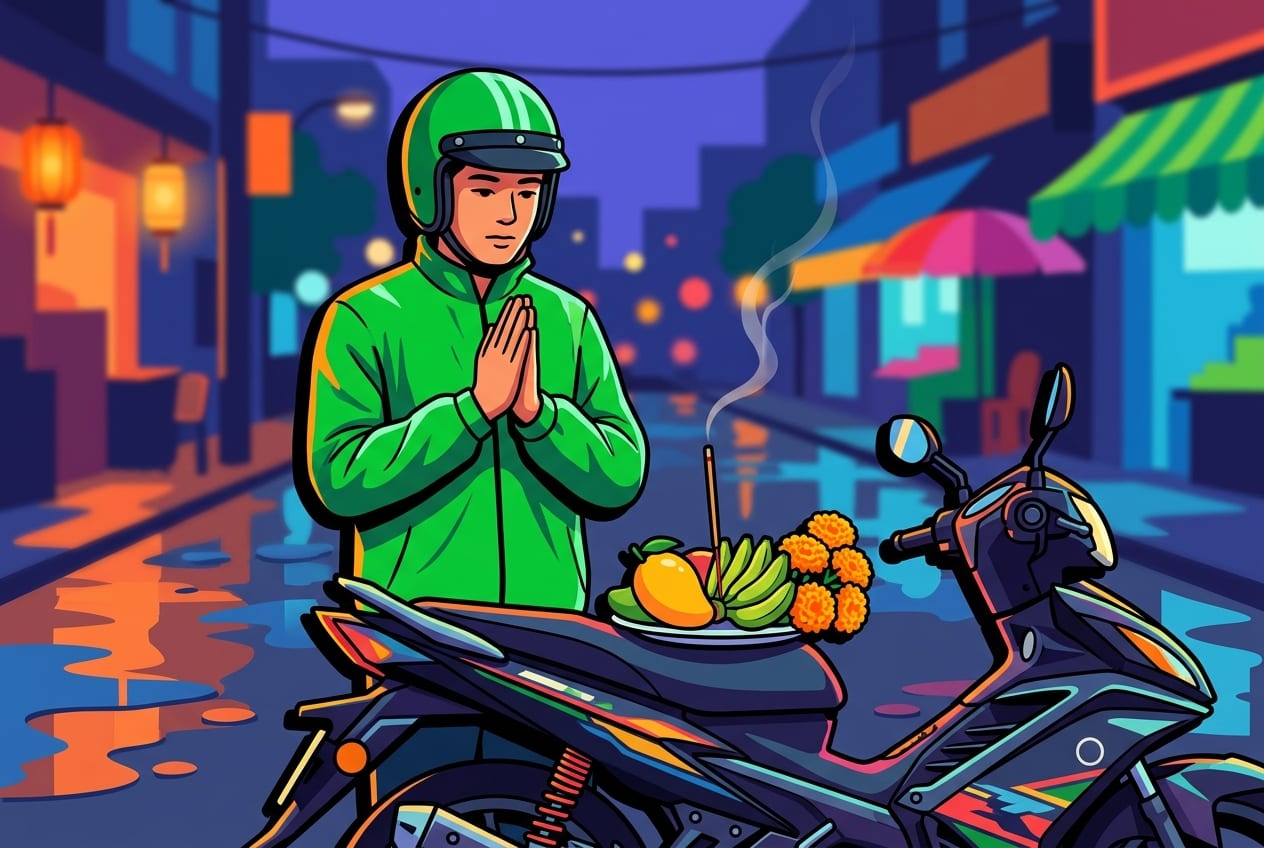
You step out of your hotel into the humid, buzzing air of Ho Chi Minh City. You open your phone, book a ride on a ride-hailing app, and within minutes, a driver clad in a bright green jacket pulls up. But instead of immediately waving you over, he parks on the sidewalk, props his scooter on its kickstand, and places a small plastic stool in front of the front wheel. On it, he carefully arranges a plate of fresh mangoes, a small cup of water, and a bunch of bright yellow marigolds. Finally, he lights three incense sticks, bows deeply three times, and whispers a quiet prayer to his handlebars.
To the uninitiated traveler, this looks like a surreal glitch in the modern gig economy. Why is a high-tech app driver offering a fruit salad to a machine? Welcome to the fascinating world of the Vietnam vehicle blessing ritual, locally known as Cúng Xe. Far from being a forgotten relic of the past, this ancient ritual has adapted seamlessly to the 21st century, serving as a vital spiritual insurance policy for the millions of drivers navigating Vietnam’s chaotic streets.
What is Cúng Xe? The Spiritual Contract of the Vietnamese Road
The Vietnam vehicle blessing ritual, known as Cúng Xe, is a traditional ceremony where drivers offer food, prayers, and incense to protective deities and wandering spirits. This practice establishes a spiritual contract to ensure physical safety, prevent mechanical breakdowns, and attract a steady stream of paying passengers on chaotic roads.
To understand Cúng Xe, you have to understand how Vietnamese people view the relationship between the physical and spiritual worlds. In Vietnam's rich tapestry of animism and ancestor worship, a vehicle is never just a cold piece of metal, rubber, and plastic. It is a driver’s livelihood, a "second home," and the vessel that carries their physical safety every single day. The roads themselves are believed to be populated by an invisible crowd of deities (Thần Linh), ancestral spirits, and wandering, neglected souls (Cô Hồn).
According to traditional beliefs rooted in Vietnamese folk religion, wandering spirits who died in road accidents may linger at the spots where they passed away. If they feel ignored or hungry, they might cause mischief—resulting in a sudden flat tire, a mysterious engine failure, or worse, an accident. By performing a Cúng Xe, drivers are essentially offering a peace offering. They invite the benevolent deities to protect them and feed the wandering spirits so they remain peaceful.
This ritual is highly synchronized with the lunar calendar. In Southern Vietnam (especially Ho Chi Minh City), drivers strictly perform this ritual on the 2nd and 16th days of the lunar month. In Northern Vietnam (Hanoi), it is more commonly practiced on the 1st and 15th days. If you look closely at the sidewalks during these specific days, you will see hundreds of motorbikes and cars lined up for their monthly blessings.
The Modern Gig Economy Meets Ancient Spirits
Modern ride-hailing drivers in Vietnam actively adapt the traditional vehicle blessing ritual to secure digital bookings. Whether operating a green Grab, yellow Be, or electric cyan Xanh SM vehicle, drivers invest significant daily earnings into these streetside offerings to protect their livelihoods and maintain high platform ratings.
While traditional taxi and truck drivers have practiced Cúng Xe for generations, the ritual has found a passionate new demographic: gig economy workers. Today, the streets of Hanoi and Saigon are dominated by ride-hailing giants like Grab, Be, and the rapidly expanding, eco-friendly, electric cyan fleet of Xanh SM (VinFast's electric vehicles which have become a dominant force in 2025–2026).
For these app-based drivers, their vehicle is their sole source of income. A bad day on the road doesn't just mean a dented bumper; it means a drop in their algorithm-driven acceptance rate, missed bonuses, and costly repairs. Therefore, skipping a Cúng Xe is seen as inviting a "dry spell" of zero customer bookings.
A typical motorbike driver will spend between 50,000 to 150,000 VND ($2 to $6 USD) on a basic offering. While this might seem small, it represents a significant portion of a driver's daily earnings—a testament to how deeply they value this spiritual protection. For car, taxi, and delivery truck drivers, the stakes (and the offerings) are much higher. A car blessing can easily cost 300,000 to 500,000+ VND ($12 to $20 USD) and often includes premium items like a whole boiled chicken, roasted pork belly, and bottles of rice wine.
Anatomy of a Streetside Blessing: What's on the Bike?
A typical streetside vehicle blessing features a vibrant mix of modern machinery and traditional offerings, including yellow marigolds, a five-fruit plate, cups of water or wine, and burning incense. These elements are arranged directly on the vehicle's seat or a small plastic stool placed on the pavement.
To witness a Cúng Xe is to see a beautiful, sensory clash of high-visibility corporate branding and organic, ancient spirituality. Picture the electric cyan of a Xanh SM VinFast scooter parked on a damp, neon-lit Saigon sidewalk, with the warm, sweet, woody scent of incense smoke drifting into the humid air.
The setup is highly standardized yet deeply personal. It typically includes:
- The Five-Fruit Plate (Mâm Ngũ Quả): A colorful arrangement symbolizing the five elements of Eastern philosophy. It usually features green bananas, red apples, yellow mangoes, and other seasonal fruits.
- Flowers: Bright yellow or orange marigolds (cúc vạn thọ), which symbolize longevity and good fortune.
- The Offerings for Wandering Spirits: A small bowl containing a mixture of raw rice and salt, alongside small cups of water or rice wine. After the prayers are finished, the driver will scatter the rice and salt onto the street. This act of charity feeds the wandering souls so they do not linger around the vehicle.
- The Altar: For motorbikes, the seat of the bike or a small plastic stool acts as the altar. For cars, the hood of the car is opened or used as the platform, with the front bumper facing outward toward the street.
This blend of daily life and spiritual devotion is a hallmark of Vietnamese culture, similar to the offerings and incense rituals travelers observe when pagoda-hopping in Vietnam.
Etiquette for Travelers: What to Do When Your Ride is 'On Hold'
Travelers encountering a driver performing a vehicle blessing should remain patient and respectful by avoiding the offering area and never touching the items. Once the short ritual concludes, offering a simple, polite Vietnamese phrase of safe travels fosters mutual respect and ensures a highly friendly, welcoming journey.
If you are traveling through Vietnam, there is a very high chance you will encounter a Cúng Xe ceremony firsthand. Perhaps your booked Grab driver is finishing up his ritual as you arrive, or you find a sidewalk blocked by a beautifully arranged car blessing. Handling these moments with cultural grace will earn you immense respect from locals.
First, never step over or touch the offerings placed on the ground or on the vehicle. In Vietnamese culture, stepping over an offering is considered highly disrespectful and is believed to bring bad luck to both you and the driver. It is also believed that touching the food before the spirits have "consumed" it can transfer negative energy.
Second, be patient. A typical Cúng Xe ritual is brief, lasting only 5 to 10 minutes until the incense sticks burn down. If your ride is slightly delayed because of this, do not show frustration or rush the driver. Take a moment to appreciate the beautiful cultural scene unfolding in front of you.
Finally, once the driver finishes—usually marked by them splashing the cup of water or wine onto the street and scattering the rice and salt—you can offer a warm, local blessing. A simple phrase wishing them a safe journey will make their day and likely result in one of the friendliest rides of your trip.
Do
- Wait patiently for 5-10 minutes if your driver is finishing their ritual; it is a sacred moment for their livelihood.
- Keep a respectful distance and feel free to take photos from afar without using a disruptive flash.
- Smile and offer a polite local blessing like 'Chúc đắt khách' (Wish you many customers) once the ritual is completed.
Don't
- Never step over the offerings, salt, or rice placed on the ground or sidewalk.
- Do not touch, move, or eat any of the fruit or food items on the altar before the ritual is finished.
- Avoid showing frustration or rushing the driver, as this is believed to bring bad luck to the journey.
To learn more about navigating local customs and making the most of your time on the streets, check out the official Vietnam Tourism portal for up-to-date travel advice and cultural insights.
Can I eat the fruit after the driver finishes the Cúng Xe ritual?
In Vietnamese culture, once the incense has completely burned down and the ritual is finished, the food is considered blessed and is safe to consume (a process called 'thụ lộc'). However, as a traveler, you should never take or eat this food unless the driver directly offers it to you as a gesture of hospitality.
What should I do if I accidentally step on the salt and rice scattered on the ground?
Do not panic. While it is best to avoid stepping on them, accidents happen on crowded sidewalks. Simply step away quietly. The scattering of salt and rice is meant to disperse the wandering spirits, so once they are on the pavement, they have already served their spiritual purpose.
Do electric vehicle (EV) drivers do Cúng Xe differently than petrol bike drivers?
The core spiritual meaning remains identical. However, drivers of modern electric vehicles, like the teal Xanh SM cars and scooters, often perform the ritual right next to charging stations or in quiet corners of parking lots, representing a fascinating blend of green technology and ancient spiritual tradition.
Practise the words you just read
Vietnamese phrases for real situations, each with native audio in both accents.
Topics
Read more
Other posts from our Vietnamese learning blog.

By Xinchao team
The Cat-and-Mouse Game of Hanoi's Train Street: Your 2026 Survival Guide to Visiting Safely (and Legally)
How do you navigate the guards, barricades, and narrow tracks of Hanoi's Train Street in 2026? Learn the insider rules to visit safely, legally, and respectfully.

By Xinchao team
Midnight at the Cemetery: Why Thousands of Vietnamese Pilgrims Flock to Cô Sáu under the Stars
Discover the deep history, essential etiquette, and practical steps for participating in Côn Đảo's famous midnight pilgrimage to the grave of Cô Sáu.

By Xinchao team
Beyond the Beach: Why You Must Experience Ninh Thuan’s Mystical Cham Kate Festival
Ready to go beyond the beach? Experience Ninh Thuan's mystical Cham Kate Festival at Po Klong Garai. Learn the deep cultural meanings, crucial etiquette, and expert survival tips for expats.