The Lunar Shift: How to Navigate Vietnam's Twice-Monthly 'Ngày Chay' Without Starving
Twice a month, Vietnam undergoes a quiet, delicious culinary transformation. Here is how to master the lunar calendar, decode the menus, and feast like a local Buddhist monk.
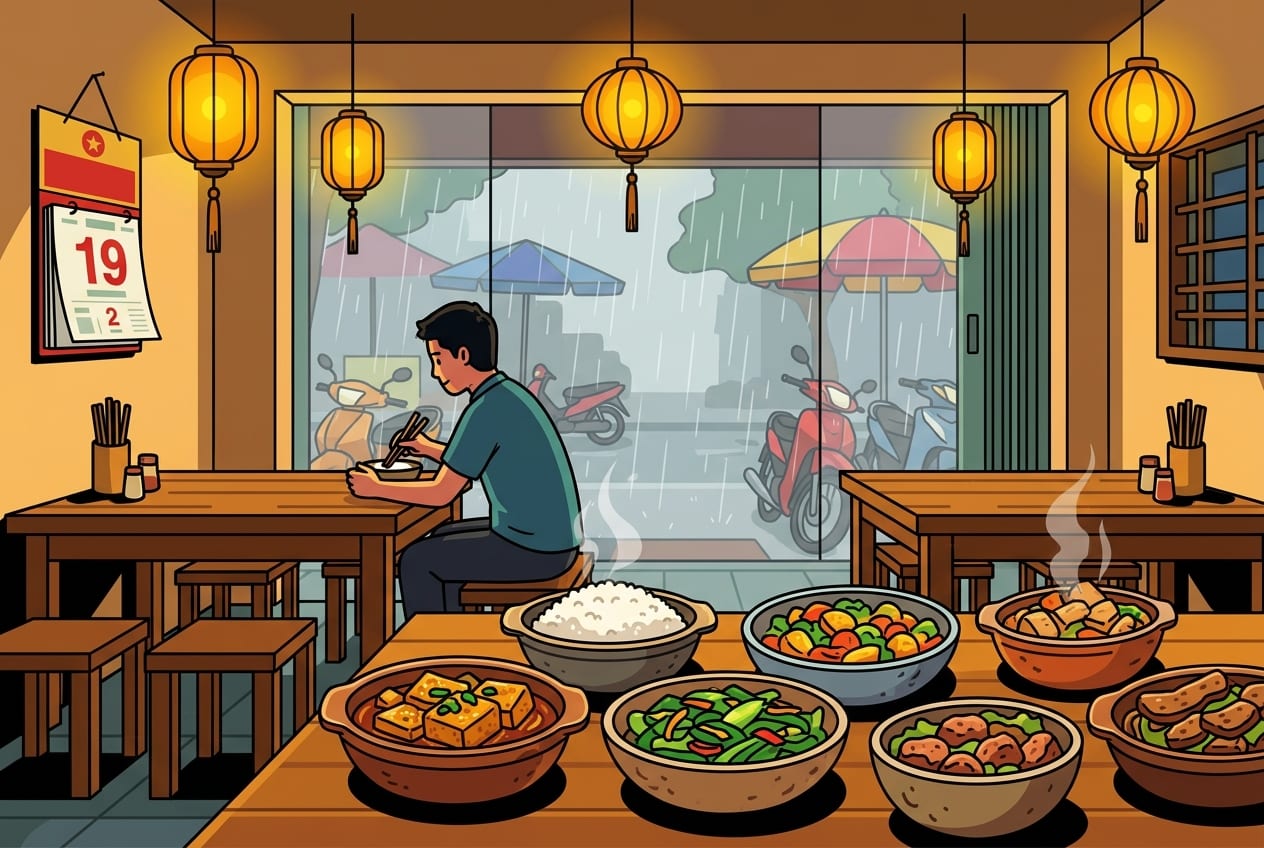
Imagine walking down a bustling alleyway in Hanoi or Ho Chi Minh City on a rainy late afternoon. The humid air hangs heavy, motorbikes buzz past wet pavement, and the usual aroma of sizzling pork chops and boiling beef broth fills the air. But as you step inside a local diner, the sensory landscape shifts completely. The dominant colors change to warm saffron, deep lotus pink, jade green, and dark, polished wood. The air is thick with the soothing scent of burning agarwood incense, and the gentle, ambient sounds of Buddhist instrumental music drift through the room. Diners—some in casual modern clothes, others in soft grey or soft blue cotton Buddhist lay robes called áo lam—sit peacefully on low wooden chairs. You have just stepped into the world of Ngày Chay.
For the uninitiated traveler, this sudden shift can be bewildering. You might find your favorite street food stall closed, or notice that the menu has been completely replaced by plant-based alternatives. This is not a random occurrence; it is a beautifully orchestrated cultural rhythm tied directly to the cycles of the moon. Far from being a time of restriction, these days open the door to some of the most sophisticated, creative, and delicious vegan food in Vietnam that you will ever experience.
What is Ngày Chay? The Lunar Pulse of Vietnam's Kitchens
Ngày Chay refers to the twice-monthly Buddhist tradition where millions of Vietnamese eat strictly vegan on the 1st and 15th of the lunar month. This practice purifies the spirit, accumulates spiritual merit, and temporarily halts meat consumption across the country.
To understand Ngày Chay, you must understand the concept of tích đức—accumulating spiritual merit. Rooted deeply in Mahayana Buddhist traditions, which shape much of Vietnam's cultural backbone, eating plant-based foods on the new moon (Mùng Một) and the full moon (Rằm) is a way to practice compassion toward living beings and cleanse the body and mind of negative karma. According to Wikipedia's entry on Buddhist vegetarianism, fasting or abstaining from animal products on specific lunar days is a widespread practice across East Asia, but Vietnam has developed its own distinct culinary identity around it.
During these two days of the month, millions of people—from devout temple-goers to casual secular locals—temporarily forgo meat, seafood, and alcohol. This collective shift creates a massive surge in demand for vegetarian and vegan dishes, turning the entire country into a plant-based paradise. It is a time for mindful eating, family gatherings, and visiting local pagodas to light incense and pray for health and harmony.
The Art of Illusion: Why Vietnamese Vegans Embrace Mock Meats
Unlike Western plant-based trends that sometimes avoid mock meats, Vietnamese culinary culture celebrates "chay giả mặn." These soy, mushroom, and jackfruit creations replicate traditional pork, shrimp, and chicken dishes, allowing families to maintain communal dining traditions during lunar holidays.
If you walk into a Vietnamese vegan restaurant, you might be shocked to see "shrimp" skewers, "pork belly" clay pots, and "chicken" drumsticks on the menu. In the West, some strict vegans look down on highly processed mock meats, preferring whole foods. But in Vietnam, the art of chay giả mặn (mock meats) is highly celebrated and deeply rooted in historical family traditions.
Historically, these artistic creations were crafted by temple cooks to allow families to transition smoothly to a plant-based diet without sacrificing the comfort of familiar textures and visual presentations during communal feasts. It is an act of inclusion: a grandfather who is not Buddhist can still sit at the family table on Ngày Chay and enjoy a dish that looks and feels like his favorite braised pork, while the rest of the family accumulates spiritual merit. These mock meats are crafted using natural ingredients like soy protein, wood ear mushrooms, green jackfruit, and arrowroot starch, achieving textures that are mind-blowingly accurate.
The Street vs. The Salon: Where to Eat on Vegan Days
Finding vegan food in Vietnam during Ngày Chay ranges from budget street-side stalls called Cơm Chay Bình Dân to high-end dining spots. Street stalls offer affordable buffet-style plates, while premium restaurants like Hum or Sadhu redefine vegetarian cuisine with upscale, modern aesthetics.
When the lunar calendar shifts, your dining options split into two wonderful worlds: the humble, high-energy street food scene and the serene, high-end vegetarian salons. No matter your budget, you will find that deciding between rice or noodles on these days is an absolute joy.
For an authentic, budget-friendly local experience, keep your eyes peeled for street-side stalls displaying the sign "Cơm Chay Bình Dân" (commoners' vegan rice). Here, you will find stainless steel food display cases stacked with golden-fried tofu blocks, emerald-green morning glory, and glistening mock meats. For just 30,000 to 50,000 VND ($1.20 to $2.00 USD), the vendor will heap a mountain of rice onto your plate and top it with a colorful assortment of braised mushrooms, tofu, and seasonal greens.
If you are looking for a more refined experience, Vietnam's major cities boast world-class vegetarian establishments that are redefining modern plant-based dining:
- Sadhu Vegetarian (Hanoi): Located in the capital, Sadhu offers an elegant, temple-inspired à la carte buffet for around 280,000 VND ($11 USD) per person. Their menu features delicate creations like grilled fig salad, mushroom hotpot, and handmade tofu served in rustic, matte-glazed ceramic bowls.
- Hum Vegetarian (Saigon): A Michelin-selected favorite in Ho Chi Minh City, Hum serves upscale, aesthetically stunning dishes in a lush, tropical garden setting. Expect to pay between 150,000 and 300,000 VND ($6 to $12 USD) per plate for masterpieces like lotus root salad and braised tofu in clay pots.
- Kashew Cheese (Saigon): Tucked away in the trendy Thao Dien ward, this hotspot caters to modern expats and hip locals with its artisanal cashew-based cheeses, vegan paninis, and curated natural wines.
Survival Tactics: How to Order and Beat the Lunar Rush
Navigating Ngày Chay requires strategic timing and simple language cues. To avoid massive crowds, dine outside peak hours, look for temporary "Món Chay" menus, use key phrases like "Tôi ăn chay," or utilize local delivery apps like Grab to locate neighborhood vegan kitchens.
Because half the neighborhood goes plant-based during these lunar days, dedicated chay restaurants can become incredibly crowded. To navigate the rush like a seasoned traveler, use these practical survival tips:
First, master your timing. To secure a plastic stool at a popular street stall or a table at a mid-range restaurant, aim to have lunch before 11:30 AM or after 1:30 PM. For dinner, arrive before 6:00 PM. If you walk into a standard, non-vegetarian restaurant, look at the counter or the walls; they will often have a temporary "Món Chay" (Vegan Dishes) menu printed specifically for the lunar day.
Second, leverage technology. If you don't feel like fighting the crowds, open local food delivery apps like Grab or ShopeeFood on lunar days. Type "Chay" into the search bar, and you will unlock hundreds of highly rated, hyper-local vegan kitchens operating right in your neighborhood, ready to deliver hot, fresh plant-based meals straight to your door.
Do
- Do try the mock meats (chay giả mặn) with an open mind; they are a celebrated culinary art form, not just processed substitutes.
- Do eat early (lunch before 11:30 AM, dinner before 6:00 PM) to beat the massive local rush on the 1st and 15th of the lunar month.
- Do use local delivery apps like Grab or ShopeeFood and search 'Chay' to find hidden neighborhood vegan kitchens.
Don't
- Don't bring outside non-vegan food or alcohol into dedicated Buddhist vegetarian restaurants; it is considered highly disrespectful.
- Don't assume 'chay' means raw vegetables; traditional Vietnamese vegan food is heavily cooked, braised, and richly seasoned.
- Don't panic if your favorite street food spot is closed on lunar days; it is the perfect excuse to explore a nearby pagoda buffet.
Is food marked as 'Chay' always strictly vegan, or does it contain fish sauce?
Traditional Buddhist 'chay' food in Vietnam is strictly vegan. It does not contain fish sauce (nước mắm), meat, poultry, seafood, or eggs. Instead, cooks use soy sauce, mushroom seasoning, and fermented tofu to create rich, savory flavors. However, if you are dining at a non-vegetarian restaurant that simply offers a few vegan options, it is always wise to double-check by saying 'không nước mắm' (no fish sauce).
What are the 'five pungent spices' and why do some vegetarian places avoid them?
Known as 'Ngũ Vị Tân', these five herbs and spices are garlic, onions, leeks, chives, and asafoetida. Strict Mahayana Buddhists avoid them because they are believed to excite the senses and disrupt spiritual focus during meditation. Traditional temple-style 'chay' kitchens and strict Buddhist stalls will omit them entirely, relying instead on lemongrass, ginger, and chili for flavor.
How do I know when it is 'Ngày Chay' if I don't follow the lunar calendar?
You don't need to carry a lunar calendar with you! The easiest way to tell is by looking at the street. On the 1st (Mùng Một) and 15th (Rằm) days of the lunar month, you will see a sudden abundance of yellow and red 'Cơm Chay' banners on the sidewalks, local pagodas will be busy and filled with incense smoke, and many regular street food vendors will display temporary vegan menus.
Practise the words you just read
Vietnamese phrases for real situations, each with native audio in both accents.
Topics
Read more
Other posts from our Vietnamese learning blog.

By Xinchao team
The Cat-and-Mouse Game of Hanoi's Train Street: Your 2026 Survival Guide to Visiting Safely (and Legally)
How do you navigate the guards, barricades, and narrow tracks of Hanoi's Train Street in 2026? Learn the insider rules to visit safely, legally, and respectfully.

By Xinchao team
Midnight at the Cemetery: Why Thousands of Vietnamese Pilgrims Flock to Cô Sáu under the Stars
Discover the deep history, essential etiquette, and practical steps for participating in Côn Đảo's famous midnight pilgrimage to the grave of Cô Sáu.

By Xinchao team
Beyond the Beach: Why You Must Experience Ninh Thuan’s Mystical Cham Kate Festival
Ready to go beyond the beach? Experience Ninh Thuan's mystical Cham Kate Festival at Po Klong Garai. Learn the deep cultural meanings, crucial etiquette, and expert survival tips for expats.