Is Sa Pa Just for the Views? How to Respect the 'Roof of Indochina' and Its People
Beyond the misty peaks of Fansipan lies a rich tapestry of Hmong and Red Dao culture. Here is how to navigate the clouds and the local customs of Sa Pa.
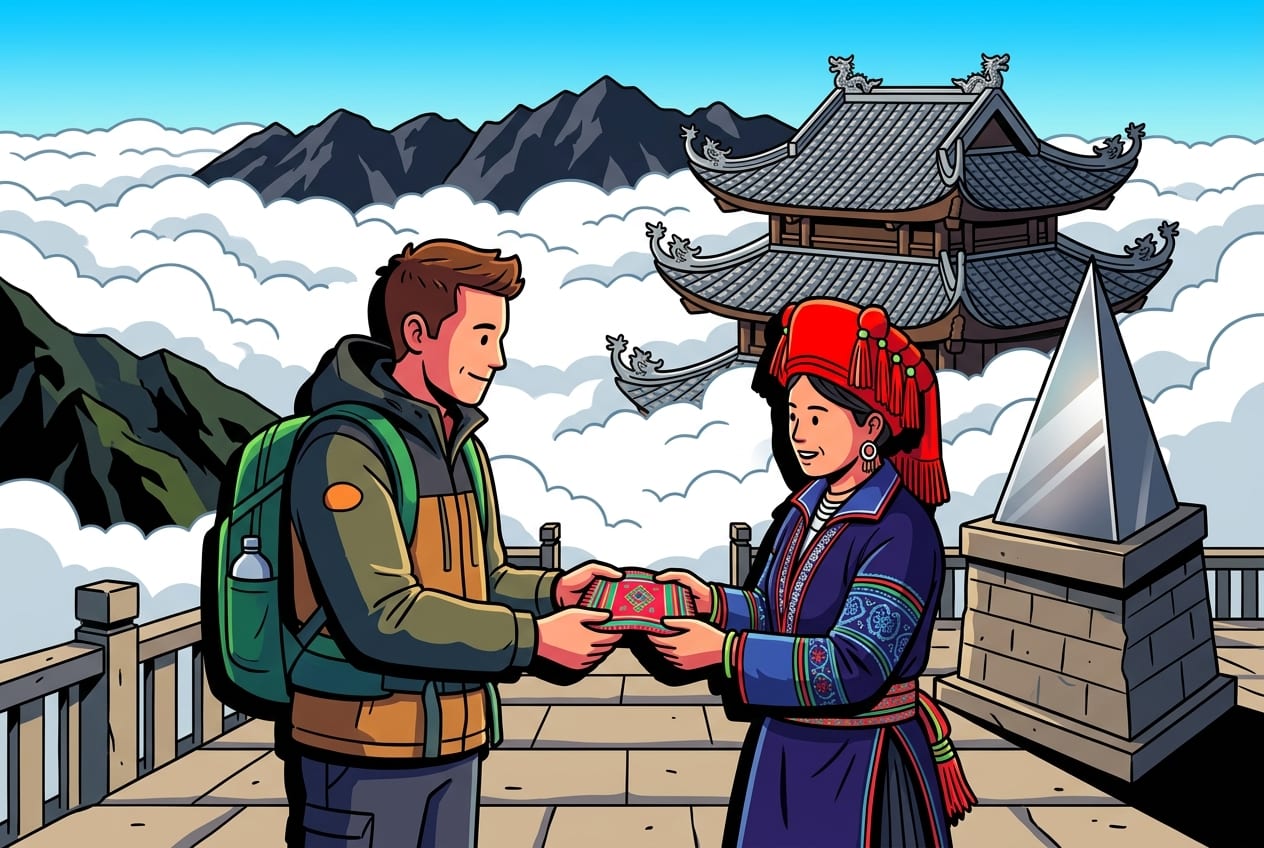
Sa Pa is a place where the earth seems to touch the heavens. Located in the Hoang Lien Son mountain range of Northwest Vietnam, this former colonial hill station has transformed into a global destination. But for the traveler standing on a stone platform 3,143 meters above sea level, Sa Pa is more than a postcard. It is a sensory overload of swirling white clouds, the smell of damp earth, and the vibrant colors of indigo and scarlet worn by the local people. To truly experience Sa Pa, one must look past the scenery and understand the heartbeat of the mountains: the indigenous cultures that have called these slopes home for centuries.
Conquering Fansipan: More Than a Cable Car Ride
Fansipan, standing at 3,143 meters, is the highest peak in the Indochinese Peninsula, earning it the title 'Roof of Indochina.' For travelers, it represents a blend of physical challenge and spiritual pilgrimage, as the summit complex features Buddhist architecture designed to harmonize with the rugged, misty landscape of the Hoang Lien Son range.
A decade ago, reaching the summit of Fansipan required a grueling two-to-three-day trek through dense bamboo forests and steep ridges. Today, the Sun World Fansipan Legend cable car has made the 'Roof of Indochina' accessible to everyone in just 15 minutes. However, the ease of the journey shouldn't diminish the mountain's majesty. As you ascend, you pass through different climate zones, watching the terraced rice fields give way to ancient trees and finally to the jagged rock faces of the summit. UNESCO has noted the unique geological and cultural value of this region, emphasizing its status as a sanctuary of biodiversity.
At the top, the air is thin and crisp. You will find a series of pagodas and temples built in the style of the Tran Dynasty, their grey tile roofs curving upward like the wings of a bird. These aren't just for show; they are active places of worship. When you see locals lighting incense or bowing before the Great Buddha Statue, remember to maintain a quiet, respectful tone. The triangular metal monument marking the summit is a popular photo spot, but the real magic lies in the 'Sea of Clouds' (Biển Mây) that often blankets the valley below, turning the peaks into islands in a white ocean.
The Red Dao and Hmong: Understanding the Heart of the Highlands
Sa Pa is home to several ethnic minority groups, primarily the Hmong and Red Dao, each possessing unique linguistic, sartorial, and social traditions. Their presence transforms the region from a mere geographical landmark into a living museum of highland culture, where ancestral customs regarding agriculture, weaving, and community remain central to daily life.
As you walk through the streets of Sa Pa town or the trails of Muong Hoa Valley, you will meet women in striking outfits. The Red Dao (Dao Đỏ) are easily recognized by their vibrant red turbans, often adorned with silver coins and tassels. They are famous for their knowledge of herbal medicine and their intricate embroidery. A Red Dao woman's jacket is a map of her identity, with patterns representing family, nature, and protection. According to Britannica, these highland groups have maintained distinct identities despite centuries of migration and change.
The Hmong (Mông), on the other hand, often wear deep indigo-dyed clothing. The fabric is hand-woven from hemp and dyed using the leaves of the indigo plant, a process that can take months. If you see a woman with blue-stained hands, it is a badge of honor—a sign of a hard-working artisan. Understanding this labor helps you appreciate the small woven textiles sold in the markets. These aren't just souvenirs; they are pieces of a woman's life story. When receiving a gift or purchasing an item, doing so with both hands is a vital sign of respect.
Social Etiquette: The Art of Receiving and Giving in Sa Pa
Etiquette in Sa Pa is rooted in mutual respect and the traditional Vietnamese concept of 'saving face,' which is especially prominent in close-knit highland communities. Travelers should prioritize humility, use both hands when exchanging items, and always seek permission before entering private spaces or photographing individuals to ensure a respectful cultural exchange.
In the highlands, the way you interact with people is as important as the words you say. If a local woman offers you a handmade textile or a piece of fruit, always receive it with both hands. This gesture signifies that you value the giver and the gift. It is a universal sign of politeness across Vietnam, much like the warmth found in Vietnamese hospitality during a family meal. In Sa Pa, where life can be physically demanding, these small gestures of grace go a long way in building rapport.
You might also encounter children selling trinkets. While it is tempting to give them candy or money, many local NGOs advise against this, as it encourages children to stay out of school to beg from tourists. Instead, consider buying from adult artisans or donating to local schools and community projects. This ensures that your visit has a positive, sustainable impact on the 'bản làng' (villages) you visit.
Photography and Personal Space
Photography in Sa Pa requires sensitivity to the privacy and dignity of the local residents, who are not merely subjects for a lens. Always ask for consent before taking portraits, and be mindful that some sacred sites or traditional ceremonies may be off-limits to cameras to preserve their spiritual integrity.
Imagine if a stranger walked into your front yard and started taking photos of you while you were doing chores. You'd find it intrusive! The same applies in Sa Pa. Before snapping a photo of a person in traditional dress, a simple smile and a nod while pointing to your camera is usually enough to ask for permission. Most people are happy to oblige, but if they shake their head, respect their wish. Also, be wary of taking photos of funerals or certain shamanic rituals, as these are deeply private spiritual events.
Do
- Use both hands when giving or receiving anything (money, gifts, food).
- Dress modestly when visiting pagodas or local homes (cover shoulders and knees).
- Ask permission before taking a photo of a local person.
- Remove your shoes before entering a traditional stilt house.
Don't
- Don't give candy or money to children; it encourages truant behavior.
- Avoid touching someone's head, as it is considered the most sacred part of the body.
- Don't show excessive public displays of affection in rural villages.
- Avoid walking through the middle of a village ritual unless invited.
Navigating the Sa Pa Market Scene
Markets in Sa Pa serve as vital social and economic hubs where ethnic groups gather to trade goods, share news, and maintain communal bonds. For travelers, these markets offer a window into the local economy, requiring a balance of fair bargaining and an appreciation for the artisanal craftsmanship on display.
The Sa Pa Market is a kaleidoscope of sights and smells. You'll find everything from fresh mountain herbs and honey to hand-forged farm tools and vibrant textiles. Bargaining is common, but it should always be done with a smile. Remember that for many of these women, selling a scarf might represent several days of work. If the price seems fair to you, there's no need to squeeze every last 'đồng' out of the deal. The 'Love Market' (Chợ Tình) is a famous tradition where young people from different villages would come to find partners through song and flute playing; while it is now more of a tourist performance, the spirit of social gathering remains.
Why do the Red Dao people offer herbal baths, and is it polite to refuse?
The Red Dao are famous for their 'lá thuốc' (medicinal leaf) baths, which use dozens of forest plants to soothe muscles and improve circulation. It is a cornerstone of their hospitality. If offered, it is a wonderful experience, but if you must refuse (perhaps due to skin sensitivity), simply smile and say 'Cảm ơn' (Thank you) while gesturing that you cannot. They will not be offended.
I want to trek to a remote village. Should I hire a local guide or go alone?
Hiring a local Hmong or Red Dao guide is highly recommended. Not only does it provide direct income to the community, but they also act as your cultural bridge. They can explain the meanings behind the symbols on the houses and ensure you don't accidentally wander into a sacred area or someone's private garden. Plus, they know the trails better than any GPS!
What should I do if I am invited into a local home for tea or corn wine?
Being invited into a home is a great honor. Always remove your shoes at the door. When served tea or 'rượu ngô' (corn wine), accept the cup with both hands. It is polite to take at least a small sip. If you don't want to drink more, you can leave the cup mostly full, which signals you are finished without being rude.
Sa Pa is changing rapidly, but its soul remains in the mist-covered mountains and the resilient spirits of the people who live there. By traveling with an open heart and a respectful hand, you don't just see the 'Roof of Indochina'—bạn thực sự chạm vào nó (you truly touch it).
Practise the words you just read
Vietnamese phrases for real situations, each with native audio in both accents.
Topics
Read more
Other posts from our Vietnamese learning blog.
By Xinchao team
The 'Em Ơi' Minefield: Your Expat Survival Guide to Addressing Anyone on the Vietnamese Street (Without Causing an Accidental Crisis)
Think 'Em ơi' is a magic pass to get any waiter's attention? Think again. Dive into the complex, rewarding world of Vietnamese pronoun etiquette and learn how to navigate the streets like a seasoned expat.
By Xinchao team
Sweet Sâm or Face-Melting Đắng? Your Expat Survival Guide to Cholon’s Ancient Herbal Tea Culture
Discover Saigon's ancient herbal tea culture in Cholon. Learn how to order sweet nước sâm and survive face-melting nước đắng with this expat survival guide.
By Xinchao team
The Point-and-Eat Protocol: Your Expat Survival Guide to Vietnam's 'Cơm Bình Dân' Buffet Trays
Demystify Vietnam's legendary 'commoner's rice' stalls. Learn the step-by-step point-and-eat protocol, discover must-try dishes, and master sidewalk etiquette.