Is Phu Quy the New Bali? Why 2026 Travelers Risk Seasickness for Vietnam’s Ultimate ‘Healing’ Island
Discover why Phu Quy Island is 2026's top 'healing' destination. Learn about the rough ferry ride, volcanic landscapes, and the Gen Z obsession with silence.
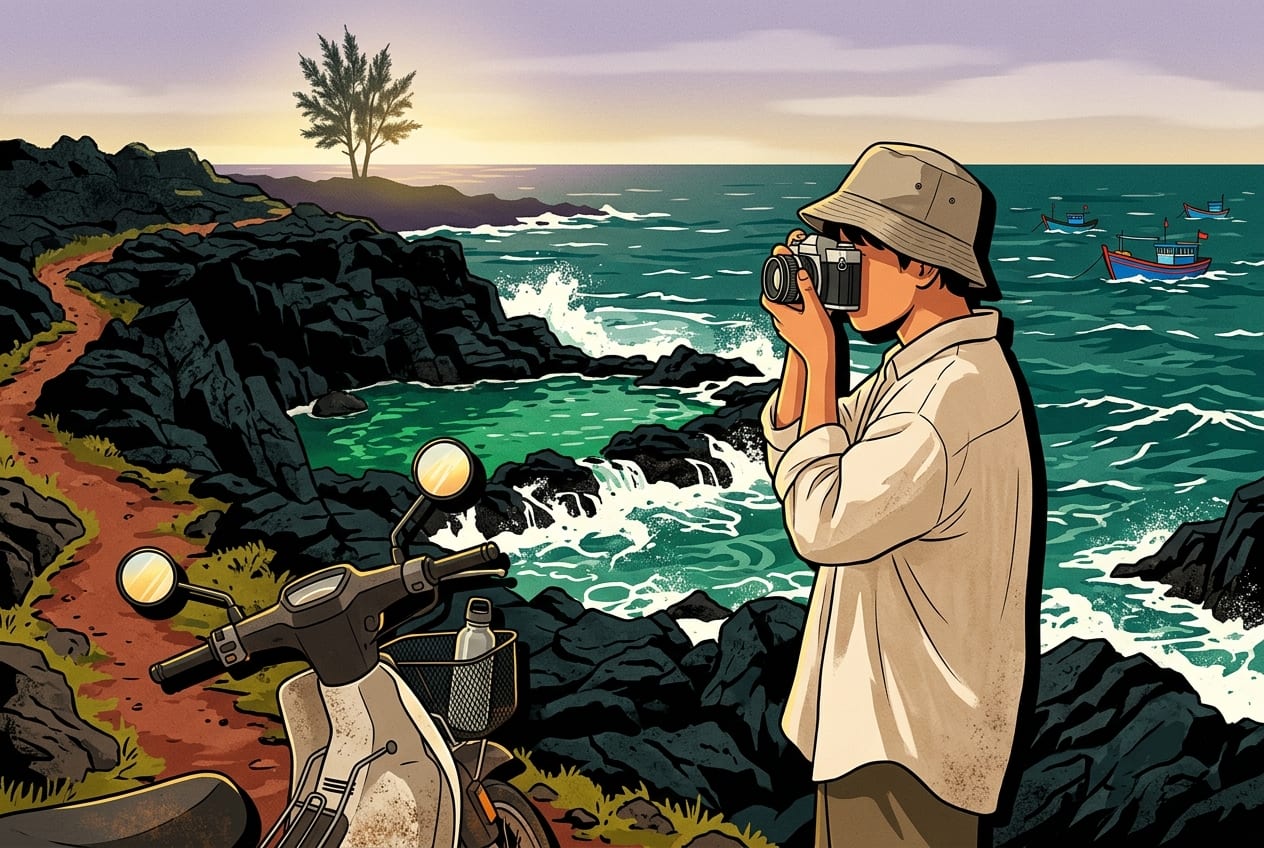
If you ask a young Vietnamese traveler in 2026 where they are going to 'find themselves,' they won't say Bali, and they definitely won't say the crowded resorts of Phu Quoc. Instead, they will point to a tiny, windy speck in the East Sea called Phu Quy. This island has become the unofficial capital of the 'chữa lành' (healing) movement. But here is the catch: to get to this paradise, you have to survive a two-and-a-half-hour ferry ride that locals affectionately call the 'vomit express.' Why are thousands of people willing to risk their lunch just to stand next to a lonely tree? The answer lies in a cultural shift where 'imperfection' is the new luxury.
The Rite of Passage: Why the Rough Sea is Part of the Therapy
Phu Quy Island requires a challenging 2.5-hour ferry journey from Phan Thiet, often involving turbulent waters that test even seasoned travelers. This physical struggle is culturally viewed as a necessary 'cleansing' process before reaching the island's serene environment, reinforcing its reputation as a destination for genuine emotional and spiritual recovery.
In the world of high-speed travel, Phu Quy remains stubbornly difficult to reach. You start at the Phan Thiet Port, where you board a vessel like the Superdong or Phu Quy Express. In 2026, a ticket costs between 350,000 and 580,000 VND. But don't let the 'Express' name fool you. The channel between the mainland and the island is notorious for its massive swells. On any given morning, you will see rows of Gen Z travelers, clad in expensive linen outfits, clutching plastic bags and looking remarkably pale.
Why do they do it? Because in the Vietnamese mindset of 2026, a destination that is easy to reach is a destination that is 'spoiled.' The rough sea acts as a filter. It keeps out the massive tour buses and the noisy crowds. By the time you step off the boat onto the concrete pier, you have paid your dues. You aren't just a tourist anymore; you are a survivor. This shared trauma of the ferry ride creates an instant bond between visitors. You’ll see people who were strangers an hour ago sharing ginger candy and motion sickness tips like they are old war buddies.
What Does ‘Chữa Lành’ Actually Mean in 2026?
The term 'chữa lành' has evolved in Vietnam from a clinical concept to a mainstream lifestyle trend focusing on mental well-being and digital detoxing. On Phu Quy, this manifests as a rejection of commercial entertainment in favor of minimalist living, quiet contemplation, and reconnecting with the island's raw, unpolished natural beauty.
A few years ago, 'healing' might have meant a five-star spa in Da Nang. But today, the trend has flipped. Young Vietnamese professionals are burnt out by the 'hustle culture' of Saigon and Hanoi. They are tired of the 'check-in' culture where you only visit a place to take a photo. They want to go somewhere where there is literally nothing to do. You might wonder, is your coffee actually healing you, or do you just need a break from the city? On Phu Quy, the answer is usually the latter.
Phu Quy is the 'anti-Bali.' There are no beach clubs with thumping bass, no international hotel chains, and no Starbucks. The 'healing' comes from the silence. After 9:00 PM, the island goes quiet. You don't hear cars; you hear the wind—and the wind on Phu Quy is legendary. It’s a constant, salty gale that clears the cobwebs from your brain. The aesthetic here is 'low-fi.' Travelers stay in minimalist homestays like Ri-Rao or La Isla Bonita, where the luxury isn't a gold-plated faucet, but a window that looks out onto a volcanic cliff. It’s about the luxury of being unreachable.
The Visual Soul: Volcanic Rocks and Emerald Infinity Pools
Phu Quy's unique geological landscape features dramatic obsidian-black volcanic formations contrasted against vibrant emerald waters. Key sites like Ganh Hang and the 'Lonely Tree' provide a stark, high-contrast visual experience that differs significantly from the white-sand tropical clichés found elsewhere, offering a more grounded and ancient atmosphere for visitors.
The geography of Phu Quy is what sets it apart from the rest of Vietnam. Most Vietnamese islands are soft—sandy beaches and palm trees. Phu Quy is hard. It is made of obsidian-black volcanic rock that looks like it was frozen in time mid-explosion. At Ganh Hang, these rocks form natural 'infinity pools.' When the tide comes in, the crystal-clear emerald water fills these rocky basins, creating a perfect, calm swimming hole surrounded by jagged cliffs. It looks like something out of a prehistoric movie.
Then there is the 'Lonely Tree' (Cây Cô Đơn). In any other country, a single tree on a coast wouldn't be a landmark. But in Vietnam, it is a symbol of resilience. It stands alone against the ocean winds, perfectly framed for a film-style photograph. You will see travelers sitting near it for hours, not even talking, just watching the sunset turn the sky into a hazy purple. This is the 'healing aesthetic' in action: oversized linen shirts, neutral-toned bucket hats, and a Fujifilm camera slung over the shoulder. It’s a quiet, contemplative beauty that feels much more authentic than the neon lights of a city.
The Unspoken Rules: Military Zones and Silent Nights
As a strategic offshore territory, Phu Quy maintains strict military regulations that travelers must navigate with respect. This includes carrying identification at all times and avoiding restricted areas. Culturally, the islanders prioritize environmental preservation and communal quiet, expecting visitors to adhere to 'zero-plastic' initiatives and maintain silence after dark.
You must remember that Phu Quy isn't just a playground; it is a sensitive military outpost. For decades, foreigners weren't even allowed here. While the permit rules were relaxed years ago, the military presence is still felt. This adds a layer of 'seriousness' to the island. You can't just fly a drone wherever you want, and you should always have your passport handy. This isn't a place for wild parties or loud behavior. In fact, the locals are quite protective of their peace. If you start a loud karaoke session at midnight, you won't just get a dirty look—you'll be disrupting the very 'healing' vibe that everyone came here to find.
There is also a growing 'Green Wave' on the island. Local businesses are increasingly moving toward a zero-plastic model. You’ll find that many homestays don't offer single-use plastic bottles. This is part of the island's charm—it’s one of the few places in Vietnam where you can see a community actively trying to say cảm ơn to the planet. Respecting these rules is part of the 'healing' process. You aren't just taking from the island; you are respecting its boundaries.
Do
- Take motion sickness medication 30 minutes before boarding the ferry.
- Carry your physical passport at all times; it's a military zone requirement.
- Dress modestly (cover shoulders and knees) when visiting Linh Son Pagoda.
- Bring enough cash (VND), as ATMs on the island are often out of service or empty.
- Rent a motorbike; it is the only practical way to see the island's hidden spots.
Don't
- Don't fly drones near military outposts or the Sovereign Flagpole without checking local signs.
- Don't use single-use plastics; the island is strictly moving toward a 'zero-plastic' rule.
- Don't play loud music or host parties after 9:00 PM; respect the 'healing' silence.
- Don't swim at Ganh Hang during high tide or rough weather; the waves can be dangerous.
Survival Guide: How to Actually ‘Heal’ Without Stress
Navigating Phu Quy's limited infrastructure requires practical planning, particularly regarding transportation and finances. With a cash-heavy economy and a single primary mode of transport—the motorbike—visitors must be self-reliant. Understanding these logistical realities ensures that the 'healing' experience isn't overshadowed by the stress of basic travel needs.
To truly enjoy Phu Quy, you need to embrace the 'slow' life. Renting a motorbike is non-negotiable. It costs about 150,000 to 200,000 VND per day. There are no taxis, and the island is too hilly and windy for bicycles. Driving here is a dream—the roads are paved, the traffic is light, and the views of the Casuarina trees against the blue sea are breathtaking. Just make sure you fill up your tank at the few gas stations available, as they close early.
When it comes to food, keep it simple. Phu Quy is famous for its 'Huynh De' crab (King Crab), which is much cheaper here than in the cities. For a true local experience, head to the harbor in the morning and watch the blue and red wooden boats bring in the catch. You can buy seafood directly and ask a local 'quan' (eatery) to cook it for you. It’s raw, it’s fresh, and it’s a far cry from the fancy plating of a resort. For more information on the history of this region, you can check out the UNESCO records on coastal heritage in Southeast Asia.
Is the ferry to Phu Quy really that bad for motion sickness?
Yes, it is often called the 'toughest' boat ride in Vietnam. The sea between Phan Thiet and Phu Quy has strong cross-currents. Even on a clear day, the boat can rock significantly. It is highly recommended to take medication and sit in the middle or back of the boat where there is less movement.
Can I use my credit card or Apple Pay on the island?
Almost nowhere. Phu Quy is still very much a cash-based economy. While a few upscale homestays might accept bank transfers, you will need cash for motorbikes, street food, and local markets. The few ATMs on the island frequently run out of money, especially on weekends.
What is the best time of year to visit for the 'healing' vibe?
The best window is from January to June. During these months, the sea is calmer (though still choppy), and the weather is sunny. From July to September, the island enters the rough sea season, and ferries are frequently cancelled due to storms, which might turn your 'healing' trip into a 'stranded' trip!
Ultimately, Phu Quy isn't just a place; it's a mood. It’s for the traveler who is tired of the 'perfect' vacation and wants something real. It’s for the person who finds beauty in a jagged rock and peace in a silent night. So, if you're ready to leave the noise behind—and if you have a strong stomach—Phu Quy is waiting to heal you.
Practise the words you just read
Vietnamese phrases for real situations, each with native audio in both accents.
Topics
Read more
Other posts from our Vietnamese learning blog.

By Xinchao team
Beyond the Beach: Why You Must Experience Ninh Thuan’s Mystical Cham Kate Festival
Ready to go beyond the beach? Experience Ninh Thuan's mystical Cham Kate Festival at Po Klong Garai. Learn the deep cultural meanings, crucial etiquette, and expert survival tips for expats.
By Xinchao team
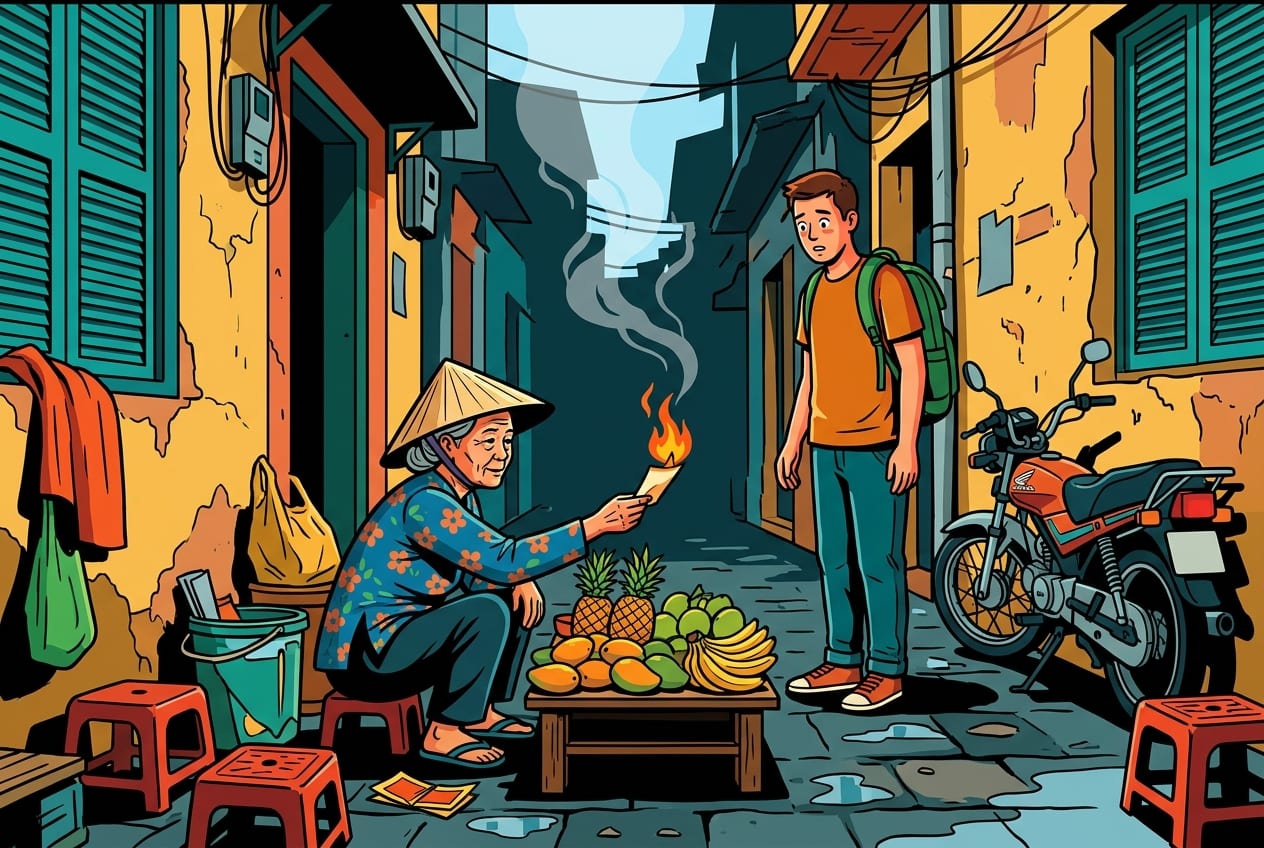
Don't Be the First Customer! An Expat’s Guide to Vietnam's Sacred Morning Rituals of 'Mở Hàng' and 'Đốt Vía'
Ever wondered why a Vietnamese street vendor looked terrified when you asked for a price early in the morning? Welcome to the delicate, sacred rituals of Mở Hàng and Đốt Vía.

By Xinchao team
Survival of the Spinnest: Your Expat Guide to Navigating Hoi An’s Dizzying Basket Boat Culture
Get ready to spin! Dive into the history, pricing, and survival tips for navigating Hoi An's iconic basket boats in Cam Thanh Coconut Forest.