Hoi An: Still Ancient, But Now Da Nang? Your Seamless Central Vietnam Ride Awaits!
Navigate Central Vietnam's new travel routes between Da Nang and Hoi An after their 2025 merger. Discover transport, culture, and must-see spots.
Central Vietnam's Big Hug: Da Nang & Hoi An Become One!
Imagine two beloved siblings, always close, now sharing the same address. That’s pretty much what’s happening in Central Vietnam! From July 1, 2025, the charming ancient town of Hoi An, once a city within Quang Nam Province, will officially become a ward of the dynamic Da Nang City. This isn't just a paperwork change; it's a strategic move to create a stronger, more unified region, promising travelers an even more streamlined and richer experience as they explore Vietnam's stunning central coast.
For you, the curious traveler, this merger means a truly "seamless journey" between the vibrant modernity of Da Nang and the timeless, lantern-lit streets of Hoi An. Think of it as one big, beautiful destination with easier connections, better infrastructure, and a shared vision for tourism that highlights the best of both worlds. The short 30-kilometer hop between these two gems is now more straightforward than ever, making it a breeze to soak up Da Nang's beaches and bridges before stepping back in time in Hoi An.
Getting There: Your Ride, Your Way (Da Nang to Hoi An)
Navigating from Da Nang to Hoi An in 2025-2026 is simpler than ever, offering diverse options for every budget and preference. Whether you prioritize speed, comfort, or cost, there's a convenient way to make the approximately 30-kilometer journey, which typically takes between 30 and 90 minutes depending on your chosen transport.
The route between Da Nang and Hoi An offers travelers multiple convenient and affordable transportation options, with ride-hailing apps, private taxis, and shared shuttles providing varying levels of comfort and speed. For budget travelers, public buses offer the most economical choice, though they take longer and might require additional short rides to reach specific final destinations within Hoi An.
Here's a breakdown of your best bets:
Ride-Hailing Apps: Quick & Convenient
For speed and comfort, ride-hailing apps like Grab, Xanh SM (the electric taxi service), or Maxim are your go-to. They are widely available, easy to use via your smartphone, and offer transparent pricing. You can book a car or even a motorbike (xe ôm) if you're traveling light and want a more local experience. Just make sure you confirm the price before starting your trip.
Expect fares to range from 250,000 VND to 400,000 VND (approximately $10-17 USD) for a one-way car trip. The journey usually takes about 30-45 minutes, depending on traffic and your exact starting point in Da Nang and destination in Hoi An. This is often the preferred choice for couples or small groups who value directness and air-conditioned comfort.
Private Taxis & Pre-Booked Transfers: Flexible & Scenic
If you prefer to have a driver waiting for you, especially if you're arriving at Da Nang Airport (DAD), private taxis or pre-booked transfers are excellent options. Many hotels and local tour operators can arrange these for you. They offer similar travel times to ride-hailing apps (30-45 minutes) but often come with added flexibility, like stopping at scenic spots along the way. For instance, you could ask your driver to pause at the stunning Marble Mountains for a quick visit, turning your transfer into a mini-tour.
Fares for private taxis or pre-booked transfers typically run from 300,000 VND to 450,000 VND (approximately $12-18 USD). While slightly more expensive, the convenience and potential for customized stops can be well worth it, especially if you're traveling with luggage or a family.
Shared Shuttles & Minivans: Budget-Friendly Group Travel
For budget-conscious travelers who don't mind sharing a ride, shared shuttles or minivans are a fantastic option. These services pick up multiple passengers and drop them off at various locations, making them a social and economical choice. You can often book these through your hotel or online travel agencies.
The cost per person is usually around 120,000-150,000 VND (approximately $5-7 USD). Be aware that while cheaper, these might take longer (60-90 minutes) due to multiple pick-ups and drop-offs. If you're not in a rush, this is a great way to save some dong!
Public Bus (Route LK02): The Ultimate Saver
The most economical option is the public bus, specifically Route LK02. This is perfect for the adventurous, ultra-budget traveler. The fare is incredibly low, ranging from 8,000-15,000 VND (less than $1 USD). However, it's also the slowest option and might require an additional short ride (like a local taxi or Grab bike) from the bus stop to your final destination in Hoi An Ancient Town, as the main bus station is usually a bit outside the core tourist area.
Hoi An's Timeless Charm: Entry & Etiquette
Hoi An Ancient Town, now a ward of Da Nang, retains its unique charm and specific entry requirements for its heritage sites, ensuring its preservation. Visitors should be aware of the 120,000 VND international entrance ticket, which grants access to five heritage sites and is typically checked after 5 PM when the town's famous lanterns illuminate the streets, creating a magical atmosphere.
Stepping into Hoi An is like walking onto a movie set from centuries past. The golden-yellow buildings, the silk lanterns, the gentle Hoai River – it’s a magical experience. But even in this relaxed setting, a little cultural know-how goes a long way.
Ancient Town Entry Ticket: What You Need to Know
As of 2025, an entrance ticket to the Ancient Town costs 120,000 VND (approximately $5 USD) for international visitors. This ticket isn't just for general entry; it grants you access to five specific heritage sites within the town, such as old houses, assembly halls, or museums. While you can wander the streets freely without a ticket, you'll need it to step inside these significant historical buildings. Ticket checks often become more prominent starting around 5 PM, just as the lanterns begin to glow, transforming Hoi An into its most enchanting state.
Respectful Roaming: Local Customs & Etiquette
Vietnamese culture is deeply rooted in respect – for elders, family, and community. Politeness and humility are highly valued, and direct confrontation is generally avoided. As a guest in their beautiful country, showing respect for these traditions will enhance your experience and build positive connections with locals.
Do
- Dress modestly when visiting temples, pagodas, or local homes (shoulders and knees covered). This shows respect for sacred spaces and private residences.
- Remove your shoes before entering someone's home or a temple. Look for a pile of shoes outside as a hint.
- Use two hands when giving or receiving something, especially from elders. It's a gesture of respect.
- Smile and use polite language. A simple 'Cảm ơn' (thank you) goes a long way.
- Bargain politely at markets, but do so with a friendly attitude and a smile. Don't be too aggressive.
Don't
- Point with your finger; it can be considered rude. Use your whole hand if you need to indicate something.
- Touch someone's head, as it's considered the highest and most sacred part of the body.
- Engage in loud arguments or public displays of affection. Vietnamese culture values discretion and harmony.
- Wear revealing clothing in religious sites or conservative areas. Opt for light, breathable fabrics that offer coverage.
- Leave chopsticks standing upright in a bowl of rice; it resembles incense sticks at a funeral and is considered bad luck.
Beyond the Ride: The Scenery & Local Life
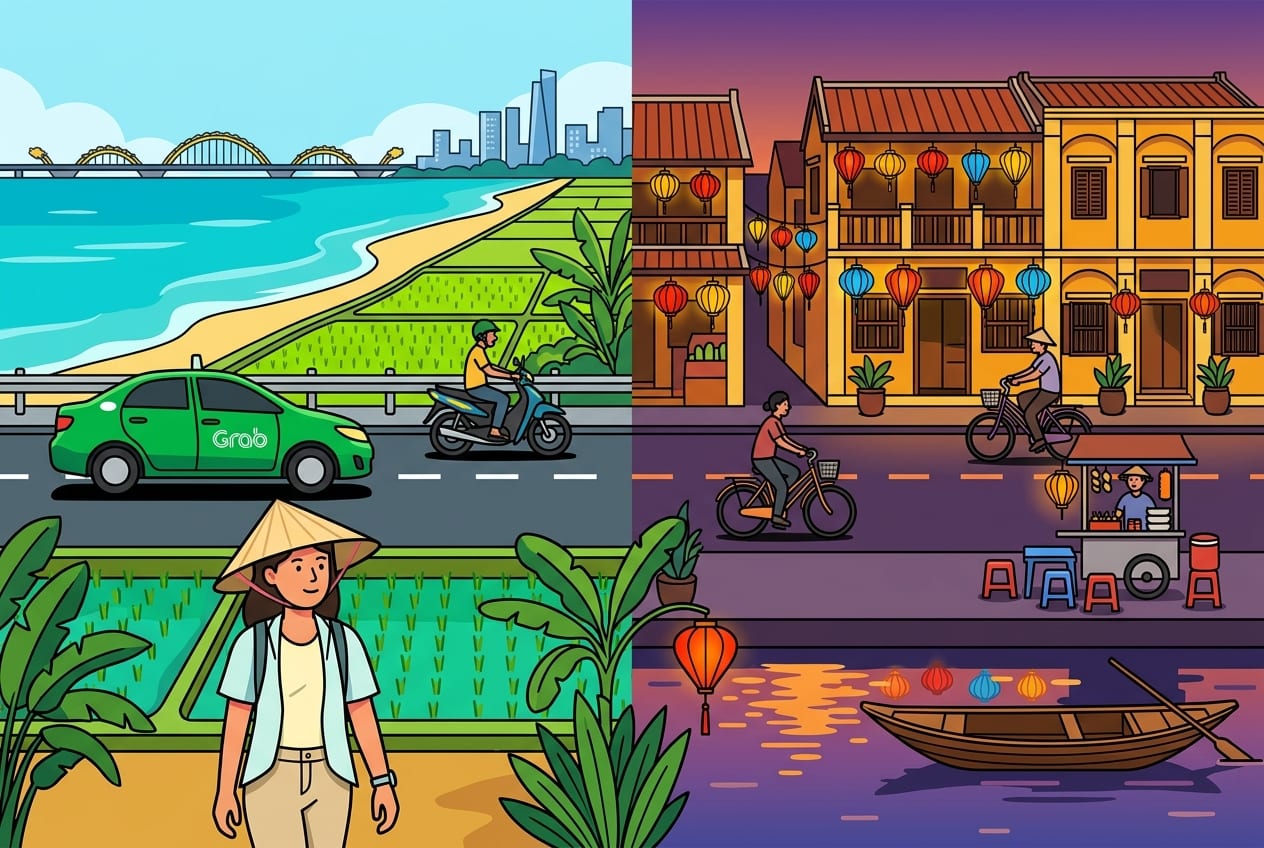
The journey between Da Nang and Hoi An is a visual treat, transitioning from modern coastal roads to ancient, lantern-lit streets. Along the way, travelers will observe lush rice paddies, the blue ocean, and ubiquitous motorbikes, often ridden by locals wearing conical hats (nón lá). Hoi An's golden-yellow architecture and vibrant silk lanterns at dusk create a uniquely enchanting atmosphere, complemented by bustling street food scenes.
The approximately 30-kilometer drive between Da Nang and Hoi An isn't just a transfer; it's a journey through Central Vietnam's heart. You'll witness the landscape transform before your eyes, offering a rich tapestry of sights, sounds, and local life.
A Feast for Your Eyes: From Coast to Countryside
As you leave Da Nang, the coastal roads often present stunning vistas of the deep blue ocean meeting white sandy beaches, most notably My Khe Beach. Soon, the urban sprawl gives way to serene, lush green rice paddies stretching towards the horizon, punctuated by small villages and the occasional water buffalo. It's a beautiful contrast that showcases the diverse natural beauty of the region.
The Rhythms of Vietnamese Life
Keep an eye out for the vibrant daily life unfolding around you. Motorbikes, the unofficial kings of Vietnamese transport, will weave gracefully through traffic, carrying everything from families to towering stacks of goods. You'll see locals wearing light, practical clothing, often topped with the iconic conical hat, the nón lá, which offers excellent sun protection and is a symbol of Vietnamese culture.
As you approach Hoi An, the modern buildings gradually give way to the distinctive golden-yellow architecture of the ancient town, with its dark wooden accents and tiled roofs, often draped in vibrant bougainvillea. It's a visual transition that truly transports you back in time.
Hoi An by Night: A Lantern-Lit Dream
The real magic happens in the evenings. Hoi An transforms into a breathtaking spectacle, bathed in the warm, soft glow of thousands of silk lanterns. These lanterns, in shades of red, yellow, blue, and green, reflect beautifully on the Hoai River, where traditional sampan boats glide by, offering serene rides. Street food vendors set up their stalls, their colorful offerings illuminated by hanging lights, and both locals and tourists gather on miniature plastic stools, sharing delicious meals and stories. It’s an atmosphere that’s both bustling and incredibly peaceful – truly unforgettable.
Weather Watch: May in Central Vietnam
If you're traveling in May, be prepared for hot and sunny weather! Temperatures typically range from 27-38°C (80-100°F) with high humidity. Occasional refreshing afternoon showers are common and often a welcome break from the heat. Pack light, breathable clothing, a wide-brimmed hat, sunscreen, and stay hydrated!
What the Merger Means for Locals (and You!)
The administrative merger of Quang Nam Province and Da Nang City, elevating Hoi An to a ward within Da Nang, holds deep significance for locals. It symbolizes a future of enhanced infrastructure, economic prosperity, and a stronger global identity for their cherished region, promising better services and opportunities for residents, while also streamlining the experience for international visitors.
For the people living here, this merger is more than just a change on a map. It’s a powerful symbol of progress and unity. Locals anticipate enhanced infrastructure, meaning better roads, public services, and perhaps even more direct flights to Da Nang, making the entire region more accessible. It’s also seen as a pathway to increased economic prosperity, bringing more investment and job opportunities to their beloved homeland.
From a cultural perspective, the merger reinforces a stronger global identity for Central Vietnam. It positions the region as a unified powerhouse, capable of attracting even more international attention while preserving its unique heritage. For travelers, this means a more cohesive and potentially richer cultural experience, where the modern vibrancy of Da Nang and the ancient soul of Hoi An are presented as two harmonious parts of one incredible story. It's a win-win: better for locals, and better for visitors seeking an authentic and seamless Vietnamese adventure.
Must-See Spots: Da Nang & Hoi An's Brightest Stars
The newly merged Da Nang-Hoi An region boasts a wealth of attractions for every traveler. In Da Nang, highlights include the 'Lighting Up the Han River' project, My Khe Beach, the Dragon Bridge's fire and water show, and the iconic Golden Bridge at Ba Na Hills. Hoi An continues to charm with its lantern-lit Ancient Town, bustling Night Market, serene An Bang Beach, and the cultural insights offered by Tra Que Vegetable Village.
With the seamless connection, you can easily hop between the highlights of both areas. Don't miss these trending and perennial favorites:
Da Nang's Dazzling Delights (2025-2026 Trends)
Da Nang is a city on the rise, constantly innovating and offering new experiences.
- "Lighting Up the Han River" Project: Expect even more dazzling light displays and riverside activities along the Han River, enhancing the city's modern appeal.
- My Khe Beach: Still a top favorite, renowned for its pristine white sands and clear waters, perfect for relaxation or water sports.
- Dragon Bridge Fire & Water Show: Catch this spectacle on weekend evenings when the dragon's head breathes fire and spouts water – a truly iconic Da Nang experience.
- Golden Bridge (Ba Na Hills): The famous bridge held aloft by giant stone hands continues to draw crowds for its unique architecture and breathtaking mountain views. It's a full-day trip but absolutely worth it.
Hoi An's Historic Heartbeat (Timeless Favorites)
Hoi An’s charm is eternal, offering a glimpse into Vietnam’s rich past.
- Lantern-Lit Ancient Town: Wander through the pedestrian-only streets, admire the ancient architecture, and soak in the romantic ambiance, especially after sunset.
- Hoi An Night Market: Cross the Bridge of Lights to An Hoi islet and explore the bustling night market for souvenirs, street food, and local crafts.
- An Bang Beach: Just a short ride from the Ancient Town, this serene beach offers a peaceful escape with charming beachside restaurants.
- Tra Que Vegetable Village: Experience rural life and learn about organic farming methods in this picturesque village. You can even join a cooking class here.
FAQs: Your Seamless Journey Questions Answered
Will the Hoi An Ancient Town entrance fee change now that it's officially part of Da Nang City?
While Hoi An is now administratively part of Da Nang, the specific entrance fee for the Ancient Town (120,000 VND for international visitors) is expected to remain in place for 2025 and beyond. This fee is crucial for the preservation and maintenance of the heritage sites within the ancient town, ensuring its timeless charm endures for future visitors.
What's the best way to get from Da Nang Airport (DAD) directly to Hoi An Ancient Town after the merger?
For convenience and speed, booking a private transfer or using a ride-hailing app like Grab or Xanh SM directly from Da Nang Airport to Hoi An Ancient Town is highly recommended. These options offer air-conditioned comfort and take about 30-45 minutes. You can pre-book a transfer online or easily find Grab cars waiting at the airport. Shared shuttles are a more budget-friendly alternative if you don't mind a slightly longer journey.
Are there any new cultural events or festivals planned for the Da Nang-Hoi An region after the merger?
The merger aims to enhance cultural and tourism offerings. While specific new events for 2025-2026 are still being developed, it's anticipated that there will be a greater integration and promotion of festivals across the region. Keep an eye on local tourism boards for announcements, as events like the Da Nang International Fireworks Festival and Hoi An Lantern Festival might see expanded celebrations or coordinated activities to showcase the unified region's cultural richness.
Hear these phrases
Each one is recorded in both the northern and southern accent.
Topics
Read more
Other posts from our Vietnamese learning blog.
By Xinchao team
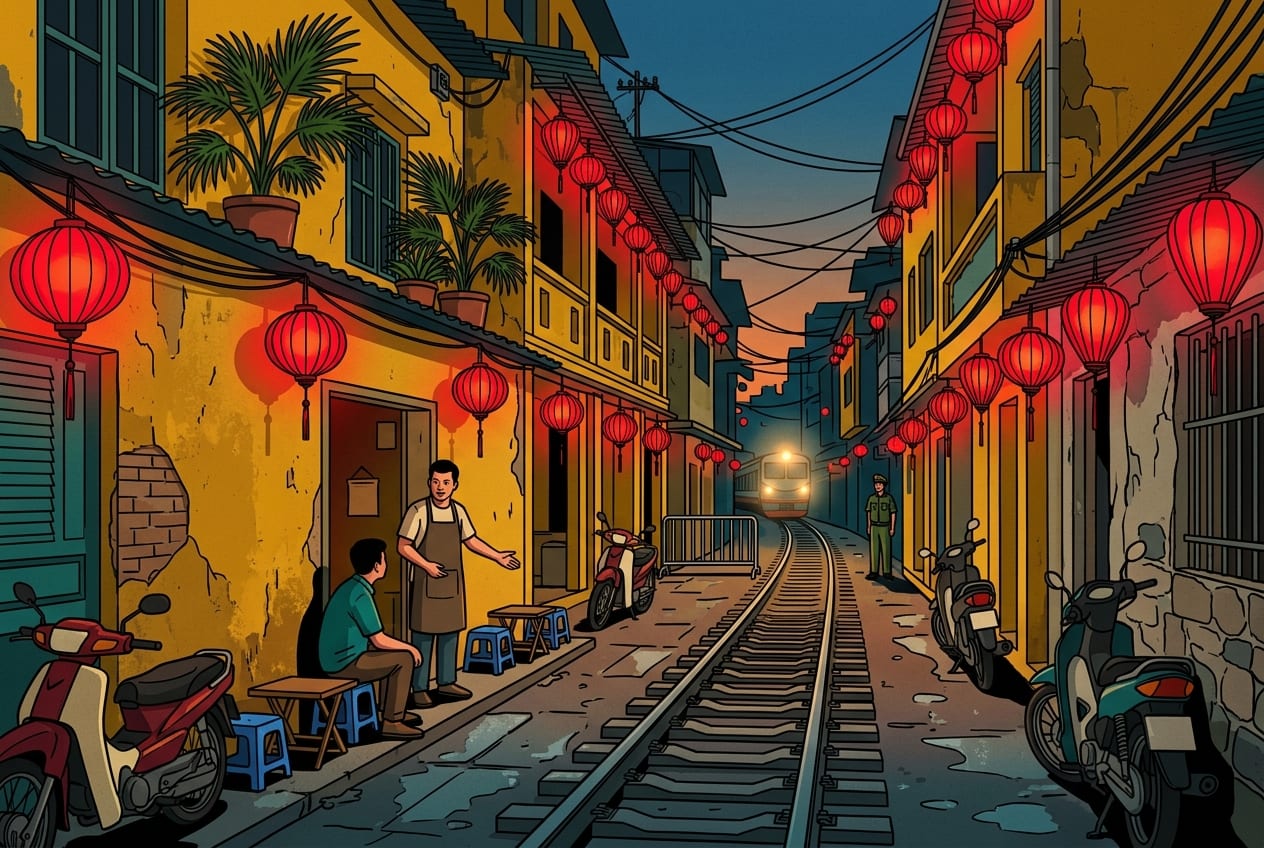
The Cat-and-Mouse Game of Hanoi's Train Street: Your 2026 Survival Guide to Visiting Safely (and Legally)
How do you navigate the guards, barricades, and narrow tracks of Hanoi's Train Street in 2026? Learn the insider rules to visit safely, legally, and respectfully.

By Xinchao team
Midnight at the Cemetery: Why Thousands of Vietnamese Pilgrims Flock to Cô Sáu under the Stars
Discover the deep history, essential etiquette, and practical steps for participating in Côn Đảo's famous midnight pilgrimage to the grave of Cô Sáu.
By Xinchao team
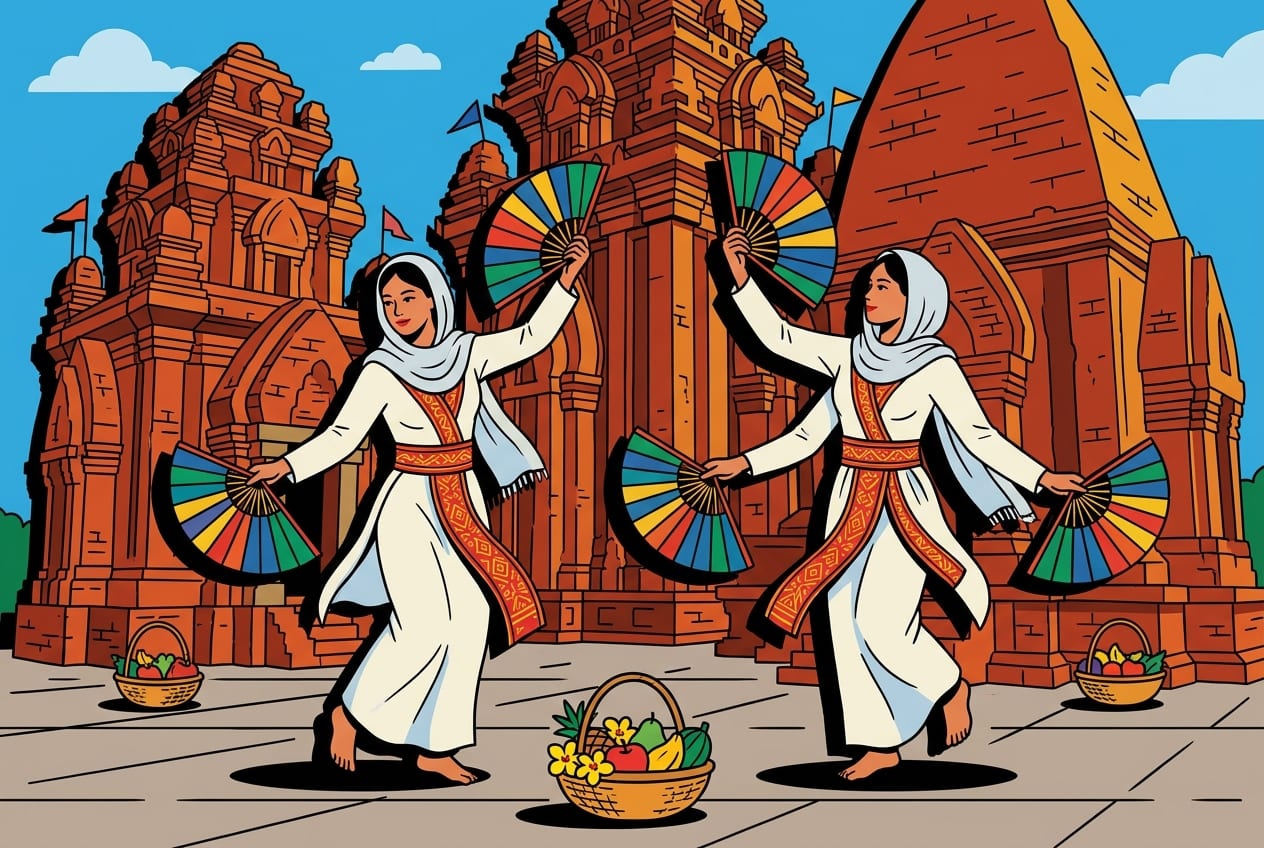
Beyond the Beach: Why You Must Experience Ninh Thuan’s Mystical Cham Kate Festival
Ready to go beyond the beach? Experience Ninh Thuan's mystical Cham Kate Festival at Po Klong Garai. Learn the deep cultural meanings, crucial etiquette, and expert survival tips for expats.