A Bowl of Corn Wine and a Handshake: Your Expat Survival Guide to Highland Market Etiquette in Ha Giang
Venturing into Vietnam's far-north highland markets is a sensory overload of neon textiles, bubbling cauldrons, and high-proof hospitality. Here is how to navigate the drinking rituals, cash-only stalls, and cultural boundaries of Ha Giang like a seasoned local.
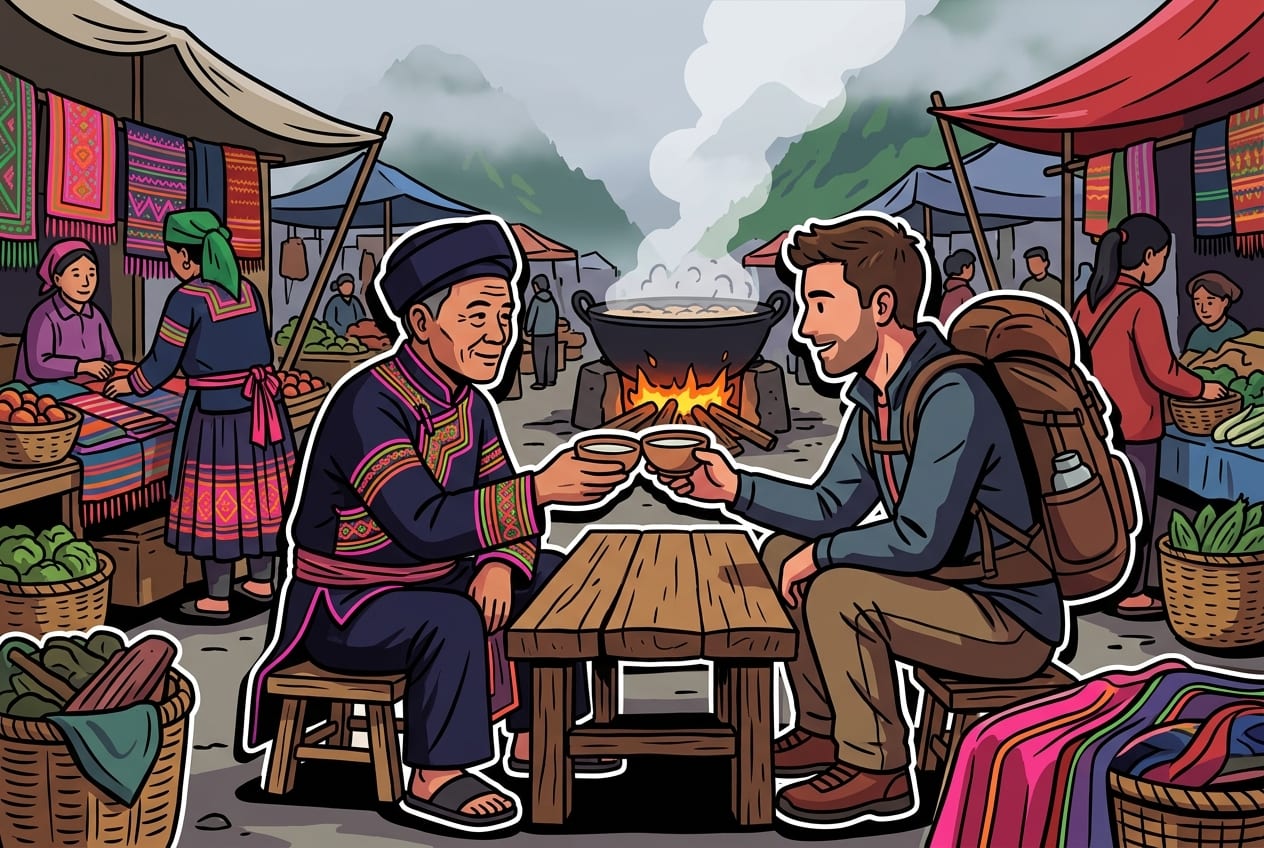
If you find yourself winding up the dizzying mountain passes of northern Vietnam, you will quickly realize that Ha Giang is a world of its own. Here, the jagged black limestone peaks of the UNESCO Dong Van Karst Plateau Geopark frame a landscape that feels frozen in time. But if you want to experience the true heartbeat of this region, you have to step off the motorbike and step into a Sunday market. These weekly gatherings are not just places to trade cows and buy spices; they are vibrant social arenas where the local Hmong, Dao, and Tay communities gather to gossip, matchmake, and drink.
For expats and adventurous travelers, entering a highland market like Mèo Vạc or Đồng Văn can feel like stepping onto a theatrical stage without a script. Suddenly, a weathered elder with a warm, sun-creased face is hand-delivering a plastic bowl of clear liquid to you, looking you dead in the eye, and waiting. That liquid is rượu ngô (traditional corn wine), and how you react in this exact moment will dictate whether you are embraced as an honored guest or politely avoided as a clueless outsider. Understanding the unspoken rules of engagement is your key to unlocking the legendary hospitality of the far north.
The Sacred Ritual of the Bowl and Handshake
In Ha Giang's highland markets, sharing corn wine is a sacred ritual of hospitality. To show respect, you must look your host in the eye, clink your bowls together while holding your cup with both hands, drink, and immediately follow up with a firm, warm handshake to seal the friendship.
In Western drinking cultures, clinking glasses is a casual precursor to a sip. In the highlands of Ha Giang, it is a highly physical, multi-step contract of mutual respect. When someone invites you to drink, they are offering you a piece of their home. To accept this offer correctly, you must hold your small ceramic bowl or plastic cup with both hands. This gesture of using two hands is a universal sign of respect across Vietnam, much like how you would present a business card or accept change from an elder in Hanoi.
Once the bowls clink, look your drinking partner directly in the eyes—no looking down at the floor or scanning the room. Take the drink (traditionally in one go, though pacing is allowed for visitors), and then—this is the crucial step—immediately reach out for a firm, warm handshake. The handshake is not a separate greeting; it is the physical punctuation mark of the drink itself. It says, 'We have shared this spirit, and now we are friends.' Unlike the bustling, transactional nature of the Mekong Delta floating markets, where trade is fast-paced and conducted from boat to boat, the highland market is designed for slow, face-to-face connection.
You will also notice a fascinating gender dynamic playing out around the drinking tables. While the men are busy forging alliances, catching up with friends from neighboring valleys, and getting progressively merry, the women are often the ones keeping a sharp eye on the clock. Because the mountain roads of Ha Giang Province are notoriously steep and dangerous, local women frequently act as the designated drivers. It is a common and culturally respected sight to see a Hmong woman patiently waiting by the family motorbike, ready to drive her husband safely back up the limestone passes after a long day of socializing.
Rượu Ngô: The Fiery Soul of the Dong Van Plateau
Rượu ngô men lá is a traditional highland corn wine fermented with over thirty wild forest leaves. Selling for 45,000 to 60,000 VND per liter from plastic jerry cans, this smooth but potent spirit ranges from 30% to 40% ABV and forms the social core of northern markets.
To understand why this drink is so revered, you have to understand how it is made. This is not factory-produced industrial alcohol. True highland corn wine, known as rượu ngô men lá, is fermented using a secret starter culture made from over thirty different local forest leaves and herbs. The corn itself is a hardy, yellow variety that clings to the rocky mountainsides of the Dong Van Karst Plateau. It is boiled, mixed with the herbal yeast, and left to ferment in quiet corners of wooden stilt houses before being distilled over open wood fires.
The result is a spirit that is deceptively smooth. It tastes sweet, earthy, and slightly floral, masking a powerful alcohol content that usually hovers between 30% and 40% ABV. At the markets, you won't find this in fancy glass bottles. Instead, it is sold out of giant blue plastic jerry cans (can nhựa) lined up on the concrete floor. If you want to buy some to take home, a single liter will only set you back about 45,000 to 60,000 VND ($1.80 to $2.40 USD). It is a far cry from the craft IPAs of Vietnam's urban centers, which you can read about in our Vietnam craft beer guide, but it carries a soul that no modern brewery can replicate.
How to Decline a Drink Without Causing Offense
To politely decline corn wine in Ha Giang, place your right hand gently over your heart, smile warmly, and take a tiny symbolic sip known as nhấp môi. Alternatively, explain that your health is poor by saying sức khỏe không tốt while offering a sincere, respectful handshake.
As an expat, you might find yourself invited to three or four different tables within the span of an hour. While the hospitality is genuine, your liver might not share the enthusiasm. Abruptly refusing a drink or walking away can be interpreted as a rejection of friendship, which causes a loss of face for your host. Fortunately, there is an elegant way to bow out.
The most respected method is to place your right hand over your heart, smile, and take a tiny, symbolic sip—a practice known as nhấp môi (literally 'touching the lips'). This shows that you accept the gesture of hospitality even if you cannot consume the volume. If you cannot drink at all due to health or driving reasons, simply smile, look them in the eye, and say 'Sức khỏe không tốt' (My health is not good) or point to your motorbike. Follow this immediately with a warm handshake. By keeping the physical connection of the handshake, you show that the social bond is still intact, even if the cup remains full.
Practical Survival: Preparing Your Stomach and Your Wallet
Surviving a Ha Giang market requires lining your stomach with local dishes like mèn mén or phở chua before drinking. Additionally, since digital banking is virtually non-existent in these remote highlands, you must carry plenty of physical cash in small denominations for all your food and drink transactions.
Rule number one of highland survival: never drink corn wine on an empty stomach. The locals have been drinking this since youth and have built up a formidable tolerance. To keep pace, head straight for the food stalls as soon as you arrive. Look for the giant, steaming iron cauldrons bubbling under blue tarps. This is where you will find Thắng cố, a traditional Hmong soup made from horse meat and viscera, heavily spiced with cardamom, lemongrass, and cinnamon. A hot bowl costs between 50,000 and 80,000 VND and provides a rich, fatty base that will protect your stomach lining.
If horse viscera is a bit too adventurous for your morning palate, opt for Mèn mén (steamed, ground corn which serves as the traditional staple rice substitute) or a bowl of Phở chua (sour noodles topped with roasted pork, peanuts, and a sweet-sour sauce). Eating first is not just practical; it is also a great way to blend in with the locals who use these food stalls as their morning meeting grounds.
Equally important is how you pay. While urban Vietnam has embraced cashless transactions and VietQR codes with open arms, the highland markets of Ha Giang remain resolutely cash-only. There are no ATMs hidden among the limestone peaks, and cellular service can be spotty. Before you head out, stock up on small physical bills (10,000, 20,000, and 50,000 VND notes). Handing a vendor a 500,000 VND note for a 15,000 VND bowl of noodles is a major inconvenience, as they often do not have enough change in their small cash boxes.
Highland Market Hotspots: Where to Go
The most authentic highland markets in Ha Giang include Mèo Vạc Sunday Market, Đồng Văn Sunday Market, and the remote Lũng Phìn Market. These weekly gatherings serve as vital economic and social hubs where ethnic minority communities trade goods, catch up with friends, and share traditional corn wine.
While there are small daily markets scattered across the province, the true cultural spectacles happen on Sundays. The Mèo Vạc Sunday Market is the largest, loudest, and most chaotic of them all. Here, the air is thick with the smell of woodsmoke, livestock, and fermenting yeast. It is a dizzying explosion of color, where the deep indigo-blue hemp clothing of the Hmong contrasts sharply with the neon-bright pinks and oranges of the floral headscarves worn by the local women.
For a slightly more compact but equally vibrant experience, the Đồng Văn Sunday Market takes place right in the heart of the ancient town. If you prefer to get off the beaten tourist track entirely, make the journey to the Lũng Phìn Market. Located between Yên Minh and Đồng Văn, this market operates on a backward-rotating calendar based on the twelve zodiac animals, preserving an incredibly authentic, non-commercialized atmosphere where you are likely to be one of the only expats in attendance.
Do
- Always hold your drinking bowl or cup with both hands when clinking with locals.
- Follow every shared drink with a firm, warm handshake and direct eye contact.
- Keep plenty of small cash notes (10k, 20k, 50k VND) in your pocket for easy transactions.
- Ask for permission with a polite gesture or smile before taking close-up photos of vendors and children.
- Line your stomach with mèn mén or phở chua before joining a drinking table.
Don't
- Never touch the sacred, intricately embroidered headpieces or clothing of ethnic minority women.
- Avoid refusing a drink abruptly; use the 'nhấp môi' (sip) technique instead to keep the peace.
- Do not try to pay with credit cards or bank transfer apps like VietQR at the market stalls.
- Avoid taking photos of people in sensitive or private moments without their consent.
Frequently Asked Questions About Ha Giang Market Etiquette
Navigating Ha Giang's highland markets requires understanding local traditions around drinking, photography, and cash transactions. Respecting the sacred ritual of the handshake, preparing with physical currency, and asking permission before taking photos ensures a mutually respectful and deeply rewarding cultural exchange with the local ethnic minority communities.
Is it considered rude to refuse corn wine if I do not drink alcohol at all?
It is not rude as long as you decline politely. Do not simply say 'no' and walk away. Instead, place your hand over your heart, smile warmly, and explain that you cannot drink by saying 'Sức khỏe không tốt' (My health is not good). Crucially, offer a firm handshake right after. This physical gesture shows that you are rejecting the alcohol, not their friendship.
Can I use digital banking or credit cards at the Meo Vac or Dong Van markets?
No, these highland markets operate almost exclusively on physical cash. Cellular service can be highly unreliable in the mountain valleys, and local vendors do not use digital banking apps or VietQR codes. Always carry small physical banknotes (10,000 to 50,000 VND) to ensure smooth transactions and avoid asking vendors for change on large bills.
Why do I see so many local women driving their husbands home on motorbikes after the market?
This is a respected cultural norm in many Hmong and Dao families. Highland markets are rare social outlets where men are expected to drink corn wine deeply to build and maintain community alliances. Because the mountain roads of Ha Giang are incredibly steep and dangerous, the women take on the practical role of designated drivers to ensure their husbands make it home safely.
Practise the words you just read
Vietnamese phrases for real situations, each with native audio in both accents.
Topics
Read more
Other posts from our Vietnamese learning blog.

By Xinchao team
The Cat-and-Mouse Game of Hanoi's Train Street: Your 2026 Survival Guide to Visiting Safely (and Legally)
How do you navigate the guards, barricades, and narrow tracks of Hanoi's Train Street in 2026? Learn the insider rules to visit safely, legally, and respectfully.

By Xinchao team
Midnight at the Cemetery: Why Thousands of Vietnamese Pilgrims Flock to Cô Sáu under the Stars
Discover the deep history, essential etiquette, and practical steps for participating in Côn Đảo's famous midnight pilgrimage to the grave of Cô Sáu.

By Xinchao team
Beyond the Beach: Why You Must Experience Ninh Thuan’s Mystical Cham Kate Festival
Ready to go beyond the beach? Experience Ninh Thuan's mystical Cham Kate Festival at Po Klong Garai. Learn the deep cultural meanings, crucial etiquette, and expert survival tips for expats.