No License, No Loop? Your 2026 Survival Guide to Ha Giang’s Strict New Road Rules
The days of the wild, unregulated Ha Giang Loop are officially over. Here is your culturally respectful, legally bulletproof guide to conquering Vietnam's most famous mountain pass in 2026.
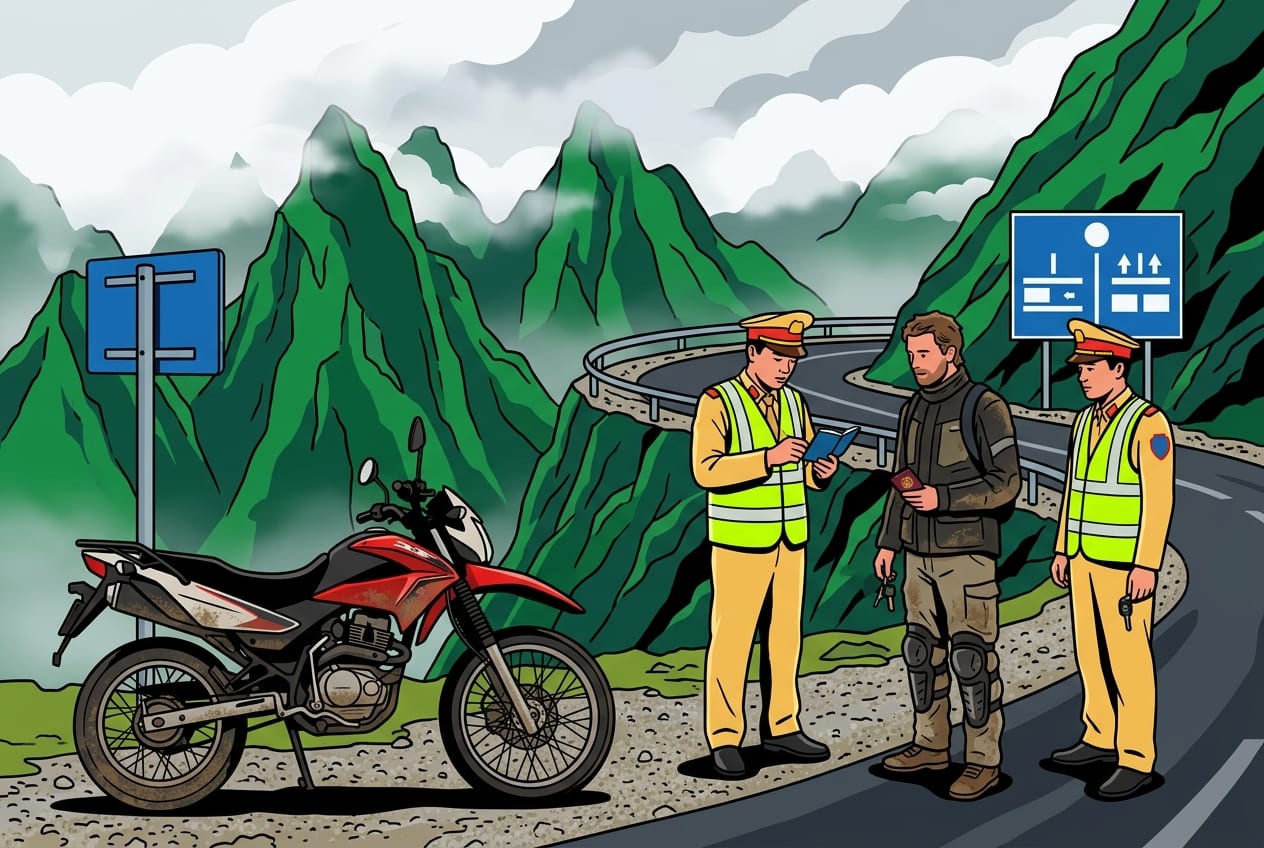
The New Reality of Vietnam's Wildest Mountain Road
The Ha Giang Loop has transitioned from an unregulated adventure frontier to a strictly monitored scenic route. In 2026, Vietnamese authorities have established permanent police checkpoints to enforce licensing laws, aiming to reduce traffic accidents and protect the cultural integrity of the northern highlands' ethnic minority communities.
For years, the Ha Giang Loop was the ultimate rite of passage for backpackers in Southeast Asia. You would roll into Ha Giang City, rent a semi-automatic scooter with nothing but a passport as collateral, and head straight into some of the most dramatic mountain terrain on earth. It was beautiful, thrilling, and undeniably chaotic. But as accident rates climbed and the quiet mountain passes became congested, the Vietnamese government stepped in. If you are planning to tackle the loop in 2026, you must understand that the old "wild west" rules no longer apply. Navigating these roads now requires preparation, the correct paperwork, and a deep respect for local regulations.
If you have already navigated the bustling train stations of the south—perhaps using our guide on Where is the 'Ga'? A Clueless Traveler’s Guide to Not Getting Lost in Vietnam’s Transit Chaos—you will know that Vietnamese transit has its own unique rhythm. In the far north, that rhythm is now defined by strict legal compliance. Let's look at exactly what you will face on the road.
Inside the 2026 Crackdown: Checkpoints, Fines, and Impounded Bikes
Under the 2026 regulations, unlicensed riders face fines between 1,000,000 and 2,000,000 VND, alongside immediate motorcycle impoundment for seven to 30 days. Key checkpoints are located on highway QL4C outside Ha Giang City, Yen Minh, and near the high-traffic passes of Dong Van and Meo Vac.
Entering 2026, the days of dodging police are gone. Vietnamese authorities have established permanent, highly organized police checkpoints (chốt cảnh sát) at key gateways. The most prominent checkpoint sits just outside Ha Giang City on the QL4C highway—the literal gateway to the loop. Additional checkpoints are stationed at the entrance to Yen Minh and along the high-traffic passes near Dong Van and Meo Vac.
If you are caught riding without a valid motorcycle license and a matching International Driving Permit (IDP) issued under the 1968 Convention, the consequences are swift and expensive. Fines have escalated to 1,000,000–2,000,000 VND ($40–$80 USD). While that might not sound like a trip-ending sum, the real penalty is the immediate impoundment of your rental motorcycle for 7 to 30 days.
Major rental agencies, including industry leaders like QT Motorbikes & Tours and Jasmine Tours, must comply with these laws. If your rented bike is impounded, these agencies will charge you for the daily rental rate of the bike while it sits in the police lot (roughly 150,000 VND or $6 USD per day), plus administrative recovery fees. This turns a minor oversight into a highly stressful, expensive ordeal that can easily derail your travel plans.
The Cultural Undercurrent: Why Locals Welcomed the Crackdown
Local Hmong, Tay, and Dao communities support these strict road rules to restore peace and safety to their ancestral lands. Inexperienced foreign motorcyclists have caused severe accidents, disrupting community harmony and creating negative spiritual karma, known as nghiệp, within these tightly-knit highland villages.
To fully understand this crackdown, we have to look past the immediate inconvenience to travelers and see the road through the eyes of the people who live here. For generations, the winding roads of Ha Giang have been the lifelines for the indigenous Hmong, Tay, and Dao communities. In recent years, they have watched their quiet, sacred mountain passes turn into high-risk zones populated by inexperienced foreign riders struggling to handle heavy manual bikes on tight curves.
In Vietnamese culture, causing an accident that harms a local resident or damages communal property brings immense bad karma (nghiệp) and severe legal complications for the entire village. It disrupts the social harmony (hòa thuận) that these communities work hard to maintain. When a traveler crashes, it is not just an insurance claim; it is a community tragedy.
Furthermore, the Vietnamese traffic police (Cảnh Sát Giao Thông, or CSGT) are executing a nationwide mandate to modernize road safety and curb corruption. Attempting to offer a bribe (tiền cà phê) to an officer in 2026 is highly offensive and can lead to immediate arrest. Showing respect, speaking softly, bowing slightly when presenting your documents, and acknowledging their role in keeping the community safe is the expected social etiquette.
How to Navigate the Ha Giang Loop Legally: A Step-by-Step Guide
To ride legally, travelers must possess a valid motorcycle license from their home country accompanied by a 1968 International Driving Permit showing a Class A stamp. Those without proper credentials should book a licensed local Easy Rider guide to ensure legal compliance and support the local economy.
To successfully navigate the loop without legal trouble, your preparation must begin weeks before you leave your home country. Here is the step-by-step checklist for a legal ride:
First, secure the correct paperwork. You must hold a full, unrestricted motorcycle license in your home country. A standard car license is completely invalid for operating motorcycles in Vietnam. Take this license to your local automobile association and obtain an International Driving Permit. Crucially, it must be a permit issued under the 1968 Vienna Convention on Road Traffic. Ensure the "A" (motorcycle) category box is stamped. Be aware that countries like Australia and the United States often issue the 1949 Convention IDP by default. You must specifically request the 1968 version, as the 1949 version is not legally recognized by Vietnamese authorities, and you will be turned back at the checkpoints.
Second, choose your ride wisely. If you have the correct paperwork, rent a reliable semi-automatic (such as a Honda Wave) or a manual dual-sport (like a Honda XR150) from a certified dealer who provides written rental agreements and clear insurance terms.
Third, go with an Easy Rider if you are unlicensed. If you do not hold a motorcycle license, do not risk driving yourself. Booking an "Easy Rider" tour—where a licensed, professional local guide drives you on the back of their bike—has boomed in popularity. Reputable hubs like Mama’s House in Dong Van report record bookings. This option supports the local economy, provides you with an expert local translator, and allows you to safely look at the breathtaking scenery rather than staring anxiously at the treacherous, winding asphalt.
Fourth, get specialized travel insurance. Ensure your policy explicitly covers riding motorcycles of the specific engine capacity (cc) you will be operating, and that it is fully compliant with the laws of the host country as outlined by the Vietnam National Authority of Tourism.
Survival Vocabulary for the Road
Navigating police checkpoints and interacting with local mechanics requires basic Vietnamese road vocabulary. Knowing how to identify traffic officers, ask for assistance with a damaged vehicle, or present your travel documents politely can significantly ease stressful situations and demonstrate respect for local authority.
Cultural Dos and Don'ts on the Loop
Respecting local customs while driving through ethnic minority villages is as important as obeying traffic laws. Travelers must avoid taking photos of locals without permission, dressing inappropriately, or driving aggressively, while actively supporting local businesses and observing quiet hours in homestays.
Do
- Always pull over safely and bow slightly when presenting your papers to the CSGT.
- Hire local Easy Riders to support the ethnic minority economies of Ha Giang.
- Dress modestly when stopping in local villages, covering your shoulders and knees.
- Ask for permission before taking photos of local children or weavers.
Don't
- Do not attempt to offer bribes or 'coffee money' to traffic officers; it is highly offensive and illegal.
- Do not honk aggressively when passing through quiet mountainside villages.
- Do not drive at night; the mountain passes have no streetlights and are highly dangerous.
- Do not buy plastic-wrapped souvenirs that contribute to the local waste management problem.
Frequently Asked Questions About Ha Giang Road Rules
Navigating the legalities of renting and riding motorcycles in Ha Giang raises many questions for international travelers. This section addresses essential inquiries regarding license conversions, the consequences of renting to unlicensed drivers, and how to verify if your travel insurance covers highland motorcycle riding.
Can I use my home country's car driver's license to ride a 110cc semi-automatic scooter legally in Ha Giang?
No. Under Vietnamese road laws, a standard car driver's license does not permit you to ride any motorcycle or scooter over 50cc. To ride a standard 110cc semi-automatic scooter legally, you must hold a valid motorcycle license in your home country and carry a matching 1968 Convention International Driving Permit (IDP) with the Class A category stamped.
What happens if a rental shop tells me I do not need a license to ride the loop?
Some informal rental shops may still offer to rent you a bike without checking your papers to secure your business. However, they will not protect you at the police checkpoints. If you are stopped at a 'chốt kiểm tra' without the proper 1968 IDP, the police will fine you and impound the bike, and you will be liable to pay the rental shop for all the days the bike is held in the police lot.
Does my standard travel insurance cover me if I get into an accident on the Ha Giang Loop?
In almost all cases, standard travel insurance will only cover you if you are riding legally. This means if you do not have a home motorcycle license and a valid 1968 IDP, your insurance company will void your medical coverage in the event of an accident, leaving you with potentially devastating medical bills.
Hear these phrases
Each one is recorded in both the northern and southern accent.
Topics
Read more
Other posts from our Vietnamese learning blog.

By Xinchao team
The Cat-and-Mouse Game of Hanoi's Train Street: Your 2026 Survival Guide to Visiting Safely (and Legally)
How do you navigate the guards, barricades, and narrow tracks of Hanoi's Train Street in 2026? Learn the insider rules to visit safely, legally, and respectfully.

By Xinchao team
Midnight at the Cemetery: Why Thousands of Vietnamese Pilgrims Flock to Cô Sáu under the Stars
Discover the deep history, essential etiquette, and practical steps for participating in Côn Đảo's famous midnight pilgrimage to the grave of Cô Sáu.

By Xinchao team
Beyond the Beach: Why You Must Experience Ninh Thuan’s Mystical Cham Kate Festival
Ready to go beyond the beach? Experience Ninh Thuan's mystical Cham Kate Festival at Po Klong Garai. Learn the deep cultural meanings, crucial etiquette, and expert survival tips for expats.