Midnight in the Ghost Market: An Expat’s Guide to Dong Thap’s Revived 'Chợ Chiếu Định Yên'
Step back in time at the historic Đình Định Yên temple, where flickering oil lamps and hand-woven sedge mats revive a legendary midnight trade.
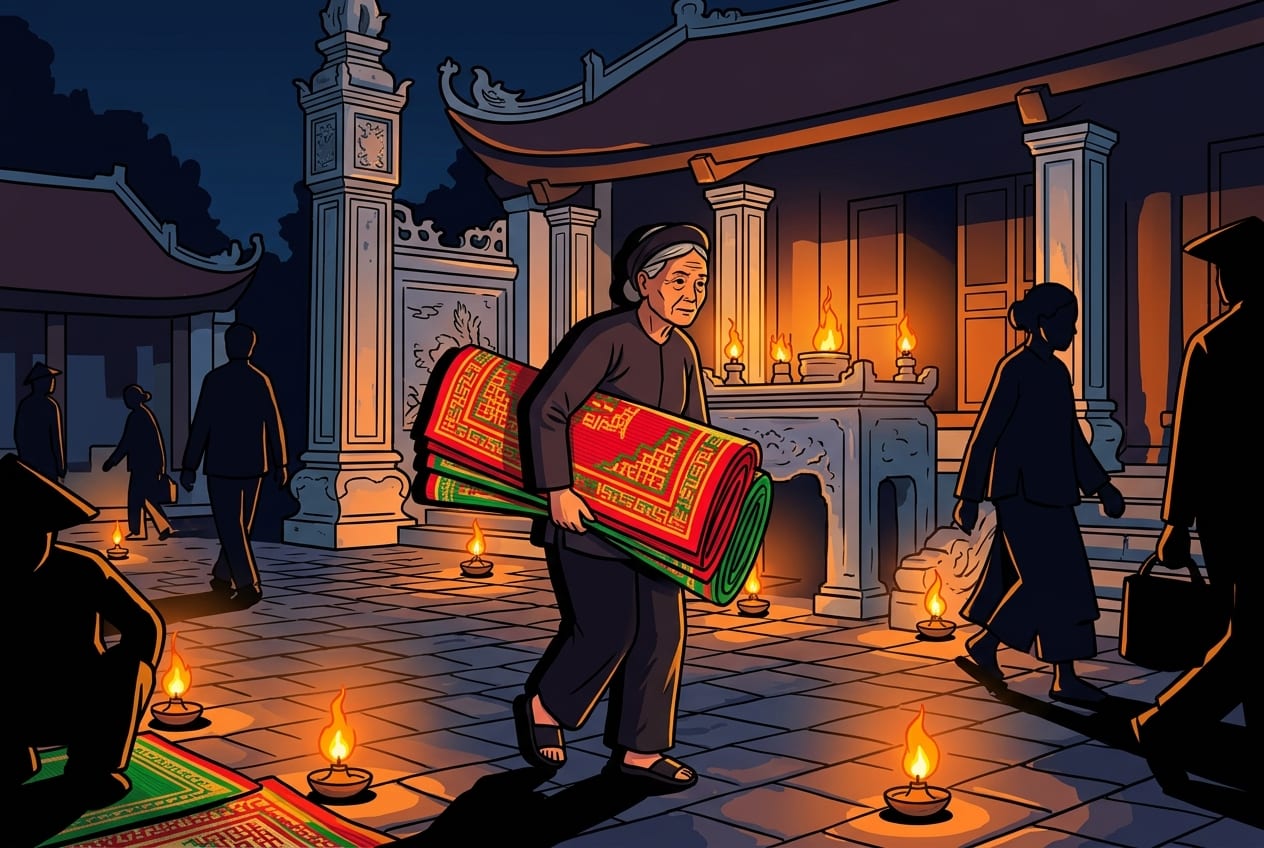
For decades, the stories of the Chợ Chiếu Định Yên (Dinh Yen Mat Market) sounded more like folklore than history. Deep in the heart of Lấp Vò District in Đồng Tháp Province, locals spoke of a bustling midnight market where buyers sat in pitch-black temple courtyards and sellers wandered like spirits through the dark, carrying heavy rolls of hand-woven sedge mats. Known colloquially as the "Ghost Market" (Chợ Ma), this unique trading hub faded away as modern machinery and paved roads replaced manual labor and canal transport.
However, in a spectacular victory for cultural preservation, the local government and passionate artisans have officially revived this legendary market. Today, periodic, highly atmospheric reenactments take place at the historic Đình Định Yên (Dinh Yen Temple). For expats and cultural travelers living in Vietnam, this event offers an unparalleled, sensory-rich journey into the soul of the Mekong Delta—one that feels less like a tourist show and more like a collective act of ancestral remembrance.
The Mystery Behind the 'Ghost' Moniker
The Dinh Yen Ghost Market earned its eerie name because historical weavers farmed by day and wove mats by night, meeting merchants at midnight when fluctuating Mekong Delta tides allowed boats to dock. This created a unique nocturnal trading hub lit only by oil lamps.
To understand the "Ghost Market," you have to understand the rhythm of life in the pre-industrial Mekong Delta. In the 19th and early 20th centuries, the families of Định Yên were busy farming crops during the daytime. Weaving the intricate, durable sedge mats (chiếu) was a secondary trade done by hand under the cool cover of night. Because the village's trade relied entirely on the labyrinthine canal network of the delta, merchants from other provinces had to synchronize their arrivals with the fluctuating river tides.
When the tide was high enough for transport boats to dock, it was often the dead of night. Thus, the market naturally adapted to operate from midnight to 3:00 AM. This nocturnal schedule birthed a highly unusual social rule that completely flips standard Vietnamese market dynamics on its head. Unlike typical bustling wet markets or the vibrant floating markets of the Mekong Delta where sellers stay stationary and buyers browse, at Định Yên, the sellers walked around carrying heavy rolls of mats on their shoulders. The buyers (the wholesale merchants) sat quietly in the dim light of the temple yard, waiting for weavers to approach them.
This inverted dynamic was born out of sheer practicality: the merchants had the capital and the boats, while the local weavers, eager to sell their night's work, carried their wares to seek the best bid. The quiet negotiations, whispered in the dark under the flickering glow of traditional oil lamps (đèn dầu), gave the market its hauntingly beautiful, ghostly atmosphere.
What to Expect: A Sensory Journey Back to the 19th Century
The revived Dinh Yen market is a vivid sensory experience featuring villagers in traditional áo bà ba, flickering oil lamps, and piles of brightly dyed sedge grass. Wisps of incense smoke drift through the ancient temple courtyard, recreating a cinematic, pre-modern Mekong Delta atmosphere.
Attending a modern reenactment of the Dinh Yen Ghost Market is a masterclass in living history. The organizers have spared no effort in keeping the experience authentic. There are no harsh fluorescent lights or modern megaphones. Instead, the dominant color palette of the night is a striking contrast between the deep, pitch-black Southern Vietnamese night and the warm, flickering amber-orange glow of traditional oil lamps and burning torches.
As you enter the courtyard of the historic Dinh Yen Temple—a weathered, mossy brick structure built in 1909—you are immediately enveloped in a dreamy, cinematic haze. Wisps of white smoke from burning straw and incense drift through the humid air, catching the lamplight. Local villagers, many of whom are multi-generational weavers, dress in authentic, rustic áo bà ba (traditional Southern silk or cotton shirts) in dark earth tones, complete with checkered khăn rằn scarves draped over their shoulders and classic conical hats (nón lá).
The ground is alive with color. Bundles of raw sedge grass (lác) dyed in brilliant, saturated shades of magenta, emerald green, and golden yellow are stacked against the weathered walls of the ancient temple. The rhythmic, clacking sound of wooden looms echoes from nearby demonstration areas, while the smell of river silt, burning wood, and sweet herbal tea fills the air. It is a stunning visual tribute to a craft that has been officially recognized on the UNESCO National Intangible Cultural Heritage registry.
Practical Expat Survival Guide for the Reenactment
Visiting the revived market requires planning: verify dates with the local tourism board, bring small cash bills due to poor cellular signals, and wear high-strength mosquito repellent. The temple is located in Lap Vo District, easily accessible from Sa Dec or Cao Lanh.
Because this is a periodic cultural reenactment rather than a daily tourist attraction, visiting requires a bit of logistical foresight. The reenactments are typically scheduled on weekend nights (often Saturdays) or during major lunar festivals. Because schedules can fluctuate based on local government planning, it is vital to verify the exact dates beforehand via the Vietnam National Authority of Tourism local updates, the Dong Thap Tourism Promotion Center, or regional expat forums.
To get there, most expats choose to base themselves in the nearby colonial charm of Sa Đéc (about a 30-minute drive away) or the provincial capital of Cao Lãnh (about 45 minutes away). You can easily rent a motorbike or hire a private driver for the evening. Be prepared for rural roads that can be quite dark at night.
Crucially, leave your bank cards and digital wallet expectations at home. While entry to the temple grounds and the reenactment is entirely free, you will want physical cash in small denominations (10,000 to 50,000 VND bills). Cellular connections in the crowded, rural temple courtyard can be highly spotty, making bank transfers or QR code payments unreliable. Bring cash to support the local artisans directly; authentic, hand-woven sedge mats can be purchased for 80,000 to 200,000 VND ($3 to $8 USD), and rustic Southern street food stalls offer local delicacies like grilled bananas, rice cakes, and herbal teas for a modest 15,000 to 35,000 VND ($0.60 to $1.50 USD).
Cultural Nuances and Etiquette at Dinh Yen Temple
Because the market takes place on the sacred grounds of Dinh Dinh Yen temple, visitors should dress modestly and respect local customs. The market begins with community prayers, highlighting the deep spiritual connection between the craft of mat weaving and ancestral worship.
The revival of the Dinh Yen Ghost Market is not merely a commercial endeavor; it is deeply tied to local spiritual life. The Dinh Yen Temple is dedicated to the village founders and ancestors who settled the harsh delta lands. Before the market reenactment officially begins, local elders and artisans gather inside the temple to offer incense, fruit, and prayers for prosperity and the preservation of their craft.
As an expat visitor, respecting this sacred space is paramount. Ensure your shoulders and knees are covered when entering the temple courtyard, even though the event takes place outdoors in the humid night. Avoid loud, disruptive behavior during the opening ceremonies. When taking photos of the elderly artisans—who are often incredibly photogenic under the warm oil lamps—always ask for permission with a polite nod or a smile. The locals are incredibly welcoming and proud to share their heritage, often happy to show you how the weaving looms work.
Do
- Carry high-strength mosquito repellent; the temple is located near rural Mekong waterways.
- Bring plenty of physical cash in small denominations for buying mats and local street food.
- Dress modestly (shoulders and knees covered) out of respect for the historic Dinh Yen Temple.
- Verify the reenactment schedule with local tourism boards before making the journey.
Don't
- Do not use bright camera flashes or phone lights that disrupt the atmospheric, low-light oil lamp environment.
- Do not touch the delicate, freshly dyed sedge grass bundles stacked around the temple without permission.
- Avoid relying on 4G connection or bank transfers for payments in this rural area.
Is the Dinh Yen Ghost Market held every night?
No, the market does not run daily. Historically it did, but today it is a periodically staged cultural reenactment held on specific weekend nights or during major lunar holidays. You must check with local tourism authorities in Dong Thap or regional expat groups to confirm the exact dates before traveling.
Why did the sellers historically walk around while the buyers sat stationary?
This unique dynamic was born from river logistics. Wholesale merchants arrived by boat at the mercy of the Mekong's tides. They would sit in the temple courtyard to wait for the weavers, who would carry their heavy, freshly woven mats from their homes to pitch them directly to the merchants, seeking the best price.
Can I buy an actual mat at the reenactment, and how do I transport it?
Yes! You can buy authentic, hand-woven mats directly from the artisans for about 80,000 to 200,000 VND ($3 to $8 USD). They can be easily rolled up tightly and secured with string, making them transportable on a motorbike or in the trunk of a taxi back to Sa Dec or Cao Lanh.
Practise the words you just read
Vietnamese phrases for real situations, each with native audio in both accents.
Topics
Read more
Other posts from our Vietnamese learning blog.

By Xinchao team
The Cat-and-Mouse Game of Hanoi's Train Street: Your 2026 Survival Guide to Visiting Safely (and Legally)
How do you navigate the guards, barricades, and narrow tracks of Hanoi's Train Street in 2026? Learn the insider rules to visit safely, legally, and respectfully.

By Xinchao team
Midnight at the Cemetery: Why Thousands of Vietnamese Pilgrims Flock to Cô Sáu under the Stars
Discover the deep history, essential etiquette, and practical steps for participating in Côn Đảo's famous midnight pilgrimage to the grave of Cô Sáu.

By Xinchao team
Beyond the Beach: Why You Must Experience Ninh Thuan’s Mystical Cham Kate Festival
Ready to go beyond the beach? Experience Ninh Thuan's mystical Cham Kate Festival at Po Klong Garai. Learn the deep cultural meanings, crucial etiquette, and expert survival tips for expats.