Why Does the SIM Card Lady Need Your Selfie?
Learn how to legally register a SIM card in Vietnam. From passport requirements to biometric selfies, here is how to stay connected without getting blocked.
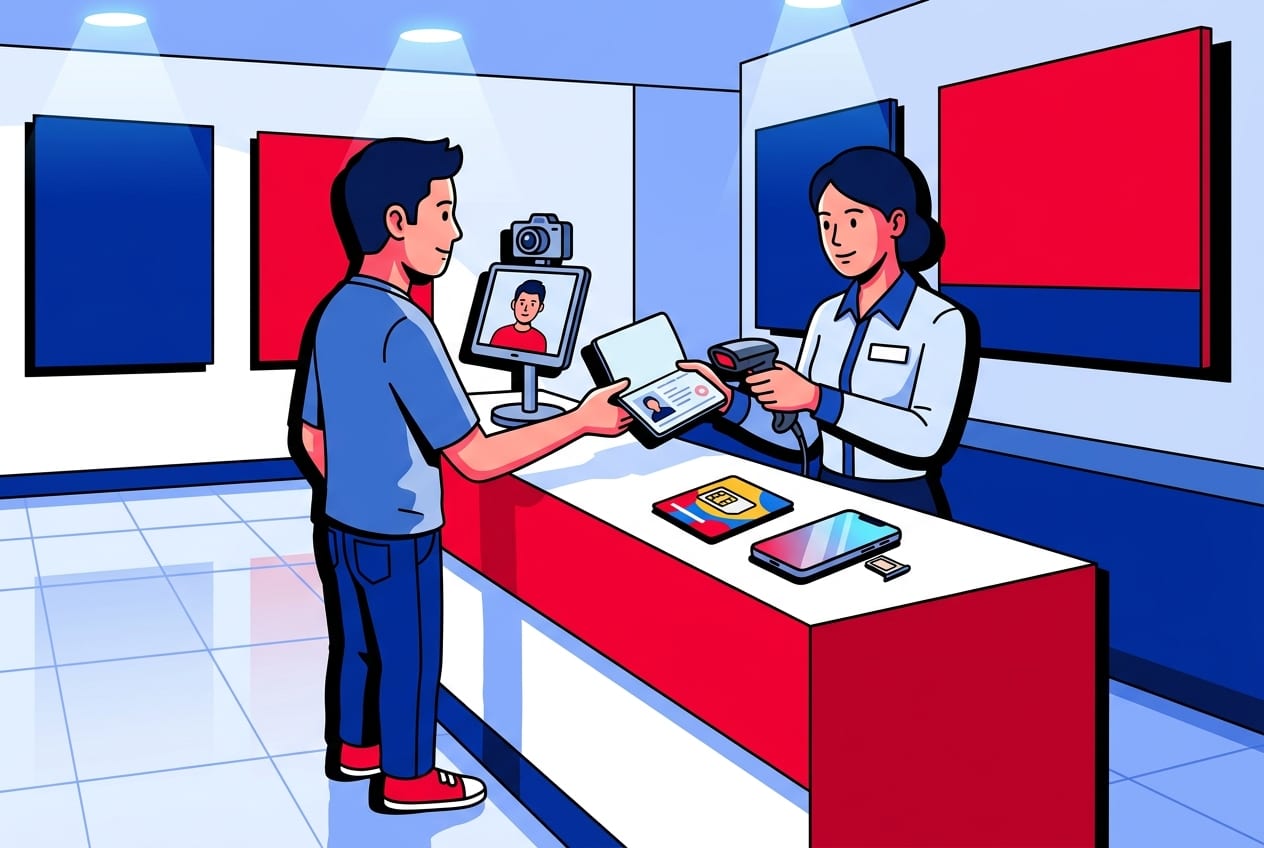
The Great Vietnamese SIM Card Hunt
Registering a SIM card in Vietnam is no longer a casual street-side transaction. To stay connected legally, travelers must visit official provider stores with their original passports. This process ensures your identity is linked to your number, preventing your service from being deactivated by government regulations during your stay in the country.
You have just landed in Vietnam. The air is warm, the smell of street food is calling your name, and you are ready to navigate the bustling streets of Hanoi or Ho Chi Minh City. But there is one problem: your phone has no signal. In the past, you could walk up to any plastic stool on the sidewalk and buy a 'ready-to-use' SIM card for a few dollars. Those days are gone. Today, getting a SIM card is a formal process that involves bright lights, professional staff, and yes, a very specific type of selfie.
Vietnam has modernized its telecommunications rapidly. The government is very serious about national security and reducing phone scams. This means that every single phone number must be attached to a real person’s identity. For a traveler, this might feel like a bit of a chore, but it actually protects you. An officially registered SIM is less likely to be blocked, and it allows you to use banking apps and ride-hailing services like Grab with peace of mind.
The War on 'Junk SIMs': Why the Rules Changed
Vietnam implemented strict registration laws to combat 'SIM rác' or junk SIMs, which were often used for spam and illegal activities. By requiring official identification and biometric photos, the government ensures that every mobile user is accountable. For tourists, following these rules is the only way to guarantee a stable connection.
To understand why the shop assistant is being so careful with your paperwork, you have to understand the 'SIM rác' phenomenon. For years, millions of pre-activated SIM cards flooded the market. They were cheap, anonymous, and disposable. While convenient for travelers, they were a nightmare for the authorities because they were used for endless spam calls and fraudulent messages. If you’ve ever been annoyed by a 'robocall' while eating your phở, you know the feeling.
Starting around 2023, the Ministry of Information and Communications ordered a massive cleanup. They deactivated millions of numbers that didn't have correct owner information. Now, if the information on file doesn't match your passport or if there is no photo of your face in the system, the signal is cut off. This is why the 'SIM card lady' at the store isn't just being nosy—she’s making sure your phone doesn't turn into a paperweight after 48 hours.
Your Passport is Your Golden Ticket
A valid, original passport is the only acceptable form of identification for foreigners to register a SIM card in Vietnam. Digital copies or photos on your phone are usually rejected by the official system. The staff must scan the physical document to upload your data directly into the national carrier's database.
When you walk into a store like Viettel or Vinaphone, the first thing they will ask for is your 'hộ chiếu' (passport). Don't reach for your wallet to show a driver's license—it won't work. The registration software is specifically designed to recognize the machine-readable zone of a passport. The staff member will take your passport, place it on a scanner, and the system will pull your full name, date of birth, and passport number.
One pro tip: make sure your visa is also visible if it’s a separate paper. While the passport is the main ID, some stores might want to see your entry stamp to prove you are in the country legally. If you are using an E-visa, having a printed copy or the PDF ready on your phone is helpful, though the physical passport remains the non-negotiable requirement.
Say Cheese! The Biometric Selfie
Biometric registration requires a portrait photo of the user taken at the point of sale. This photo is linked to the passport data in the provider's system to prevent identity theft. It is a standard procedure across all official Vietnamese mobile network stores and takes only a few seconds to complete.
This is the part that surprises many travelers. After scanning your passport, the staff member will pull out a tablet or point to a small webcam. They will ask you to look directly at the lens. They aren't taking this photo for a 'Customer of the Month' wall. This is a biometric requirement. The photo needs to be clear, with no hat or sunglasses.
In Vietnamese culture, this level of documentation is becoming the norm for many services. While it might feel like an invasion of privacy to a Westerner, in Vietnam, it is seen as a sign of a 'chính chủ' (official/rightful owner) account. Once that photo is snapped and uploaded, you are officially in the system. If you ever lose your phone, you can walk back into any branch, show your passport, and get your number back instantly because your face and ID are already on file.
Choosing Your Digital Tribe: The Big Three
Vietnam's mobile market is dominated by three major providers: Viettel, Vinaphone, and Mobifone. Each offers extensive 4G and growing 5G coverage, but their strengths vary by region. Choosing the right one depends on whether you plan to stay in major cities or venture into the remote northern highlands.
Viettel is the 'big brother' of the group. It is owned by the military and has the most extensive infrastructure in the country. If you are planning to go trekking in Sapa or motorbiking the Ha Giang Loop, Viettel is usually your best bet. Their signal reaches into deep valleys and high mountains where others might fail. Their stores are also the most numerous, often found in even small district towns.
Vinaphone and Mobifone are excellent choices for city dwellers and coastal tourists. They often have very competitive data packages tailored specifically for tourists. For example, you might find a 'Tourist SIM' that gives you 4GB of data per day for 30 days at a very low price. These providers are great if you are sticking to the Hanoi-Danang-Saigon route. Their service centers in big cities are sleek, modern, and often have English-speaking staff ready to help.
Step-by-Step: What Happens Inside the Store?
The registration process follows a specific sequence: taking a queue number, selecting a data plan, presenting your passport, undergoing biometric capture, and signing a digital contract. The entire process typically takes 15 to 20 minutes, depending on the store's foot traffic and the speed of the national database.
When you enter a major service center, you will often see a small machine near the door that spits out a paper ticket with a number. Take one! This is the 'order' of the world here. While you wait, you can look at the posters on the wall showing different 'gói cước' (data packages). Look for words like 'Data' and 'Ngày' (day). A common package might be something like '6GB/ngày' (6GB per day).
Once your number is called, head to the counter. The staff member will be very professional. Hand over your passport and tell them you want a 'new SIM' (SIM mới). They will show you a list of available phone numbers. In Vietnam, some people pay thousands of dollars for 'lucky' numbers (with many 8s or 9s), but for a traveler, any number will do. Pick one, let them scan your passport, take your photo, and then you will likely have to sign a digital pad. This signature confirms you agree to the terms of the service.
Etiquette and Expectations: Stay Cool in the AC
Maintaining a polite and patient demeanor is essential when dealing with official procedures in Vietnam. If the registration system is slow or a technical glitch occurs, staying calm helps the staff resolve the issue without 'losing face.' A small smile and a 'cảm ơn' (thank you) go a long way.
Vietnamese service centers are usually air-conditioned havens from the humid streets. The atmosphere is quiet and orderly. You might notice that the staff are very meticulous. If they ask you to retake your photo or re-scan your passport, don't get frustrated. They are simply following a strict checklist to ensure the registration isn't rejected by the central system later.
There is a cultural concept called 'Face.' If you become loud or angry because the process is taking longer than expected, it creates an awkward situation for everyone. Instead, enjoy the free water often provided and watch the local life around you. If you are in a rush, try to visit mid-morning or mid-afternoon; lunch hour (12:00 PM to 1:30 PM) can be slow as staff rotate for their break.
How to Check if Your Registration Worked
Every mobile user in Vietnam can verify their registration status by sending a standardized SMS to the government-mandated shortcode 1414. This transparency allows you to confirm that your SIM is correctly linked to your passport details and will not be subject to sudden deactivation or service cuts.
Once the SIM is in your phone and working, there is one final 'pro move' you should know. Open your messaging app and create a new message to the number 1414. In the body of the message, type TTTB (which stands for Thông Tin Thuê Bao, or Subscriber Information). Send it.
Within seconds, you will receive a text back. It will list the name, date of birth, and passport number associated with that SIM card. If the details match yours, you are golden! If the message comes back with a different name or says 'no information,' then your SIM was not registered correctly. In that case, don't leave the store until they fix it. This little trick is the best way to ensure you haven't been sold a 'junk SIM' by mistake.
Do
- Bring your original physical passport to the store.
- Visit an official flagship store (Viettel, Vinaphone, Mobifone) rather than a small street stall.
- Check your registration status by texting 'TTTB' to 1414 immediately after purchase.
- Be patient if the system is slow; it is a national database.
Don't
- Don't provide a photocopy or a photo of your passport; it will be rejected.
- Don't buy a SIM card that is already 'active' without your name on it.
- Don't wear a hat or heavy sunglasses when they take your registration photo.
Why did the shop assistant take a photo of my face with a tablet?
This is a mandatory biometric registration required by the Vietnamese government. It links your physical identity to your SIM card to prevent fraud and ensure the number belongs to the person holding the passport.
Can I use my friend's passport to buy a SIM card for myself?
No. The person whose passport is being scanned must be present for the biometric photo. If the face doesn't match the passport photo or the person isn't there, the registration will be invalid and the SIM could be deactivated.
What should I do if I receive a text saying my SIM will be locked?
If you get a message from your provider (like Viettel or Vinaphone) saying your information is 'incorrect' (không chính xác), go to an official store with your passport immediately. They will update your registration for free so you don't lose service.
Hear these phrases
Each one is recorded in both the northern and southern accent.
Topics
Read more
Other posts from our Vietnamese learning blog.
By Xinchao team
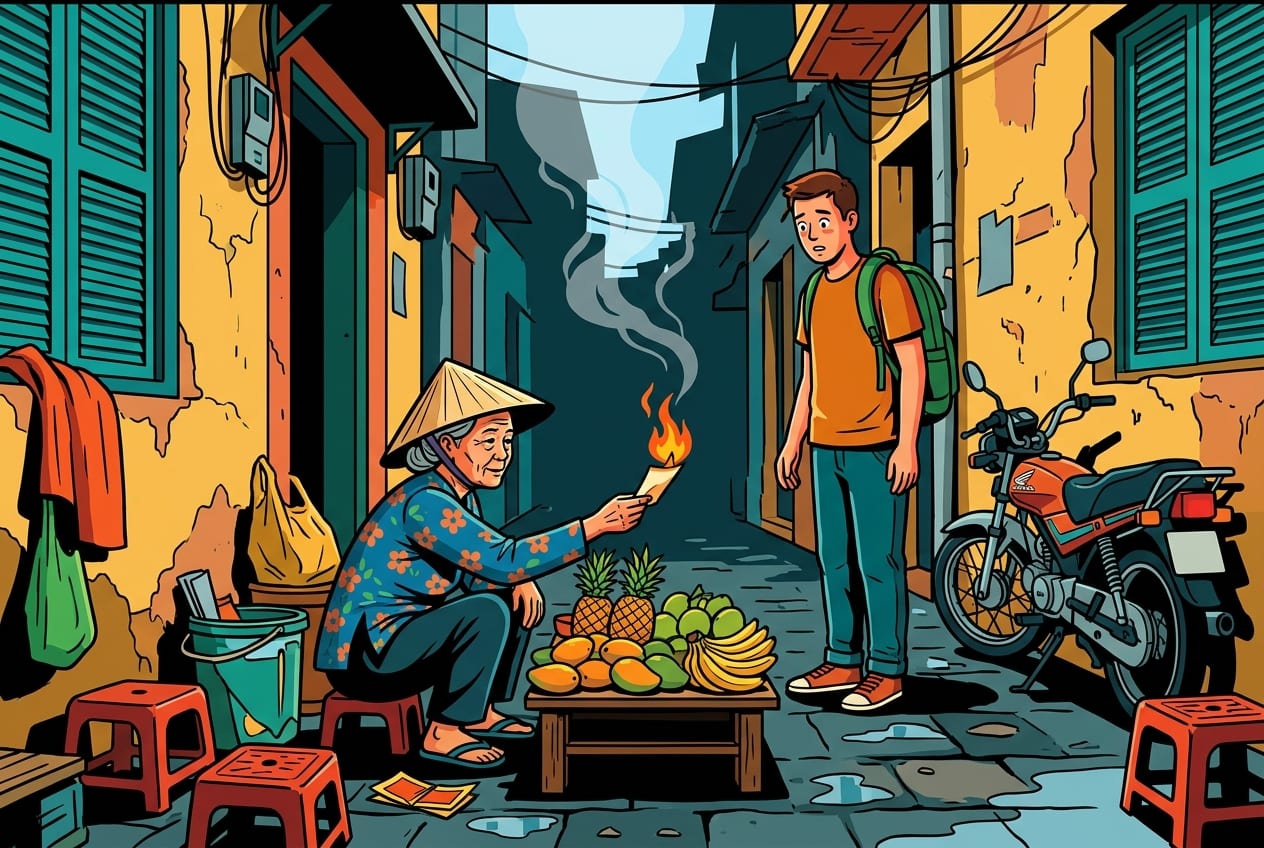
Don't Be the First Customer! An Expat’s Guide to Vietnam's Sacred Morning Rituals of 'Mở Hàng' and 'Đốt Vía'
Ever wondered why a Vietnamese street vendor looked terrified when you asked for a price early in the morning? Welcome to the delicate, sacred rituals of Mở Hàng and Đốt Vía.

By Xinchao team
Survival of the Spinnest: Your Expat Guide to Navigating Hoi An’s Dizzying Basket Boat Culture
Get ready to spin! Dive into the history, pricing, and survival tips for navigating Hoi An's iconic basket boats in Cam Thanh Coconut Forest.

By Xinchao team
A Bowl of Corn Wine and a Handshake: Your Expat Survival Guide to Highland Market Etiquette in Ha Giang
Ready to brave the legendary Sunday markets of Ha Giang? Discover the essential rules of highland etiquette, from sharing a bowl of fiery corn wine to mastering the physical handshake ritual.