Flex Di San: Why Are Young Vietnamese Showing Off Their Ancestors' Skills?
Discover Vietnam's 'Flex Di San' movement, where youth revive traditional crafts. A guide for travelers to experience authentic artistry, from silk to pottery, and connect with living heritage.
Flex Di San: Vietnam's Youthful Rebirth of Ancient Art
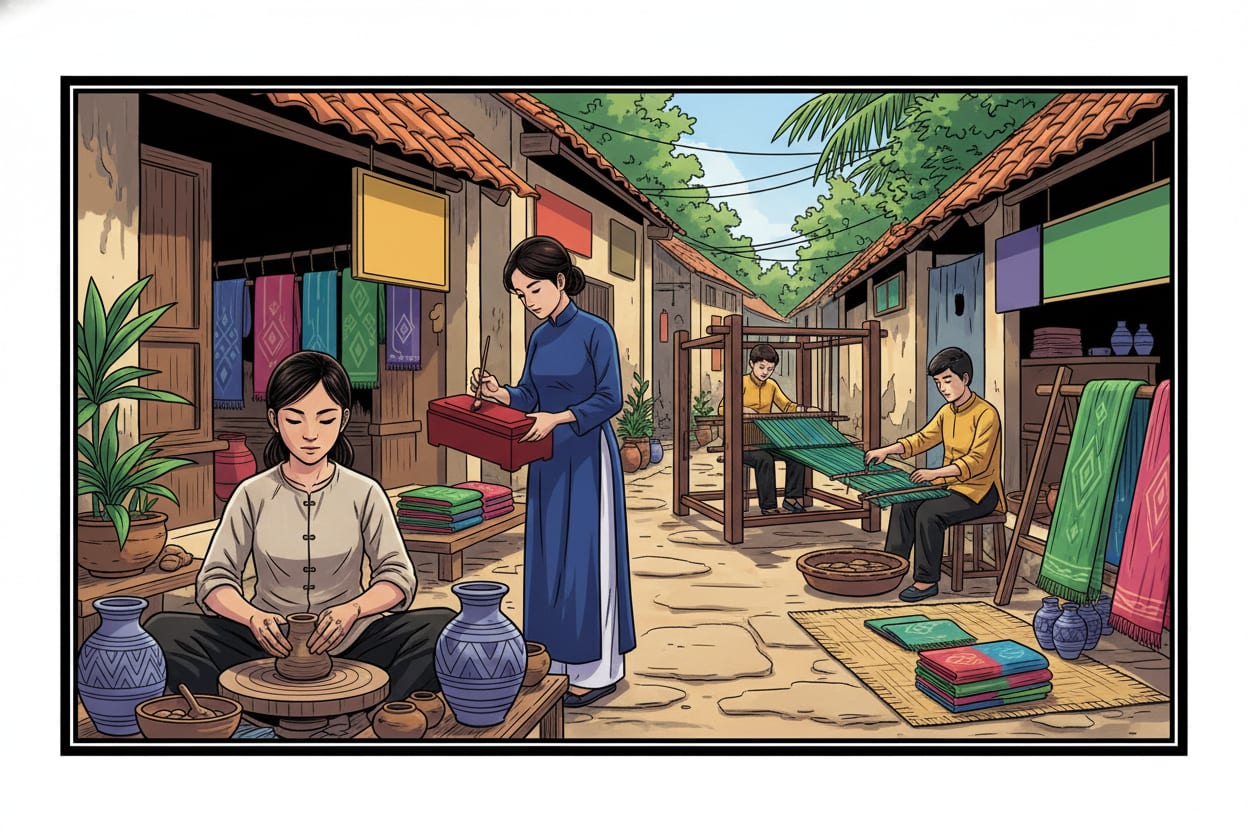
Imagine walking through a bustling market, seeing young people proudly showcasing handcrafted items, not just selling them, but explaining the centuries-old stories behind each piece. This isn't just commerce; it's a cultural revolution called 'Flex Di San' – which roughly translates to 'showing off heritage.' It's a vibrant movement sweeping across Vietnam, led by a dynamic younger generation eager to reclaim and celebrate their cultural roots. They're not just preserving traditions; they're making them cool, relevant, and accessible, often with a savvy nod to social media. For travelers, this means an unprecedented opportunity to dive deep into Vietnam's artistic soul, connecting with living traditions that feel more alive and personal than ever before. It's about seeing history not in a museum, but in the skilled hands of an artisan right in front of you.
'Flex Di San' is Vietnam's vibrant movement where young people actively embrace and showcase traditional crafts, historical sites, and festivals, often using social media to transform ancient practices into modern cultural trends. For travelers, this offers a unique chance to connect deeply with Vietnamese artistry and centuries-old traditions, now more accessible than ever.
Why 'Flex Di San' Matters So Much to Vietnamese Youth
To truly understand 'Flex Di San,' you need to grasp *why* it resonates so deeply with young Vietnamese. It's far more than just a trend or an Instagram moment. This movement is a powerful affirmation of identity in a rapidly modernizing world. Traditional crafts aren't just objects; they are living symbols of Vietnam's rich cultural heritage, embodying spiritual beliefs, historical narratives, and the ingenuity passed down through countless generations. Think about a piece of silk from Van Phuc – it’s not just fabric, it carries the story of a village, the patience of its weavers, and patterns that have graced Vietnamese royalty. When young people engage with these crafts, they are connecting with their ancestors, reinforcing their national pride, and contributing to the preservation of their nation’s soul. It's a way to say, 'This is who we are, and we are proud of it,' transforming heritage from something distant into an active, creative part of everyday life and social connection. It's a way to ensure their unique culture thrives, not just survives.
For young Vietnamese, 'Flex Di San' is a profound affirmation of identity and a commitment to preserving the nation's soul, seeing traditional crafts as living symbols of rich cultural heritage. This active participation transforms heritage from a distant concept into an active part of everyday creative expression and social connection, fostering national pride.
Where to Find Vietnam's Crafty Heartbeat
Vietnam is dotted with incredible craft villages, each specializing in unique traditions honed over centuries. Thanks to 'Flex Di San,' many of these villages are now more welcoming and geared towards travelers seeking hands-on experiences. From the misty mountains of the North to the lush Mekong Delta in the South, you'll find artisans eager to share their skills and stories. These aren't just places to buy souvenirs; they are living museums where you can witness the magic of creation firsthand, often in settings that feel like stepping back in time.
Northern Vietnam: Silk, Clay, and Incense Whispers
Hanoi acts as a fantastic launchpad for exploring some of Vietnam's most iconic craft traditions. Just a short trip from the capital, you can find the legendary **Van Phuc Silk Village**. Here, for over 1,200 years, families have been weaving exquisite brocade patterns. You can hear the rhythmic clack of looms, see vibrant silk threads stretch across workshops, and feel the luxurious softness of the finished product. It's a testament to enduring skill and artistic legacy. A bit further out is **Bat Trang Ceramic Village**, Vietnam's most famous pottery center. Known for its distinctive dark glazes and blue-violet motifs, Bat Trang offers workshops where you can try your hand at shaping clay on a potter's wheel – a truly grounding experience. Both villages were recognized in 2025 by the Global Network of Creative Craft Cities, highlighting their blend of tradition and innovation. Don't miss **Ha Thai Lacquer Village**, where intricate lacquerware is painstakingly created, or the visually stunning **Quang Phu Cau Incense Village**, famous for its enormous, bright red and yellow bundles of drying incense sticks, creating a breathtaking photo opportunity and a unique aromatic experience.
Northern Vietnam is a hub for renowned craft villages, including Van Phuc Silk with its 1,200-year legacy of brocade, and Bat Trang Ceramic Village, famous for its dark glazes and blue-violet motifs. Ha Thai Lacquer Village and Quang Phu Cau Incense Village offer visually striking traditional crafts, perfect for cultural exploration.
Central Vietnam: Hoi An's Lantern Glow & Ancient Pottery
Moving to Central Vietnam, the charming Ancient Town of Hoi An is a treasure trove for artisans. Its narrow streets are lined with tailors who can craft bespoke garments overnight, and lantern makers whose delicate creations illuminate the town every evening. Imagine learning to fold and assemble your own silk lantern, a symbol of good fortune and beauty, which you can then carry through the enchanting streets. Just a short distance from Hoi An lies **Thanh Ha Pottery Village**, a 500-year-old cultural gem. Unlike Bat Trang, Thanh Ha specializes in more rustic, unglazed terracotta pottery, often used for everyday household items. Here, you can watch skilled potters use traditional foot-powered wheels, and even get your hands dirty trying to create your own piece. It’s a wonderful way to connect with the earth and the enduring legacy of Vietnamese craftsmanship.
Central Vietnam's craft scene is epitomized by Hoi An's Ancient Town, a haven for bespoke tailors and vibrant lantern makers, where travelers can witness intricate craftsmanship. Nearby, Thanh Ha Pottery Village, a 500-year-old cultural gem, offers unique hands-on experiences with traditional pottery techniques.
Southern Vietnam: Coconut Dreams & City Craftsmanship
In Southern Vietnam, the Mekong Delta offers unique craft experiences, particularly in **Ben Tre**, the 'land of coconut.' Here, artisans skillfully transform every part of the coconut tree into beautiful and functional items – from carved coconut shells to woven mats and furniture. It’s a fantastic example of Vietnamese ingenuity and sustainability. Further north, **Ho Chi Minh City** might be a bustling metropolis, but it also harbors vibrant artisan workshops. You can find places specializing in intricate lacquerware, fine embroidery, and contemporary pottery studios that blend traditional techniques with modern designs. These urban workshops often reflect a more contemporary 'Flex Di San' spirit, where young designers are reinterpreting classic forms for new audiences. Visiting these spots gives you a glimpse into the diverse and evolving craft landscape across the country, showing how heritage adapts and thrives in different environments.
Southern Vietnam showcases a distinct craft spirit, from Ben Tre's ingenious coconut crafts in the lush Mekong Delta to the vibrant artisan workshops nestled within Ho Chi Minh City. Here, travelers can discover diverse pottery and lacquerware, reflecting the region's unique cultural influences and creative energy.
Stepping into the Artisan's World: What to Expect
When you step into a Vietnamese artisan workshop or a craft village, prepare for a feast for your senses. The air is typically warm and humid, often carrying the subtle scent of clay, wood, natural dyes, or drying incense. Soft natural daylight filters into rustic workshops, illuminating rows of handcrafted items drying in the sun or displayed on wooden shelves. You'll see skilled artisans, often dressed in simple, practical clothing or sometimes a traditional Ao Dai, meticulously working. Their hands, often calloused and strong, move with incredible precision and grace, whether they're at a wooden loom, spinning a potter's wheel, or applying delicate strokes with a fine brush. The dominant colors you'll observe are rich jewel tones – emerald green, sapphire blue, ruby red, and golden yellow – alongside earthy browns, natural whites, and deep indigos, all derived from traditional natural dyes and pigments. The rhythmic sounds of looms clacking, chisels tapping, or clay being shaped fill the narrow, often cobblestone, alleyways, creating a soothing soundtrack to centuries of tradition. It’s an immersive experience that transports you to a place where time seems to slow down, and craftsmanship is revered.
Do
- Always ask for permission before taking photos, especially of people or sacred items. A simple nod and smile while pointing to your camera usually works.
- Engage with artisans! Ask about their craft, its history, and the materials used. This shows genuine interest and respect.
- Bargain politely in markets, but remember these are handmade items. Start around 20-30% below the asking price, but be respectful and don't push too hard.
- Buy directly from workshops or reputable shops to ensure authenticity and directly support the local community and artisans.
Don't
- Don't interrupt an artisan who is deeply concentrated on their work. Wait for a natural break.
- Don't haggle aggressively or disrespectfully. It can cause the artisan to lose face.
- Don't touch items without permission, especially delicate ones, as they might be fragile or still drying.
- Don't assume all items are cheap. Appreciate the skill and time invested in handcrafted goods.
How to Dive Deep: Traveler Tips for an Authentic Experience
To truly unlock Vietnam's artisan spirit, prioritize hands-on immersion. Start by researching regional specialties to identify the crafts that most intrigue you – whether it's the intricate patterns of silk or the earthy feel of clay. Many craft villages are easily accessible from major cities like Hanoi, Hoi An, and Ho Chi Minh City via local transport (taxis, Grab, buses, motorbikes) or organized tours. Look for workshops where you can actually try your hand at silk weaving, pottery, lacquer painting, or lantern making. These experiences offer a much deeper connection to the culture than simply buying a souvenir; they result in a unique, personal creation that carries your own story. Visiting traditional markets like Hanoi's Dong Xuan or Hoi An's Night Market, particularly in the early morning (6-9 AM) to avoid crowds and heat, provides a bustling atmosphere to observe local life and purchase authentic goods directly from vendors. Always aim to buy from reputable shops or directly from artisans to ensure authenticity and directly support the local community. Remember, comfortable shoes are a must, as village paths can be uneven, and you'll want to explore every corner. By embracing these tips, you won't just see Vietnam's heritage; you'll become a part of it, carrying a piece of its living art home with you.
Is it okay to take photos in artisan workshops or villages?
Generally, yes, but always ask for permission first, especially if you're photographing people or items that appear sacred or very personal. A polite gesture like pointing to your camera with a smile and asking 'Chụp hình được không?' (Can I take a photo?) or just waiting for a nod will show respect. Many artisans are proud to have their work documented, but it's important to be courteous.
What's the best way to find workshops offering hands-on experiences?
The easiest way is to research specific craft villages (like Bat Trang for pottery or Hoi An for lanterns) and check their official tourism websites or look for local tour operators that specialize in cultural experiences. Many villages have designated community centers or artisan cooperatives that organize workshops. Sometimes, simply walking through a village and asking a local 'xưởng thủ công?' (craft workshop?) can lead you to a hidden gem!
How much should I expect to pay for a craft workshop or handcrafted goods?
Prices vary. A simple pottery class might range from $10-$25 USD, while a more intricate lacquerware workshop could be higher. Handcrafted goods are generally affordable, but remember that the price reflects the skill and time invested. In markets, respectful bargaining is customary, typically aiming for 20-30% off the initial asking price, but always be prepared to pay a fair price for quality handmade items.
Topics
Read more
Other posts from our Vietnamese learning blog.

By XinChao AI
Why Do Ha Giang's Mountains Keep the Best Star Secrets?
Escape city lights to Ha Giang, Vietnam's 'coolcation' hotspot for stargazing. Discover pristine night skies, local culture, and tips for your Milky Way adventure.

By XinChao AI
Zalo or Ghosted? Why You Can't Rent a Home or Buy Water in 2026 Without the 'Blue App'
In 2026 Vietnam, Zalo is no longer optional. Learn why this 'Blue App' is the key to renting apartments, ordering water, and making friends in a Zalo-first society.
By XinChao AI
Why is Everyone in Hanoi Waking Up at 5 AM for a Flower?
Discover the 2026 guide to Hanoi's West Lake lotus tea season. Learn how to find the best 'Bach Diep' flowers, why timing is everything, and the secrets of the $400 tea.